
All Blues is a jazz composition by Miles Davis first appearing on the influential 1959 album Kind of Blue. It is a twelve-bar blues in; the chord sequence is that of a basic blues and made up entirely of seventh chords, with a VI in the turnaround instead of just the usual V chord. In the song's original key of G this chord is an E7. "All Blues" is a modal blues in G mixolydian.
Subjects(s): Blues • Jazz • Repertoire • Song


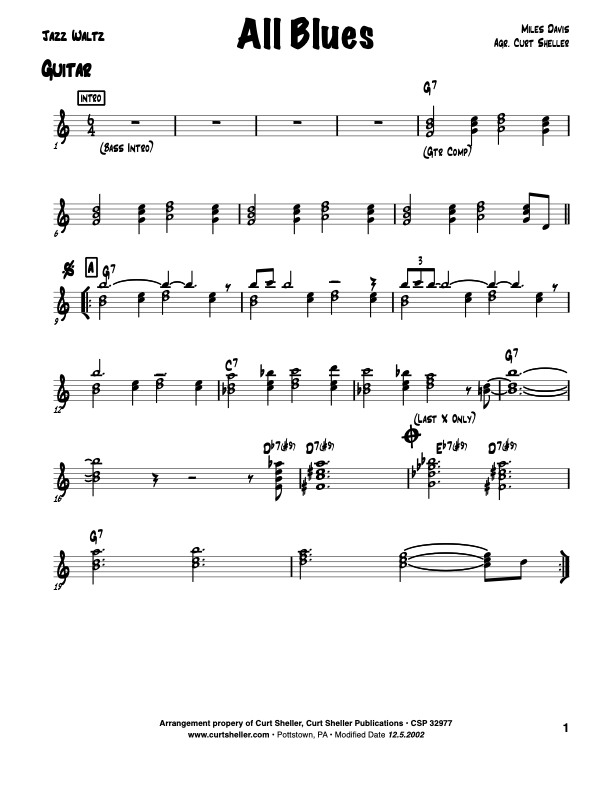
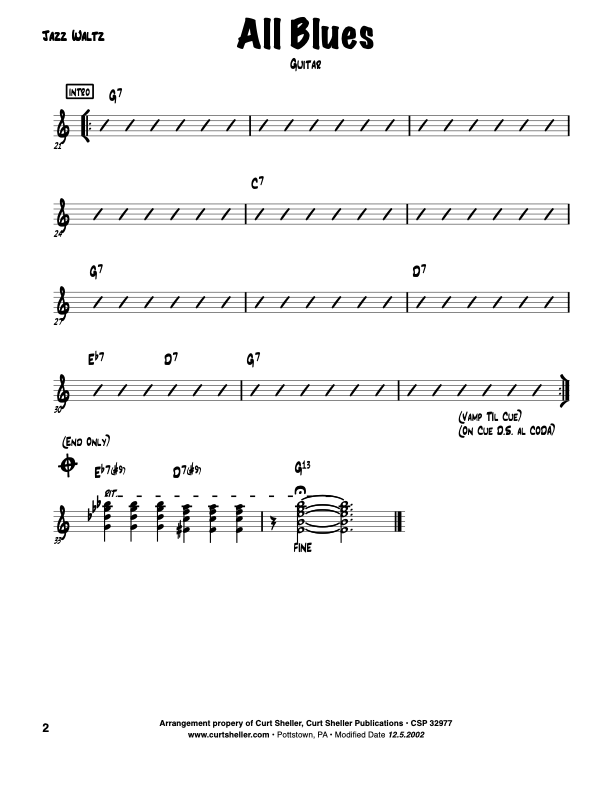
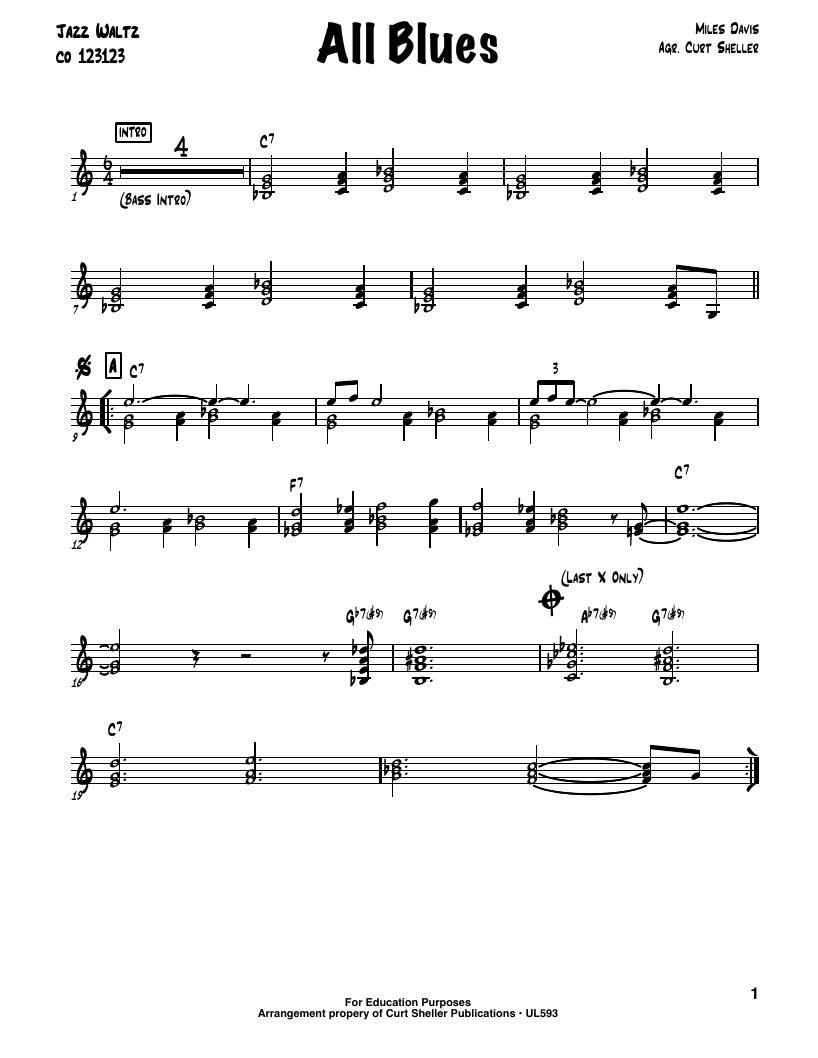
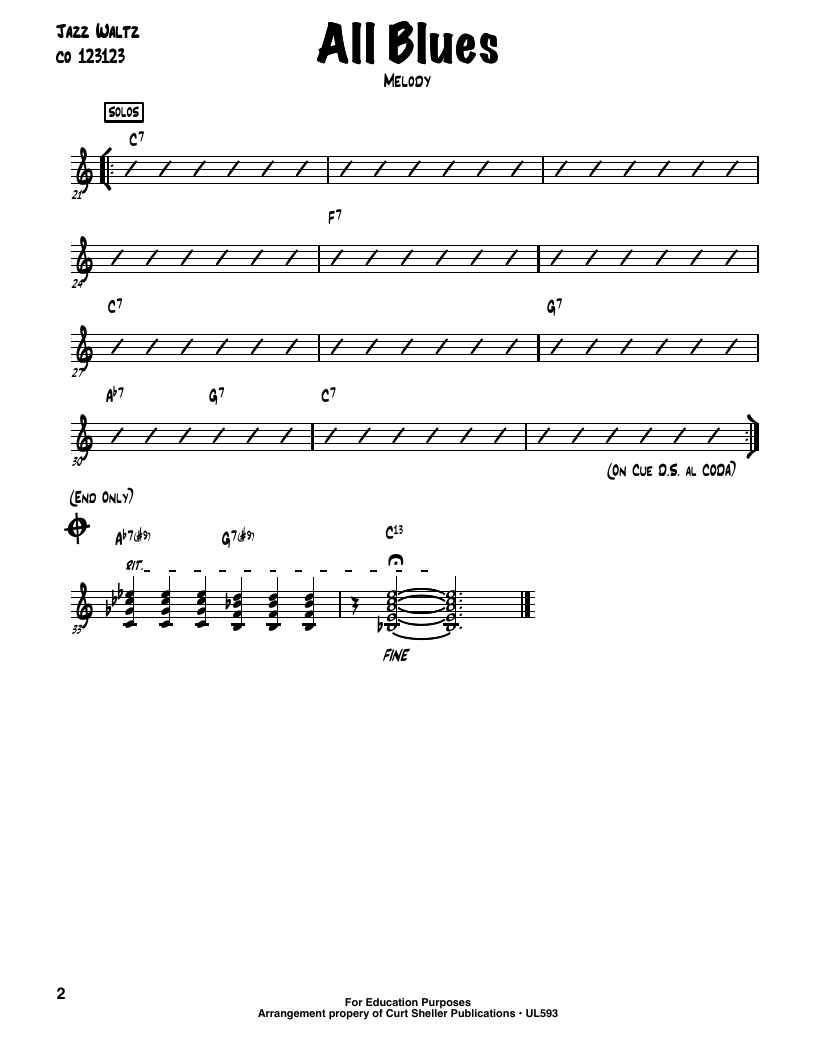
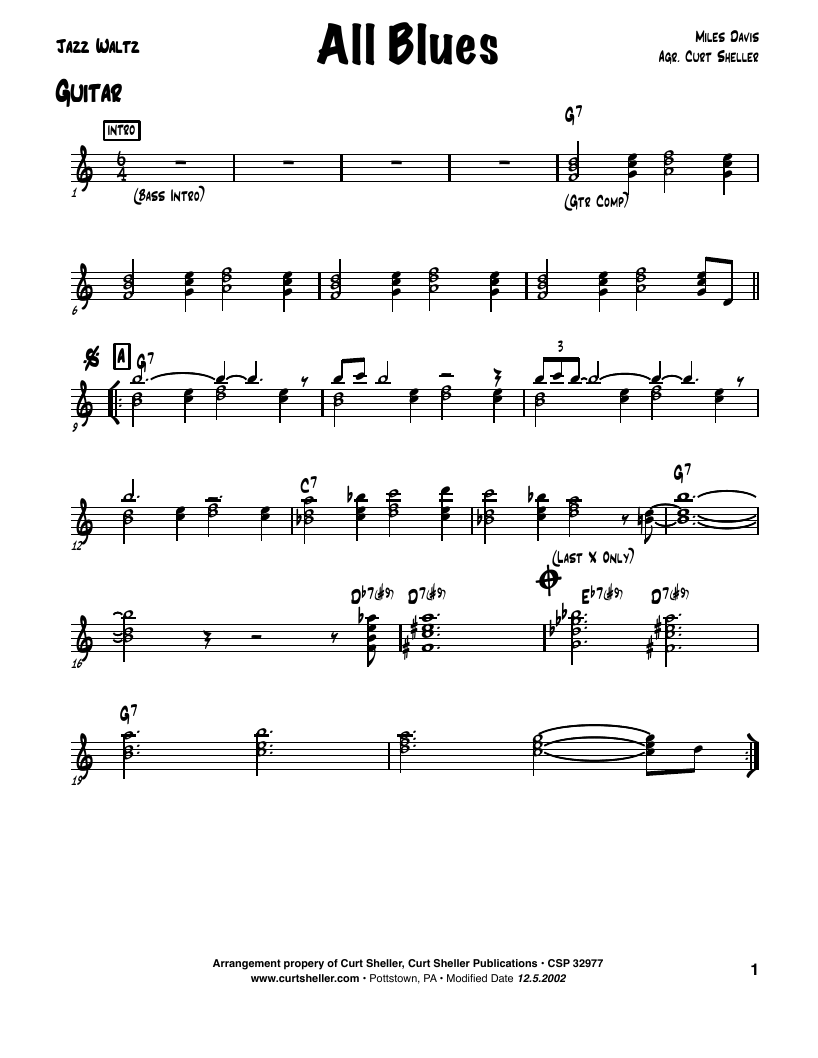
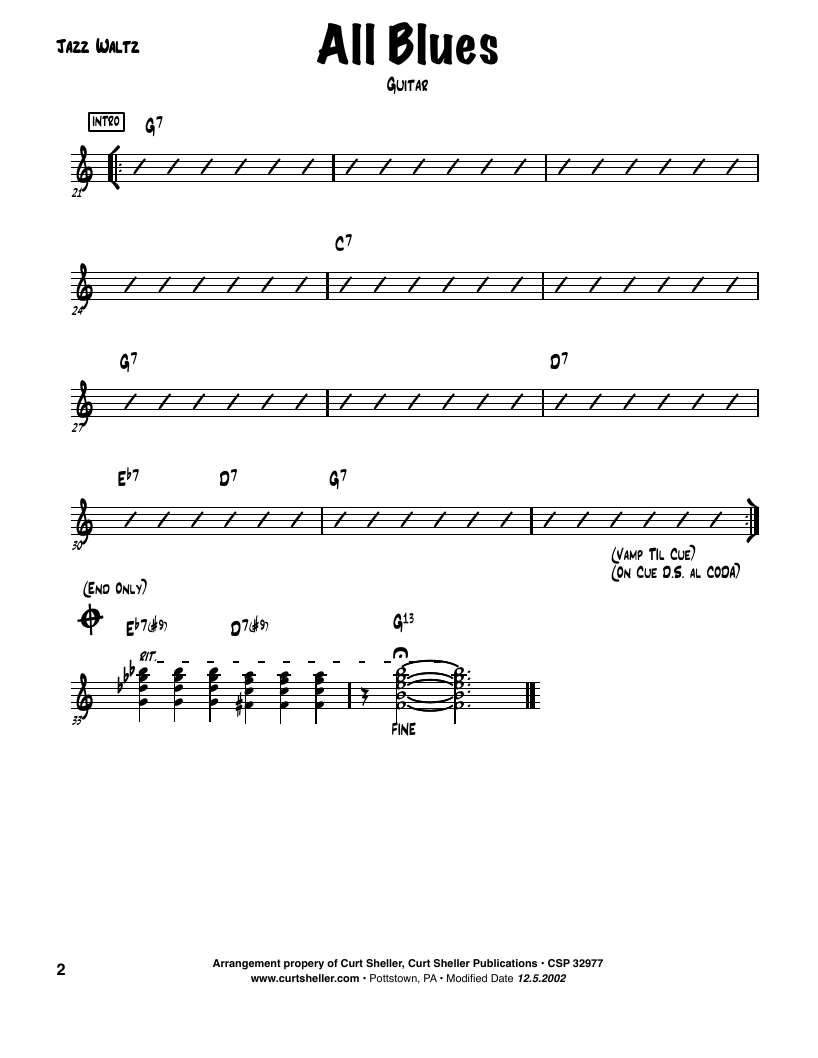
All Blues is a jazz composition by Miles Davis first appearing on the influential 1959 album Kind of Blue. It is a twelve-bar blues in; the chord sequence is that of a basic blues and made up entirely of seventh chords, with a VI in the turnaround instead of just the usual V chord. In the song's original key of G this chord is an E7. "All Blues" is a modal blues in G mixolydian.
Real Book - Volume 1— Sixth Edition book.

The Miles Davis classic arranged in key of C. All Blues is a jazz composition by Miles Davis first appearing on the influential 1959 album Kind of Blue. It is a twelve-bar blues in 6/4; the chord sequence is that of a basic blues and made up entirely of seventh chords, with a ♭VI in the turnaround instead of just the usual V chord. In the song's original key of G this chord is an E♭7. "All Blues" is an example of modal blues in G mixolydian.
The Miles Davis classic arranged in key of G. All Blues is a jazz composition by Miles Davis first appearing on the influential 1959 album Kind of Blue. It is a twelve-bar blues in 6/4; the chord sequence is that of a basic blues and made up entirely of seventh chords, with a ♭VI in the turnaround instead of just the usual V chord. In the song's original key of G this chord is an E♭7. "All Blues" is an example of modal blues in G mixolydian.
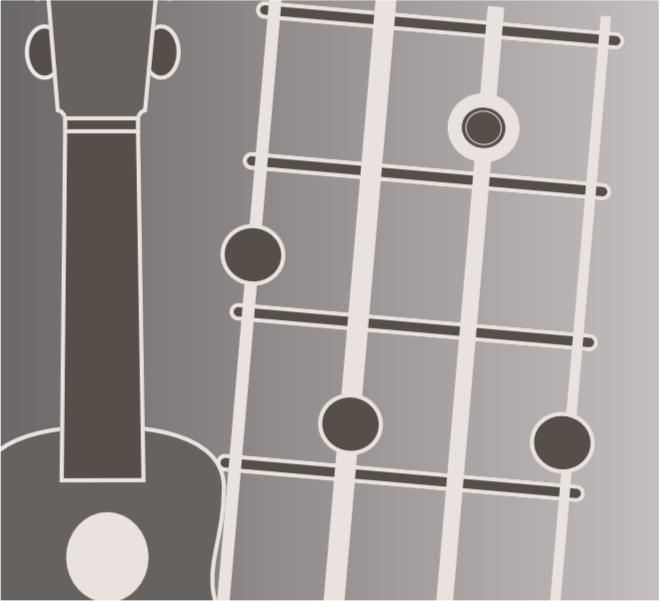
Core Chords for Ukulele, The Big Six - From four F7 chord voicings or shapes, your can build your massive 4-part, a.k.a., “jazz” chord vocabulary. Beyond basic open position chords, basic movable form chords and a core set of 4-part chords. There are just too many chords shapes too memorize.
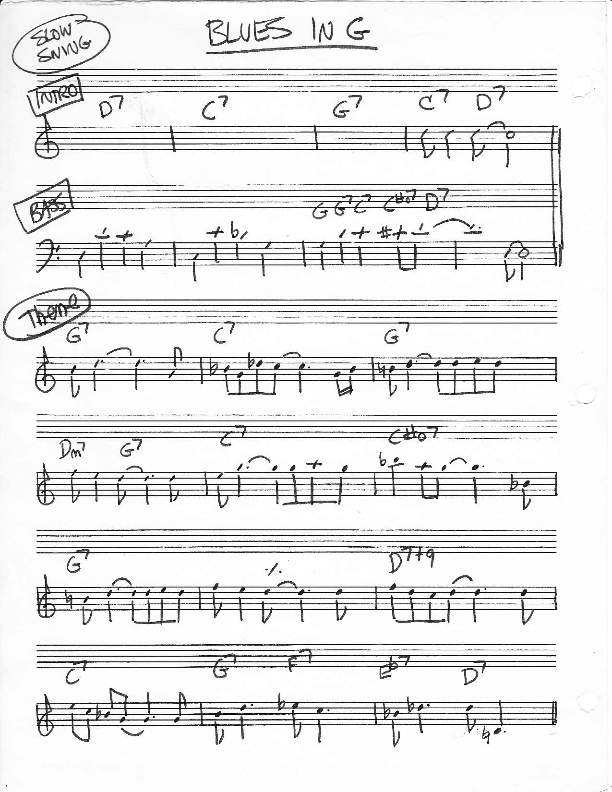

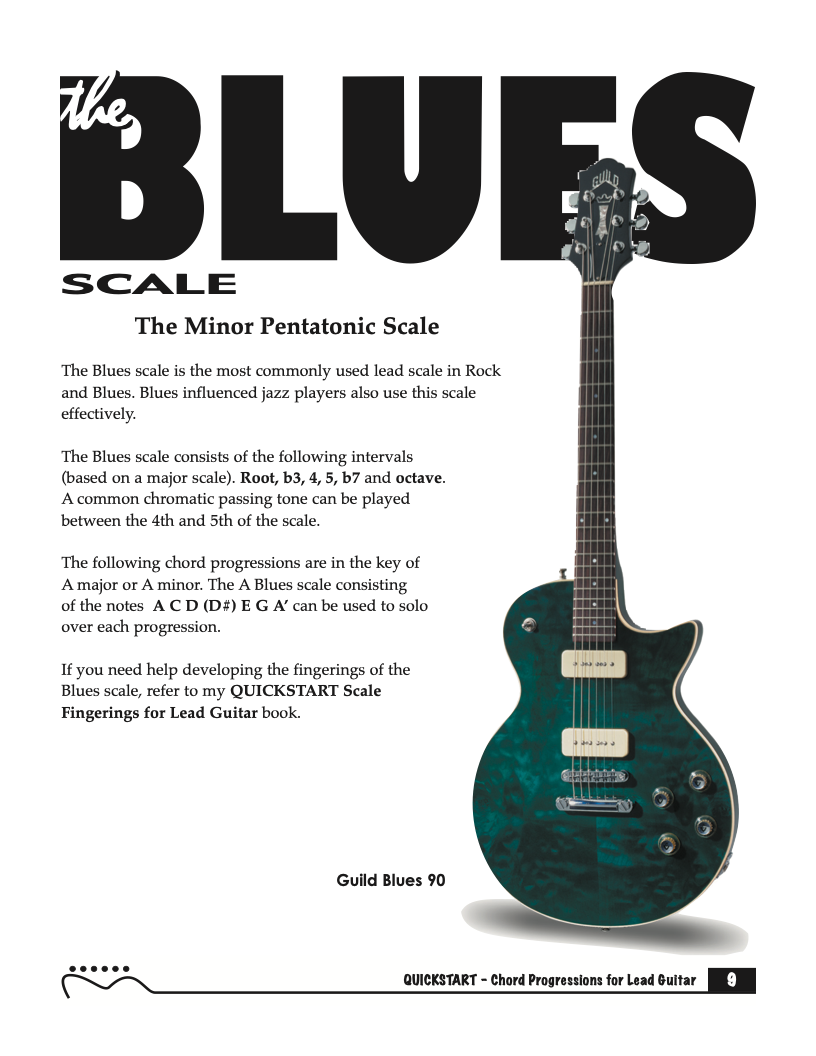
The QuickStart Blues Play-along Tracks from the QuickStart Chord Progressions for Lead Guitar. These tracks are suitable for any instruments. The Blues scale is also known by as: Minor Pentatonic and can be though of as a sub set of the Natural Minor / Aeolian scale.
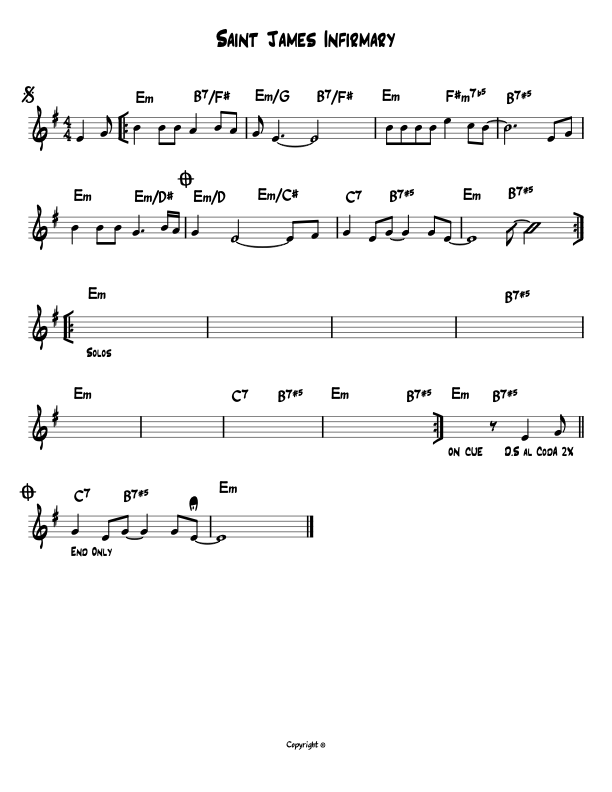
"St. James Infirmary Blues" is an American blues song of uncertain origin. Louis Armstrong made the song famous in his 1928 recording on which Don Redman was credited as composer; later releases gave the name Joe Primrose, a pseudonym of Irving Mills. The melody is 8 bars long, unlike songs in the classic blues genre, where there are 12 bars. It is in a minor key, and has a 4/4 time signature, but has also been played in 3/4.
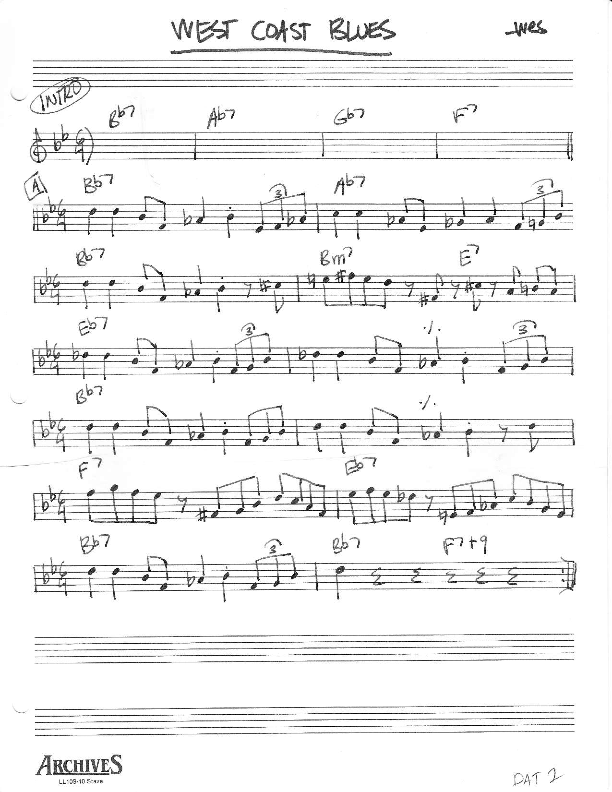
A jazz classic by the late jazz guitarist Wes Montgomery. Wes is widely considered one of the major jazz guitarists, emerging after such seminal figures as Django Reinhardt and Charlie Christian and influencing countless others, including George Benson, Kenny Burrell, Grant Green, Jimi Hendrix, Steve Howe, Russell Malone, Pat Martino, Pat Metheny, Randy Napoleon, and Emily Remler.
Beyond learning basic Ukulele chords, most players struggle with advanced chords. Commonly called "jazz" chords, these more sophisticated voicings find a wide use in all forms of music. A Guide to Advanced Chords for Ukulele - presents a highly organized and efficient approach to the mysterious subject of advanced chords. Chord dictionaries are not the answer.
The Blues are at the heart of all American music. It has influenced Country, Rock, Folk, Jazz, Bluegrass and just about every form of American music we listen to today. 26 blues progression in C and G tuning, progressing from basic to advanced jazz progression, with chord grids and substitutions explained.
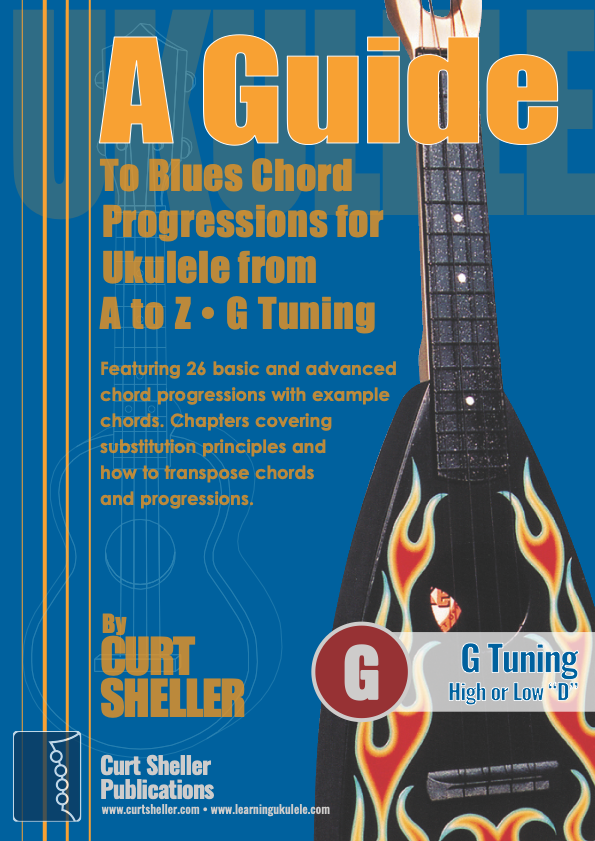
The Blues are at the heart of all American music. It has influenced Country, Rock, Folk, Jazz, Bluegrass and just about every form of American music we listen to today. 26 blues progression in C and G tuning, progressing from basic to advanced jazz progression, with chord grids and substitutions explained.
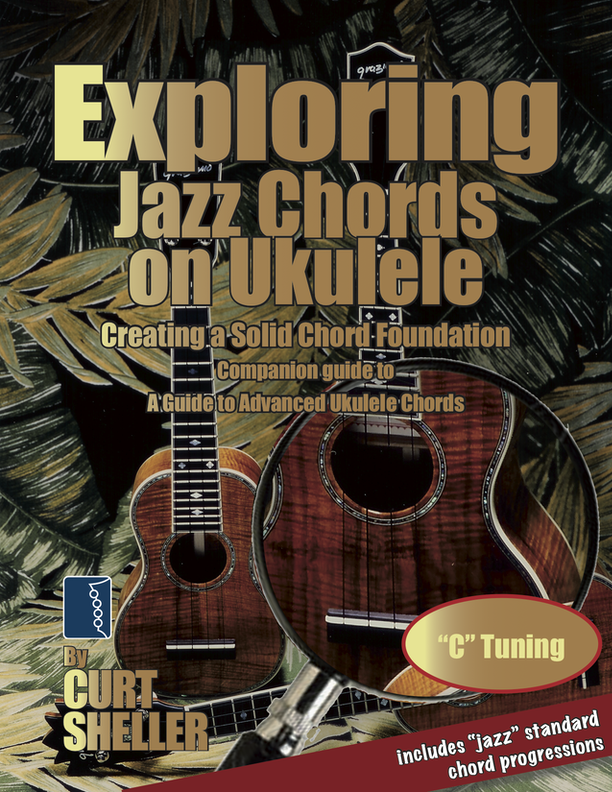
Exploring jazz chords using a variety of common chord progressions based on songs from the standard jazz repertoire. Core Chords are the basic set of chords needed to play a wide range of music, in a variety of styles. This set of chords includes basic open position chords, basic movable form chords and the core 4-part "jazz" chords.


return in your investment)—it is this— learning the
f*ckingnotes of your OWN instrument. Sorry for the tough talks—but it is sooooo true!