
Learning Ukulele with Curt
Practice, Play and Rules (Theory) - The Three Words

Chuck Anderson wrote a great blog entry about the three words Play, Practice and Theory that send the wrong message to players and the general public.

Publisher: Anderson Music Publications Authors(s): Chuck Anderson
Category: Guest Instrument: Any
Subjects(s): TheoryCoreRepertoirePracticePrinciplesFoundation
Premium Member Feature
Share the Practice, Play and Rules (Theory) - The Three Words on: Bluesky facebook twitter (X)
Practice, Play and Rules (Theory) - The Three Words

Chuck Anderson wrote a great blog entry about the three words Play, Practice and Theory that send the wrong message to players and the general public.

With Chuck Anderson's permission I've reproduced it here.
The Three Words
by Chuck Anderson
There are three words commonly used in music that should be avoided – or at least redefined.
These words are Practice, Play and Rules.
  • Practice — This implies boring repetition. It's un-creative and unproductive.
  • Play — This connotes casual fun – a frivolous, optional activity.
  • Rules — These are a rigid set of law which must be followed.
I would suggest that the word Practice be replaced with the word Explore.
I would suggest that the word Play be replaced with the word Work.
I would suggest that the word Rules be replaced with the word Principles.
Why learn Theory?
Checkout Adam Neely's Why you should learn music theory (Prescriptivism vs Descriptivism) . Adam articulates it a lot better than I every would.
It will NOT effect you technical ability or stifle you creativity.Curt
Why Not? — When you Explore music, it becomes fun and exciting. To explore is to discover!
The better you get, the better musicians you can play with and the more fun you'll. It's a vicous cycle that leads to more fun.
Why?
Work in the music business is not like work in any other field. Most musicians feel blessed to make music their career. So work in this context is joyful not tedious.
The Principles of music hold the key to the development of your potential. Within these principles, there is unlimited opportunity to expand your creativity.
*For more of Chuck's great writing and playing visit: www.ChuckAndersonJazzGuitar.com
Sign-IN, for free — to View, Un-Blur Any Additional Content for This Lesson—Can't give it ALL away.
art by Curt Sheller
End of Lesson - Thanks, Hope You Enjoyed It!

Related Lessons, Videos, Lesson Series, Songs, Books & Reference Charts, Resources & Assets, Workshops are below.

Related Lesson Series
Related Lessons Series for Practice, Play and Rules (Theory) - The Three Words.

Before You Pick Up Your Uke, Getting Started Basics

These ukulele lessons are essential for both beginners who are just starting out and seasoned players who have already gained some experience. Even if you consider yourself a seasoned player, exploring this series of lessons can still be highly beneficial. You are likely to discover new insights and perhaps even be reminded of valuable information that can greatly assist you when teaching beginners or further enhancing your own skills.

Related Books & Charts
Related Books for Practice, Play and Rules (Theory) - The Three Words.
PMG1UKE
Daily Practice Material for the Contemporary Ukulele

Daily Practice Material for the Contemporary Ukulele Player is an organized collection of daily practice and reference material for the contemporary ukulele player. This material can be used to develop the vocabulary and knowledge necessary for single note playing.
RMA1
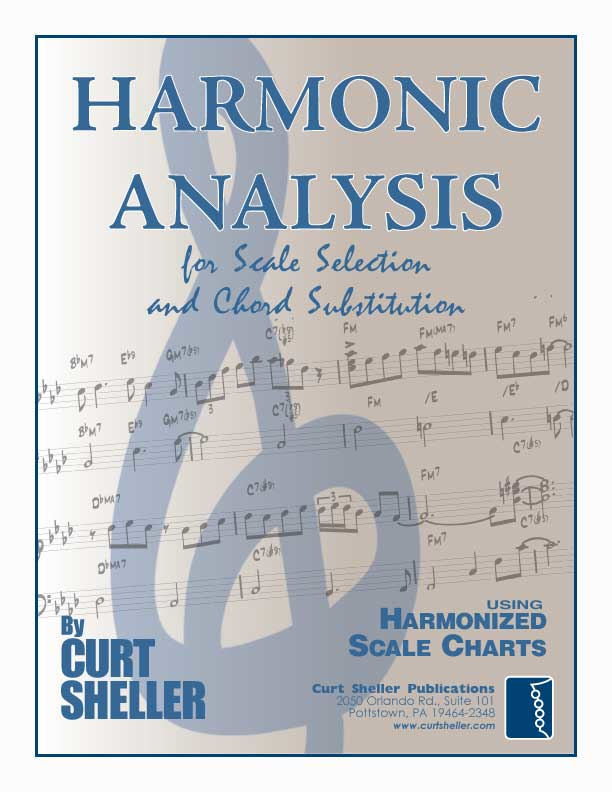
Harmonic Analysis for Scale Selection and Chord Substitution

Harmonic Analysis is the understanding of the functional sequence of chords. It is the process used to analyze the harmonic structure of a progression, song or composition. This analysis is then used to make scale selections for improvisation and chord substitution.
MPRS-FW1
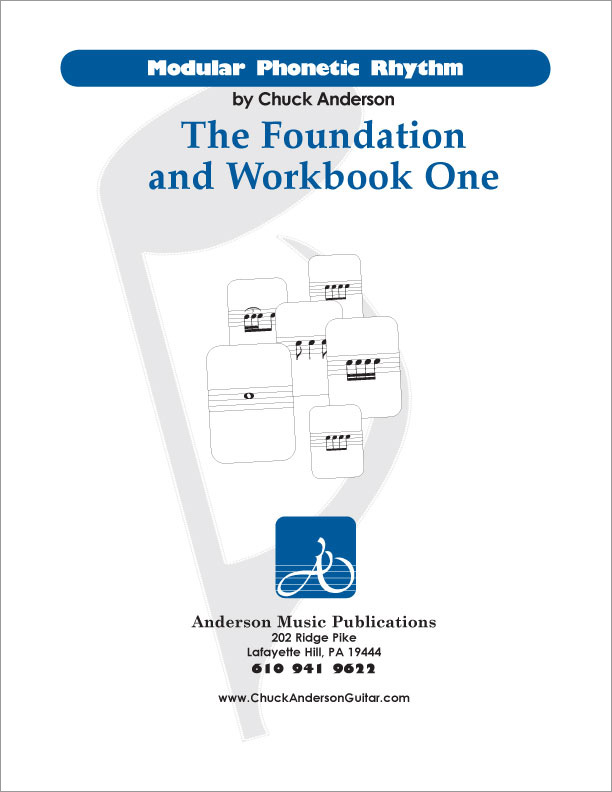
Modular Phonetic Rhythm, The Foundation and Workbook 1

Modular Phonetic Rhythm represents a significant advance in the teaching and application of rhythm. Eliminating many inefficient aspects of rhythm education, Modular Phonetic Rhythm streamlines the traditional educational approach, resulting in a reflexive reaction to rhythm.

A Selection of Books & Reference Charts that are recommended for creating a solid foundation with your chosen instrument and music in general.
These are Books & Reference Charts that apply to a majority of the lessons on LearningUkulele.com–Learning Ukulele with Curt .
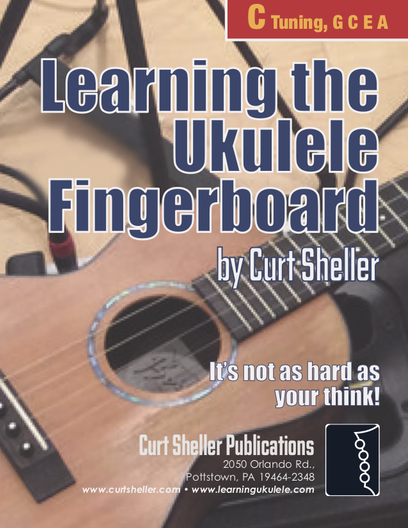
Learning the Ukulele Fingerboard – C Tuning
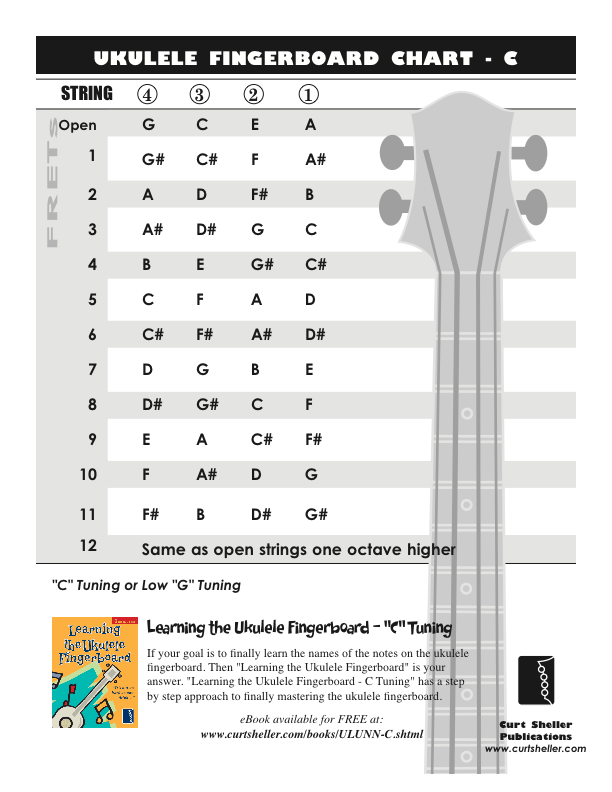
Finally, learn the names of the notes of the ukulele fingerboard in C tuning .
Six Secrets of the Ukulele Fingering
Learn the six fingering principles to navigating the ukulele fingerboard. Fingering is one of the most universal topics. Book: Six Secrets of the Ukulele Fingering It there in one thing that give a ROI (corporate speak for return in your investment)—it is this— learning the f*cking notes of your OWN instrument. Sorry for the tough talks—but it is sooooo true!
Harmonic Analysis for Scale Selection and Chord Substitution
Harmonic Analysis is the understanding of the functional sequence of chords. It is the process used to analyze the harmonic structure of a progression, song or composition. Book: Harmonic Analysis for Scale Selection and Chord Substitution
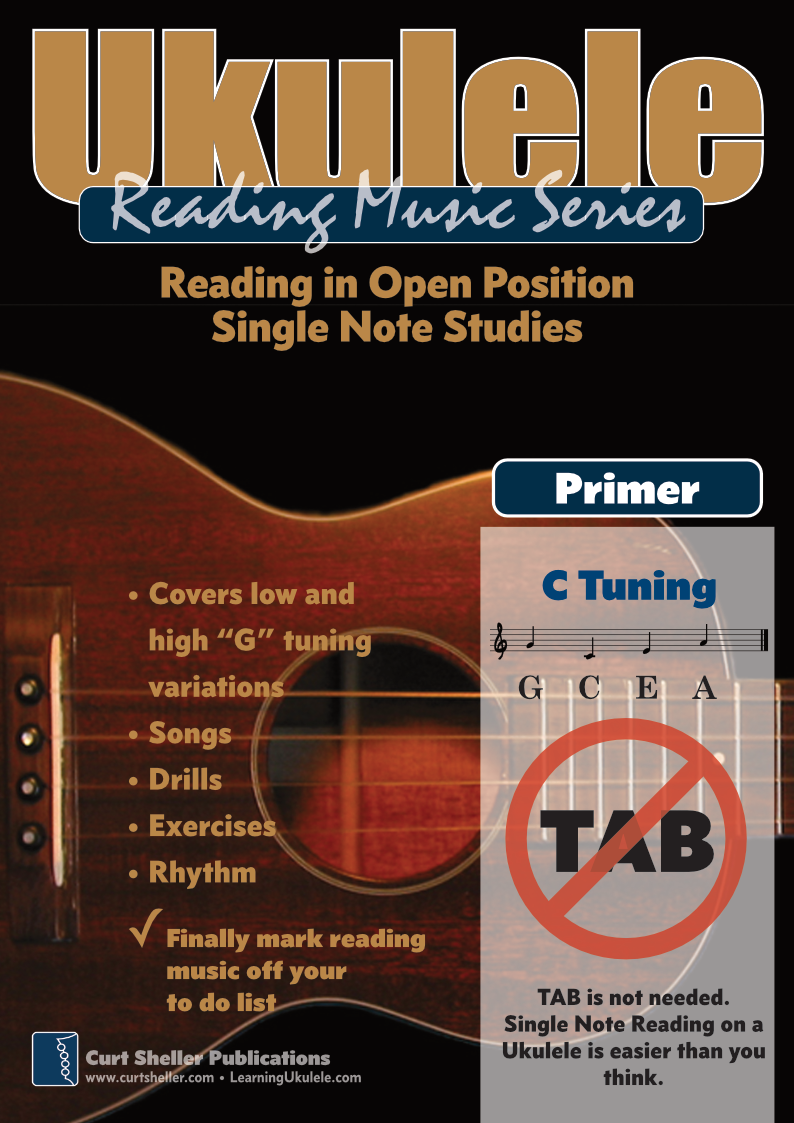
Ukulele – Reading Music Series – Primer

Learn to read single note melodies in the first/open position is a lot easier than you might think. Book: Ukulele – Reading Music Series – Primer

Daily Practice Material for the Contemporary Ukulele

An organized collection of daily practice and reference material for the contemporary ukulele player for developing the vocabulary and knowledge necessary for single note playing. Book: Daily Practice Material for the Contemporary Ukulele

Checkout the Books & Reference Charts for additional Handy, Dandy Reference Charts.

Reference Charts
Ukulele Fingerboard Chart for C Tuning, Low or High G - G C E A

Ukulele Fingerboard Chart for C Tuning, Low or High G – G C E A

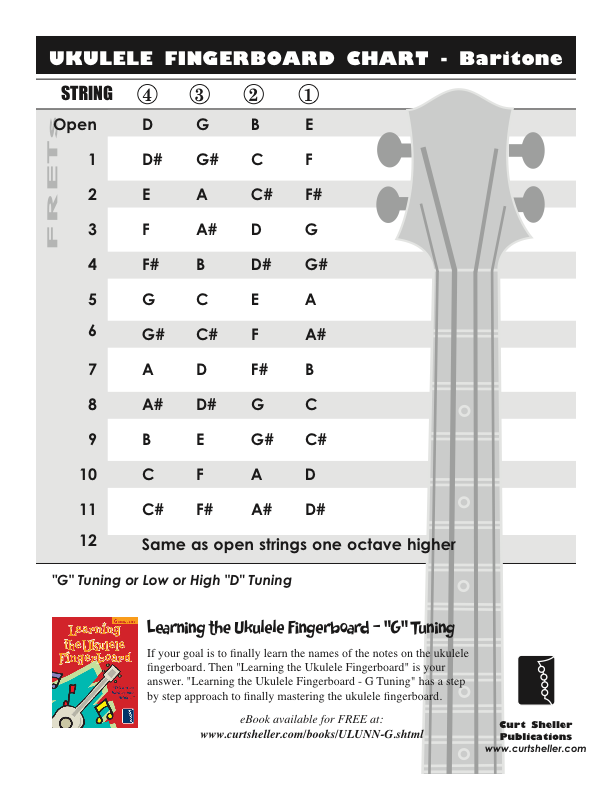
Ukulele Fingerboard Chart for G Tuning, Low or High A – D G B E

Ukulele Fingerboard Chart for G Tuning, Low or High A – D G B E

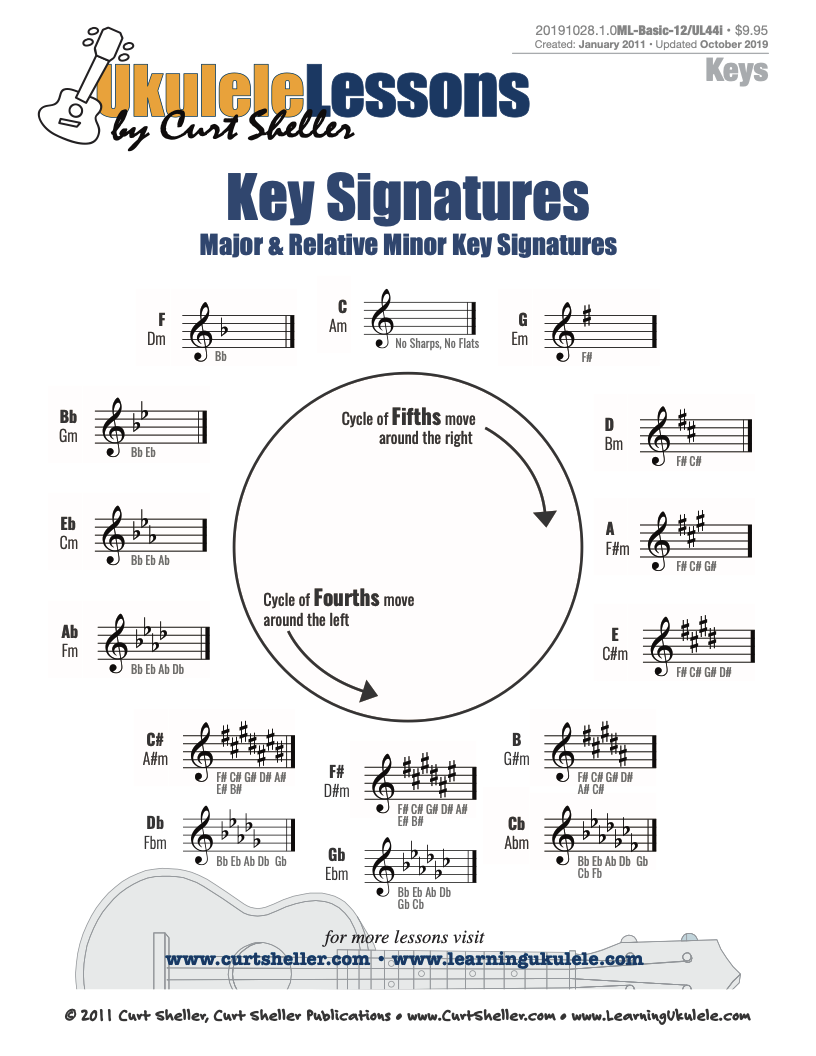
Circle of Fourths and Fifths – ANSI A & A4 sizes

A handy reference chart of all 15 major and relative minor key signatures. US Letter 8.5 x 11 sized (ANSI-A) , A4

Checkout the Books & Reference Charts for additional Handy, Dandy Reference Charts.