
A Resonator ukulele or resophonic ukulele is a ukulele whose sound is produced by one or more spun aluminum cones (resonators) instead of the wooden soundboard (ukulele top/face). These instruments are sometimes referred to as Dobro ukuleles, however the term Dobro is currently trademarked by the Gibson Guitar Corporation.
Subjects(s): Instruments • Ukulele • Resonator


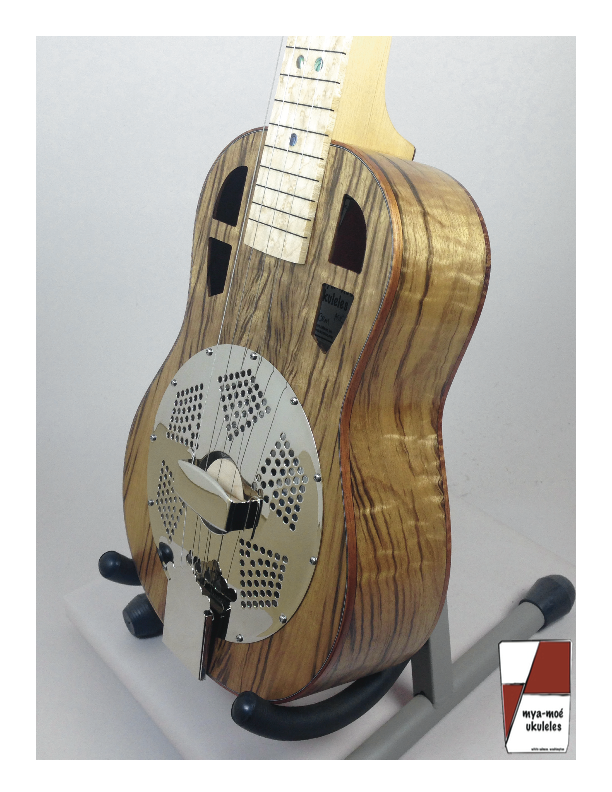
A Resonator ukulele or resophonic ukulele is a ukulele whose sound is produced by one or more spun aluminum cones (resonators) instead of the wooden soundboard (ukulele top/face). These instruments are sometimes referred to as Dobro ukuleles, however the term Dobro is currently trademarked by the Gibson Guitar Corporation.
Here is a page of manufactures and builders for resonator ukuleles .
The resonator ukulele is a descendant of the resonator guitar. The resonator guitar was originally designed to be louder than conventional acoustic guitars, which were overwhelmed by horns and percussion instruments in dance orchestras. A resonator ukulele is generally somewhat louder than a standard wooden ukulele, and has a different tone quality and distinctive appearance.
Though resonator guitars are often played flat in the lap steel guitar style, resonator ukuleles are almost exclusively played in the conventional manner.
A Resonator ukulele or resophonic ukulele is a ukulele whose sound is produced by one or more spun aluminum cones (resonators) instead of the wooden soundboard (ukulele top/face). These instruments are sometimes referred to as Dobro ukuleles, however the term Dobro is currently trademarked by the Gibson Guitar Corporation.
Here is a page of manufactures and builders for resonator ukuleles .
The resonator ukulele is a descendant of the resonator guitar. The resonator guitar was originally designed to be louder than conventional acoustic guitars, which were overwhelmed by horns and percussion instruments in dance orchestras. A resonator ukulele is generally somewhat louder than a standard wooden ukulele, and has a different tone quality and distinctive appearance.
Though resonator guitars are often played flat in the lap steel guitar style, resonator ukuleles are almost exclusively played in the conventional manner.


Related Lessons, Videos, Lesson Series, Songs, Books & Reference Charts, Resources & Assets, Workshops are below.

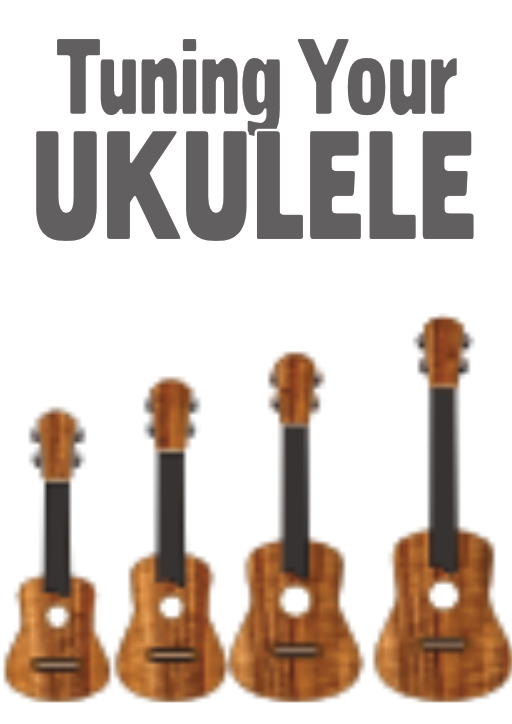
A `Ukulele is: Light Weight, Affordable and Portable | Four Strings and Four Fingers | Less Need for Strumming Accuracy | There is nott a lot expected from a ukulele player. The 'Ukulele (pronounced oo-koo-lele) comes in four standard sizes: Soprano (sometimes called Standard), Concert, Tenor and Baritone.