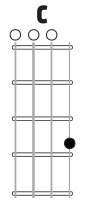

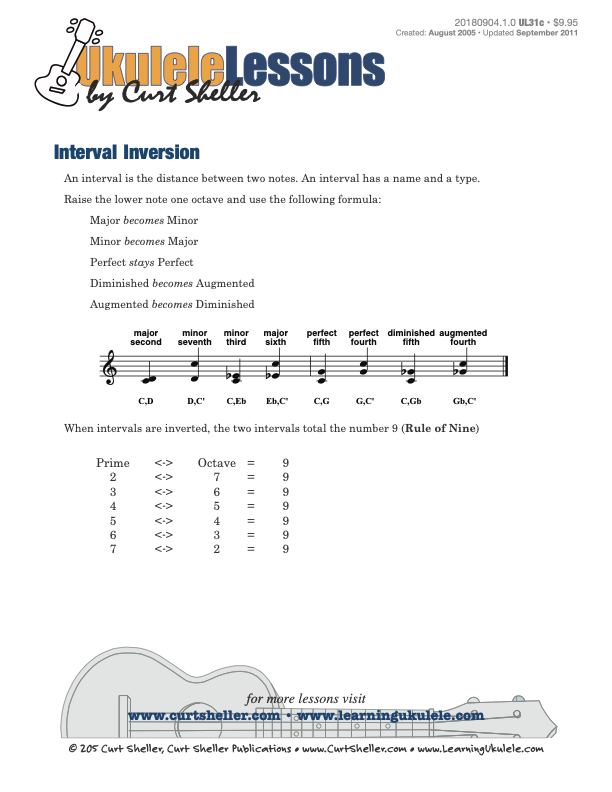
An interval is the distance between two notes. An interval has a name and a type. "Chromatic Intervals" are NOT taken from a major scale. They are derived from the diatonic intervals.
Subjects(s): Theory • Beginner • Intervals • Chromatic • Ear



An interval is the distance between two notes. An interval has a name and a type. Intervals can be played one note (melodic) or two notes (harmonic) at a time, ascending or descending.
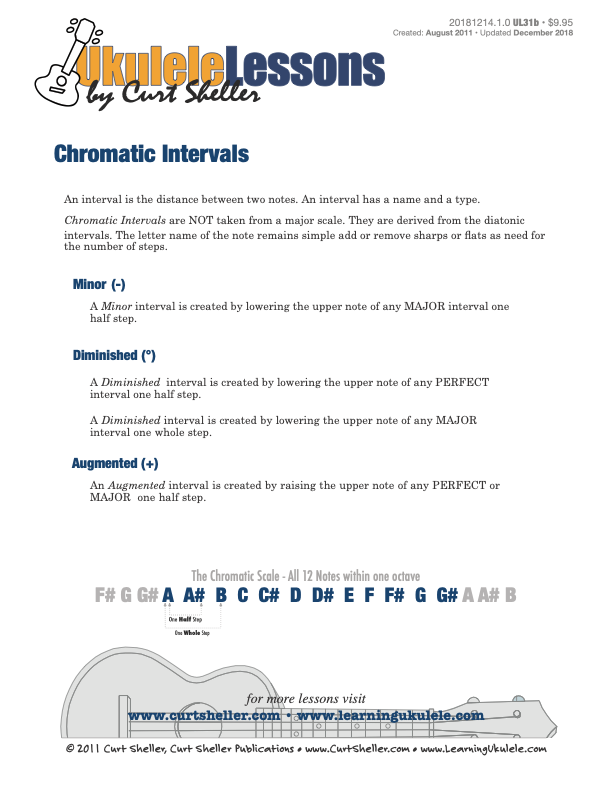
An interval is the distance between two notes. An interval has a name and a type.
Chromatic Intervals are NOT taken from a major scale. They are derived from the diatonic intervals. The letter name of the note remains simple add or remove sharps or flats as need for the number of steps.
Minor (-)
- A Minor interval is created by lowering the upper note of any MAJOR interval one half step.
Diminished (o)
- A Diminished interval is created by lowering the upper note of any PERFECT interval one half step.
- A Diminished interval is created by lowering the upper note of any MAJOR interval one whole step.
Augmented (+)
- A Augmented interval is created by lowering the upper note of any PERFECT or MAJOR interval one half step.
An interval is the distance between two notes. An interval has a name and a type. Intervals can be played one note (melodic) or two notes (harmonic) at a time, ascending or descending.
An interval is the distance between two notes. An interval has a name and a type.
Chromatic Intervals are NOT taken from a major scale. They are derived from the diatonic intervals. The letter name of the note remains simple add or remove sharps or flats as need for the number of steps.
Minor (-)
- A Minor interval is created by lowering the upper note of any MAJOR interval one half step.
Diminished (o)
- A Diminished interval is created by lowering the upper note of any PERFECT interval one half step.
- A Diminished interval is created by lowering the upper note of any MAJOR interval one whole step.
Augmented (+)
- A Augmented interval is created by lowering the upper note of any PERFECT or MAJOR interval one half step.


Related Lessons, Videos, Lesson Series, Songs, Books & Reference Charts, Resources & Assets, Workshops are below.
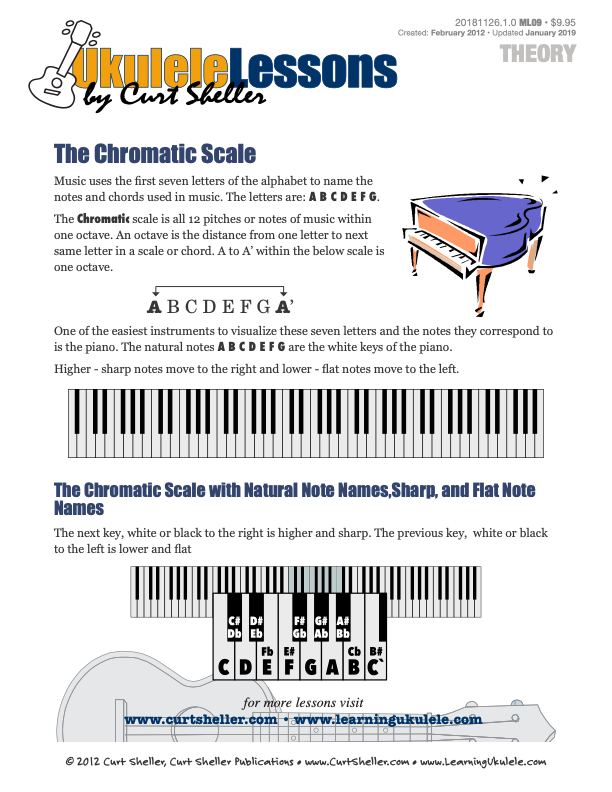
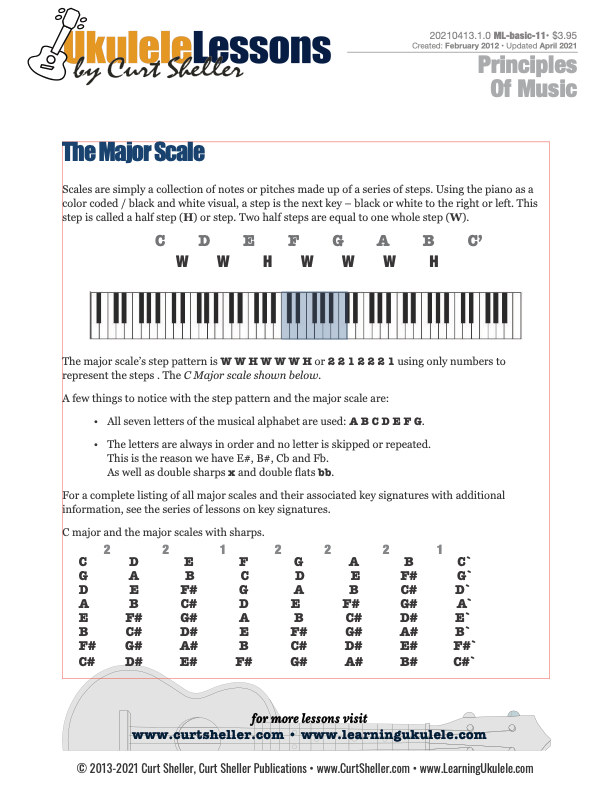
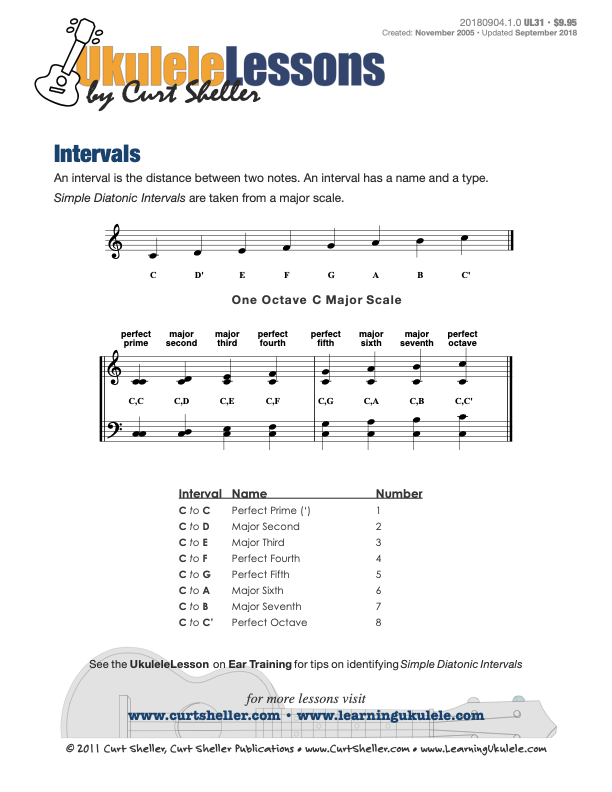
An interval is the distance between two notes. An interval has a name and a type. Intervals can be played one note (melodic) or two notes (harmonic) at a time, ascending or descending. Simple and Compound Intervals are taken from a major scale. Chromatic Intervals are NOT taken from a major scale. They are derived from the diatonic intervals.