
Learning Ukulele with Curt
It's My Party

Harmonic Analysis (RMA) Worksheet for the song: "It's My Party".

Publisher: N/A Authors(s): N/A
Category: Harmonic-Analysis Instrument: Any
Subjects(s): None
Premium Member Feature
Share the It's My Party on: Bluesky facebook twitter (X)
It's My Party

Harmonic Analysis (RMA) Worksheet for the song: It's My Party.

It's My Party
Released: April 5, 1963
It's My Party is a song by American singer-songwriter Lesley Gore from her debut studio album I'll Cry If I Want To (1963). It was released as the lead single from the album on April 5, 1963, by Mercury Records. The song was collectively written by Herb Wiener, John Gluck Jr., and Wally Gold, whilst production was helmed by Quincy Jones.
"It's My Party" is in the key of A major. The song's effectiveness is enhanced by several musical touches that producer Quincy Jones incorporated, including Latin-sounding rhythms, double tracked vocals, and effective horn parts. Allmusic critic Jason Ankeny wrote of the song, 'It's My Party' remains one of the most vivid evocations of adolescent heartbreak ever waxed – Quincy Jones produced the record, although you'd swear it was Aaron Spelling instead. (wikiwand)
The Lesley Gore hit starts on the hook — line three.
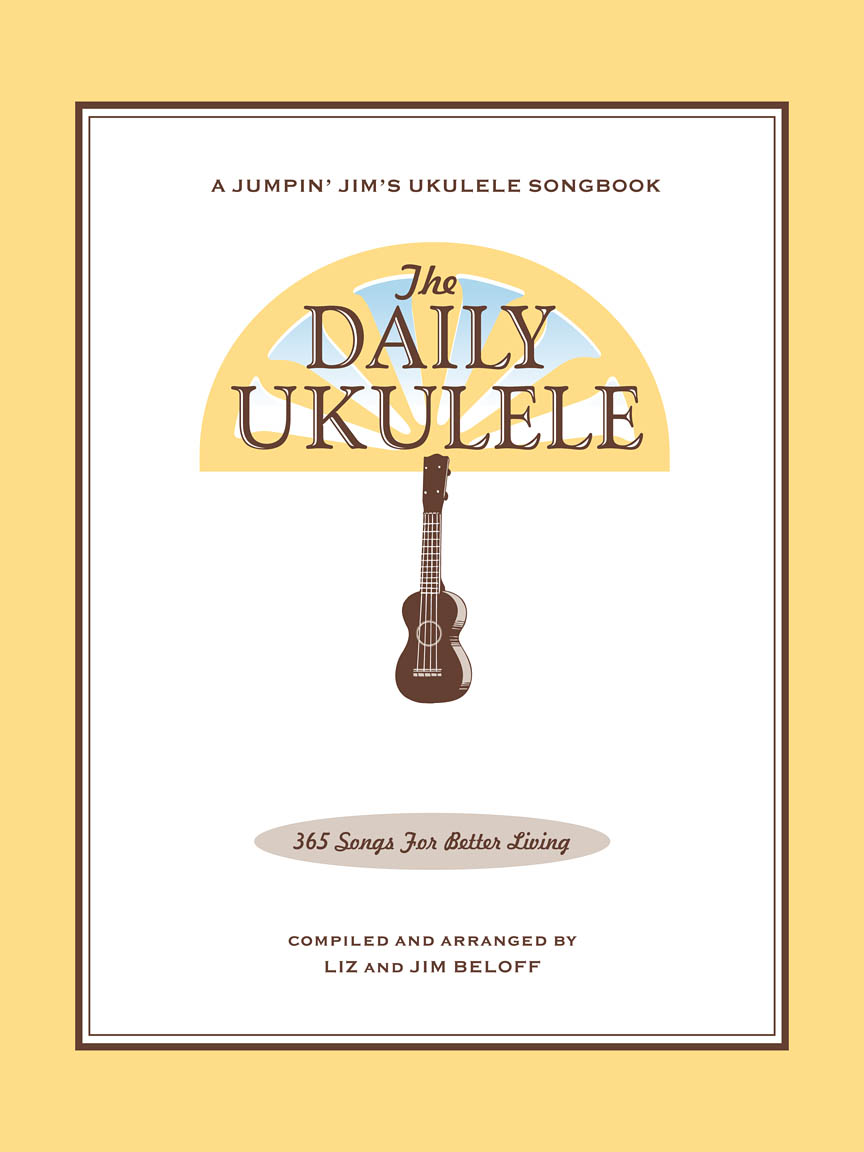
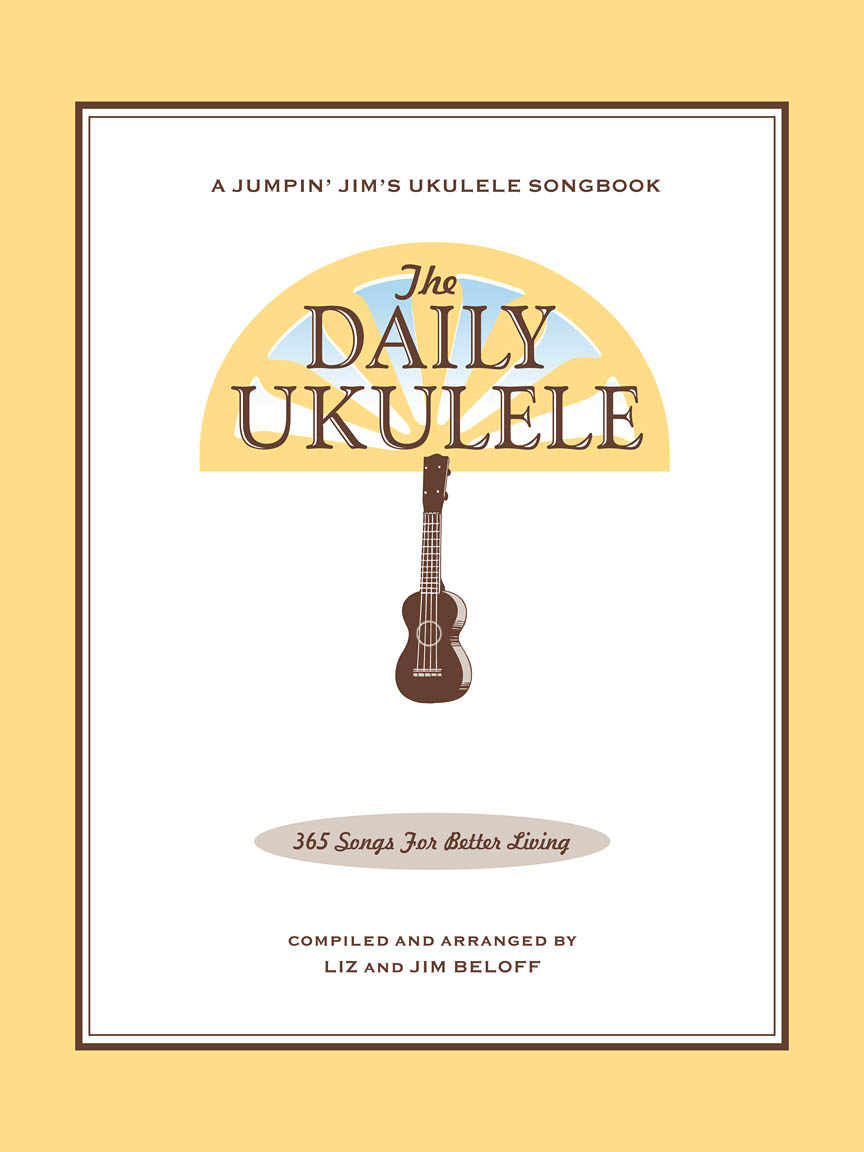
It's My Party is in the The Daily Ukulele 365 Songs for Better Living book.
Strum a different song every day with easy arrangements of 365 of your favorite songs in one big songbook! The Daily Ukulele features ukulele arrangements with melody, lyrics and uke chord grids and are in ukulele-friendly keys that are particularly suited for groups of one to one hundred to play and sing.
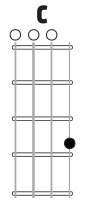
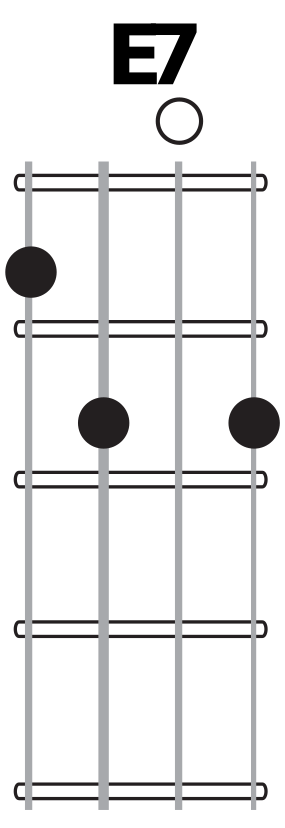
Ukulele Chords
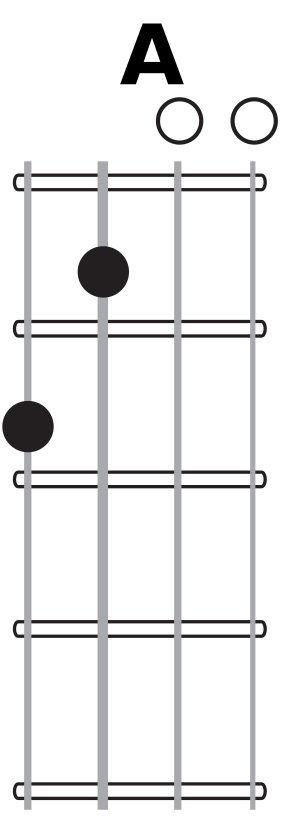
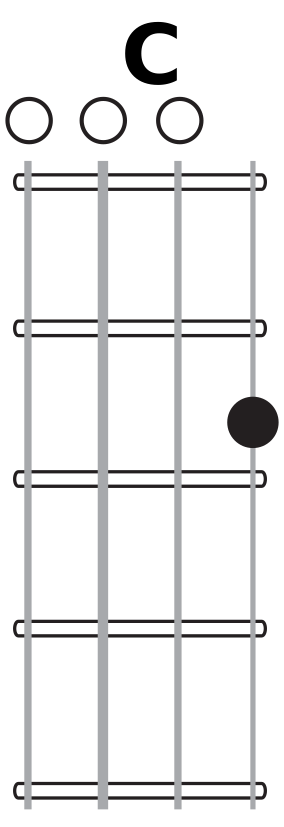
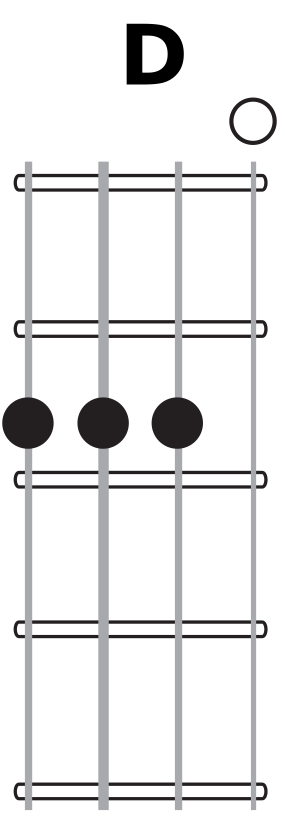
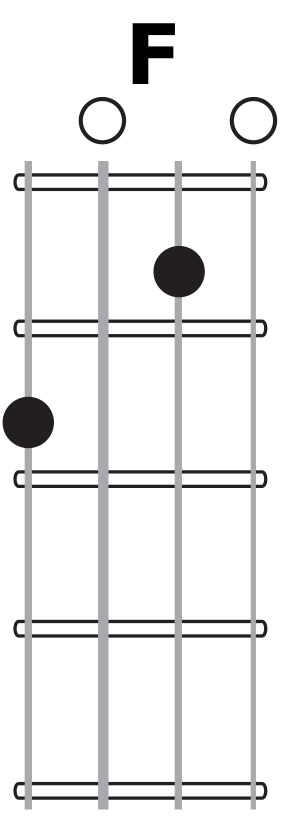
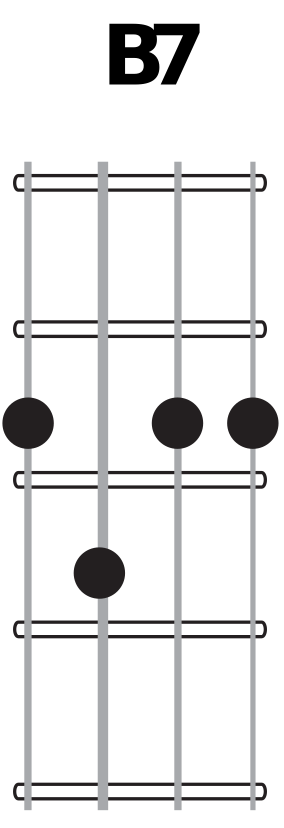
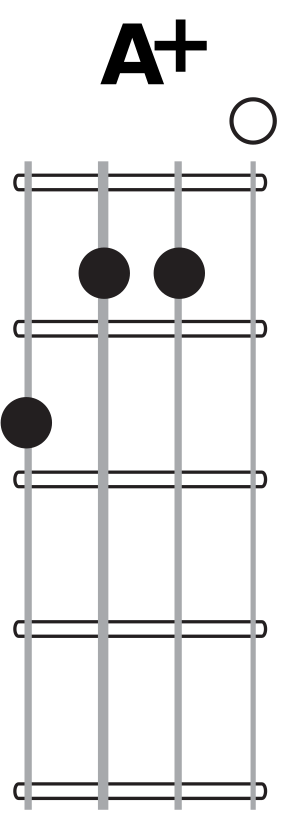
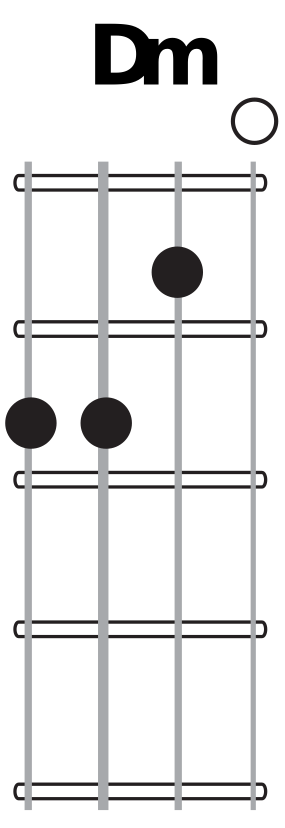
A C D F B7 E7 A+ Dm
Theses and many other chords are covered in the Learn A Chord A Day series of lessons.
C Tuning Chords
Starting Melody Note and 1st Interval
  • It's My Party is in 4/4, Common Time and the Key of A .
  • Start on P5 ↓ M3.
  • Intervals Legend: Root=note that begins a scale of the starting key; C is C, D is D, Am is A, Em is E, etc… m=minor; M=Major; P=Perfect; D=Diminished; A=Augmented. • is up/ascending; is down/descending;
    Harmonic Analysis (HA) Worksheet
    Visit the Harmonic Analysis for Scale and Chord Selection series of lessons for information on creating a your own Harmonic Analysis Worksheet
    A re-harmonization, in Red can be a simple, sticking pretty close to the original composer's intentions or complex and a whole new set of chord changes.
    A
    C
    A
    D
    I
    bIIImaj*
    I
    IV
    A Aeolian/Natural Minor
    F
    A
    B7
    E7
    bVImaj*
    I
    II7
    ( V of V)
    V
    A Aeolian/Natural Minor
    B Mixolydian
    The bVImaj & bVImaj — line 1 and 2 above, are modal interchange or borrowed chords from the parallel mode, A Aeolian. It is used to create a sense of tension and then resolve to a different chord, often the tonic ( I ) chord, which helps to establish a strong resolution. It is commonly used in various styles of music, including pop, rock, and jazz.
    A
    A+
    D
    Dm
    I
    I+
    IV
    IVm
    A Whole Tone
    D Dorian
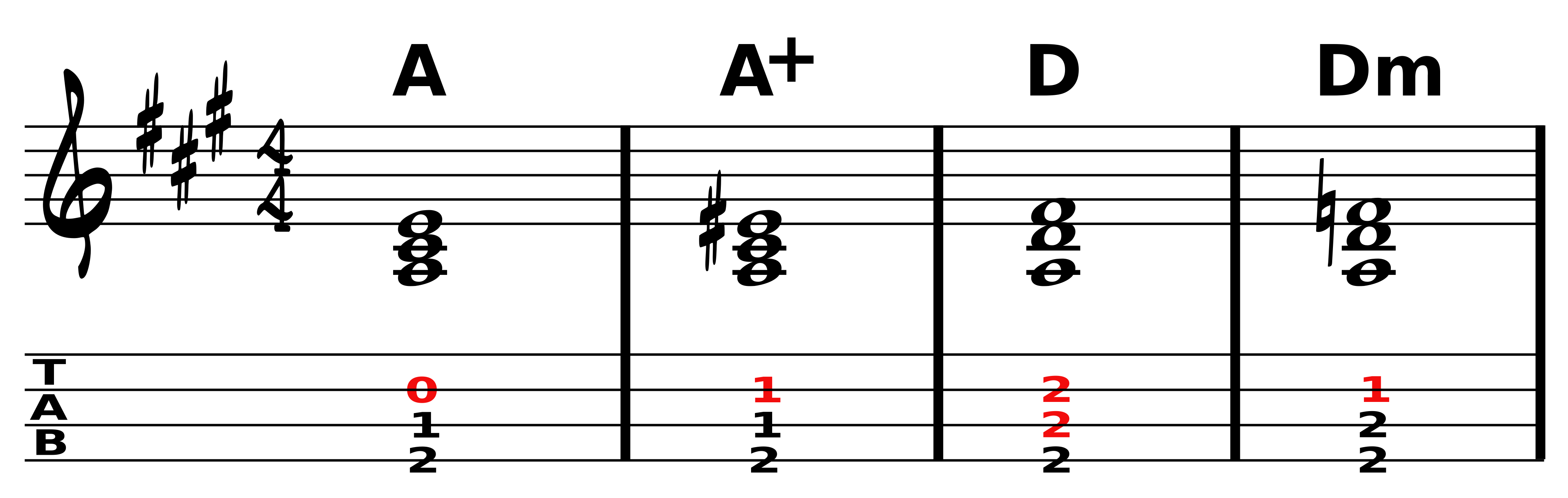
    The harmony created with in the A A+ and D Dm is a very cool contrast to the melody. Checkout the voicing below to really take advantage of the movement.
    ULHA-137-Cliche-Line

    Note the movement (red TAB notes). The top note of the chord moves E F F♯ F♮

    1.2.

    3.
    A
    E7
    A
    E7 :||
    A :||
    I
    V
    I
    V
    I
    The Harmonic Analysis (HA)
    A Harmonic Analysis (RMA/HA) and its worksheet are intended to show the function of the chords, the harmonic principles used, the keys and tonalities the song explores. And, can be used for scale selections and chord and scale substitutions.
    NOTE: A Harmonic Analysis Worksheet is NOT intended to be a lead leadsheet. Minimal roadmap information such as repeats, fine, D.S., D.C., and codas has been used in preparing the worksheets to somewhat mirror the leadsheet in the Daily Ukulele book.
    Sections, Verse, Chorus, 1st, 2nd Ending, turnbacks …
    The worksheets will show 1st, 2nd Ending, turnbacks, etc. as in indicated the Yellow Book. You should start to recognize that 1st endings typically always return to a previous verse or an section. With a 2nd ending, a transition to a different part of the song, a or chorus. Harmonic Principles are used for these repeats and transitions.
    If turnback chords are not indicated for the these 1st and 2nd endings in the original Yellow Book leadsheet recommended chord(s) will indicated in parentheses or as an alternate harmony in Red . Typically the last measures or turnbacks will be a chord that resolves to and harmonically leads you to the next section or turning you back to the same section. Typically a V or direct substitution of that next chord.
    Reference Key
    This is the key of the source leadsheet.
    • It's My Party is in 4/4, Common Time and the Key of A .
    Harmonic Principles Used:
    These are the harmonic principles used in It's My Party.
    Nashville Number System (NNS)
    Nashville Numbering System always uses four bars/measures per line, no bar lines, and default is each number of the number of beats per bar/measure based on the time signature. If multiple chords in same bar then they are underlined. It can be as simple as convert the Roman Numerals above to Arabic number.
    At its simplest you simply replace the roman numbers with Arabic numbers. e.g., I becomes 1 , II becomes 2 , etc. The only exception is the bVII7 chord becomes 7 as this borrowed chord from the Mixolydian tonality is so common and the VII (half-diminished seventh) in a major chord is so rare (actually never). And, you could go as far as saying all the modes are numbered: I II II IV V VI VII — just as in the major scale. So calling it a 7 is not that far out.
    Check the definitive book Nashville Number System
    Scale Selection
    Once a Harmonic Analysis has been completed, scale selections can be made. These scale selections can be either vertical or horizontal choices. And, really, only needed if you are going to take a solo or embellish the melody with added notes.
    Scale Abbreviation Legend
    Traditional Scales: Maj: Major (Ionian), Dim: Diminished, WT: Whole Tone, Har Min: Harmonic Minor,
    Contemporary Scales: Minor Pent: Minor Pentatonic, Pent: Major Pentatonic, Blues,
    Scale/Mode Names: Ion: Ionian (Major), Dor: Dorian (Minor), Phrygian: Phrygian, Lyd: Lydian, Mix: Mixolydian (Dominant), Aeol: Aeolian (Natural Minor), Loc: Locrian
    RMA book cover QS1UKES book cover
    Performance Notes
    Any performance notes will show here.
    Links & Resources
    Sign-IN, for free — to View, Un-Blur Any Additional Content for This Lesson—Can't give it ALL away.
    art by Curt Sheller
    End of Lesson - Thanks, Hope You Enjoyed It!

    Related Lessons, Videos, Lesson Series, Songs, Books & Reference Charts, Resources & Assets, Workshops are below.
    Related Lessons
    Related Lessons for It's My Party.
    ULHA-YB-index
    The Daily Ukulele a.k.a., The "Yellow" Book Song Index

    Index of the songs in The Daily Ukulele book. 365 Songs for a Better Living.

    Related Lesson Series
    Related Lessons Series for It's My Party.
    The Daily Ukulele a.k.a., The "Yellow" Book

    Individual Harmonic Analysis worksheets for the songs of The Daily Ukulele book.

    Related Books & Charts
    Related Books for It's My Party.
    RMA1
    Harmonic Analysis for Scale Selection and Chord Substitution

    Harmonic Analysis is the understanding of the functional sequence of chords. It is the process used to analyze the harmonic structure of a progression, song or composition. This analysis is then used to make scale selections for improvisation and chord substitution.
    HL00240356
    The Daily Ukulele

    Strum a different song every day with easy arrangements of 365 of your favorite songs in one big songbook! The Daily Ukulele features ukulele arrangements with melody, lyrics and uke chord grids and are in ukulele-friendly keys that are particularly suited for groups of one to one hundred to play and sing.


    A Selection of Books & Reference Charts that are recommended for creating a solid foundation with your chosen instrument and music in general.
    These are Books & Reference Charts that apply to a majority of the lessons on LearningUkulele.com–Learning Ukulele with Curt .
    Learning the Ukulele Fingerboard – C Tuning
    Finally, learn the names of the notes of the ukulele fingerboard in C tuning .
    Six Secrets of the Ukulele Fingering
    Learn the six fingering principles to navigating the ukulele fingerboard. Fingering is one of the most universal topics. Book: Six Secrets of the Ukulele Fingering It there in one thing that give a ROI (corporate speak for return in your investment)—it is this— learning the f*cking notes of your OWN instrument. Sorry for the tough talks—but it is sooooo true!
    Harmonic Analysis for Scale Selection and Chord Substitution
    Harmonic Analysis is the understanding of the functional sequence of chords. It is the process used to analyze the harmonic structure of a progression, song or composition. Book: Harmonic Analysis for Scale Selection and Chord Substitution
    Ukulele – Reading Music Series – Primer

    Learn to read single note melodies in the first/open position is a lot easier than you might think. Book: Ukulele – Reading Music Series – Primer

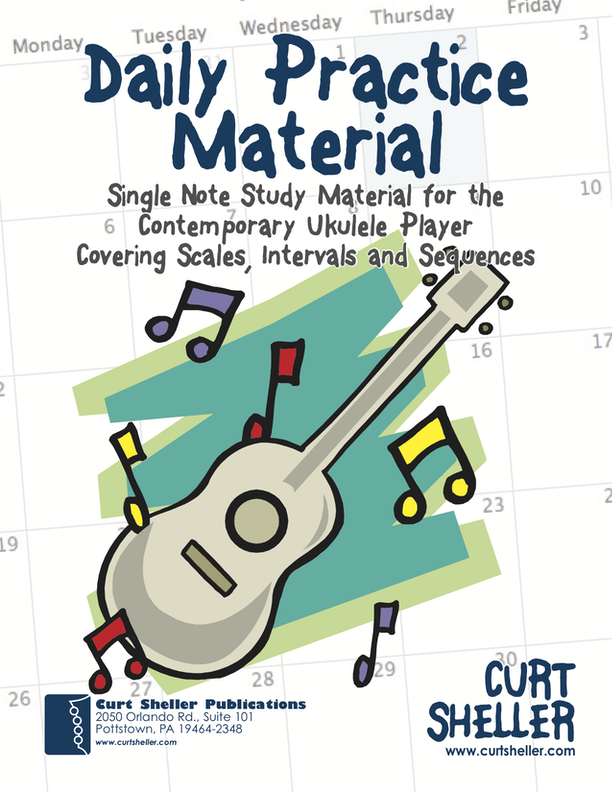
    Daily Practice Material for the Contemporary Ukulele

    An organized collection of daily practice and reference material for the contemporary ukulele player for developing the vocabulary and knowledge necessary for single note playing. Book: Daily Practice Material for the Contemporary Ukulele

    Checkout the Books & Reference Charts for additional Handy, Dandy Reference Charts.

    Reference Charts
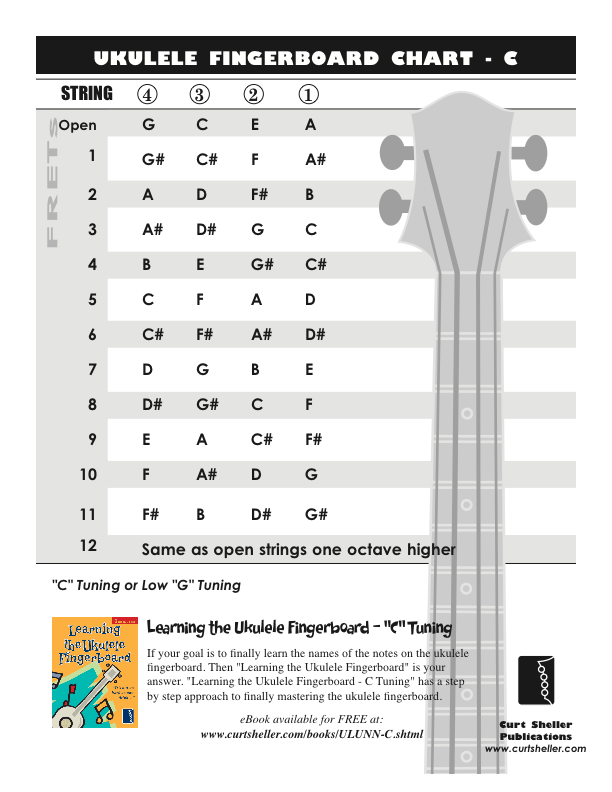
    Ukulele Fingerboard Chart for C Tuning, Low or High G - G C E A

    Ukulele Fingerboard Chart for C Tuning, Low or High G – G C E A

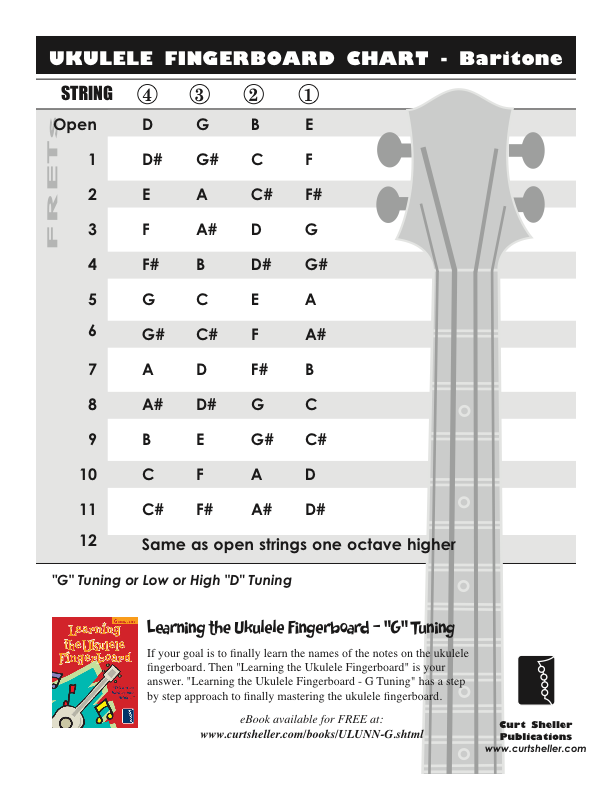
    Ukulele Fingerboard Chart for G Tuning, Low or High A – D G B E

    Ukulele Fingerboard Chart for G Tuning, Low or High A – D G B E

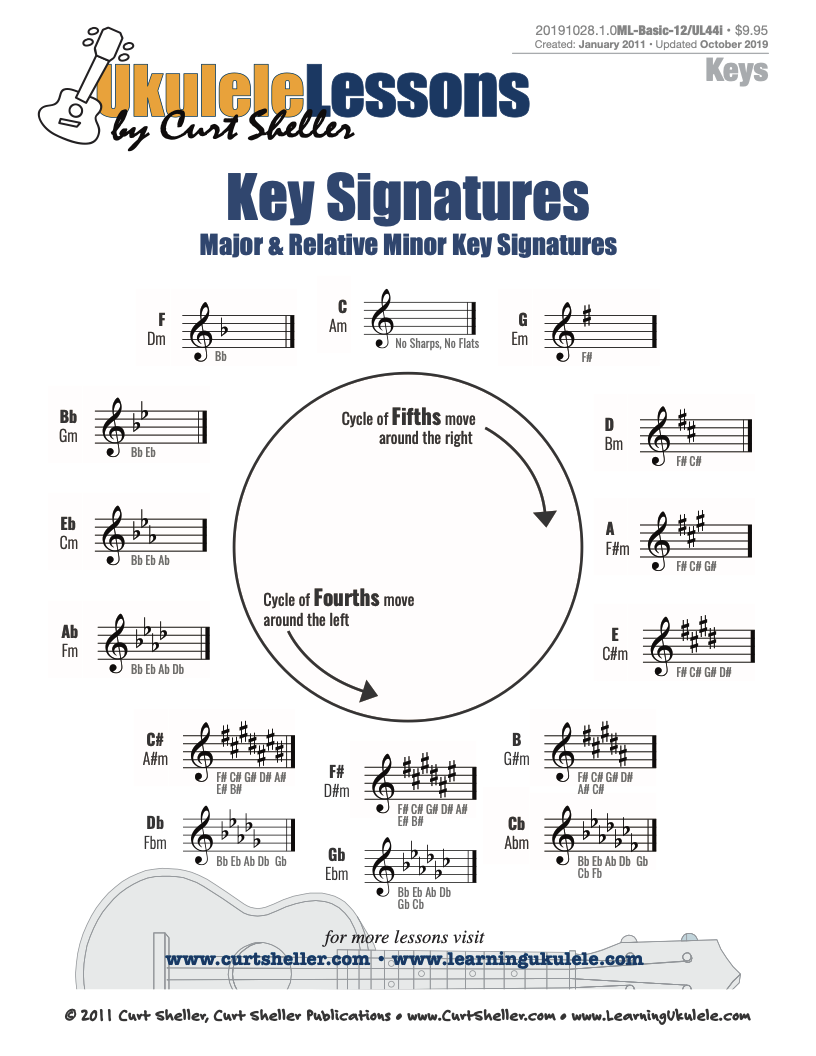
    Circle of Fourths and Fifths – ANSI A & A4 sizes

    A handy reference chart of all 15 major and relative minor key signatures. US Letter 8.5 x 11 sized (ANSI-A) , A4

    Checkout the Books & Reference Charts for additional Handy, Dandy Reference Charts.