Learning Ukulele with Curt

All 971 Lessons

With over 900+ lessons on LearningUkulele.com & Learning Ukulele with Curt, it can be a bit of an overwhelming task to navigate and find what you're looking for. The LessonSERIES section is a good place to start, as it presents a structured approach and curated list of lessons on a specific area of study.

Louis-Martin/Curt-2020-FFUF

29 August 2026

Access:

Showing 281–300 of 971 results

UL42-7e

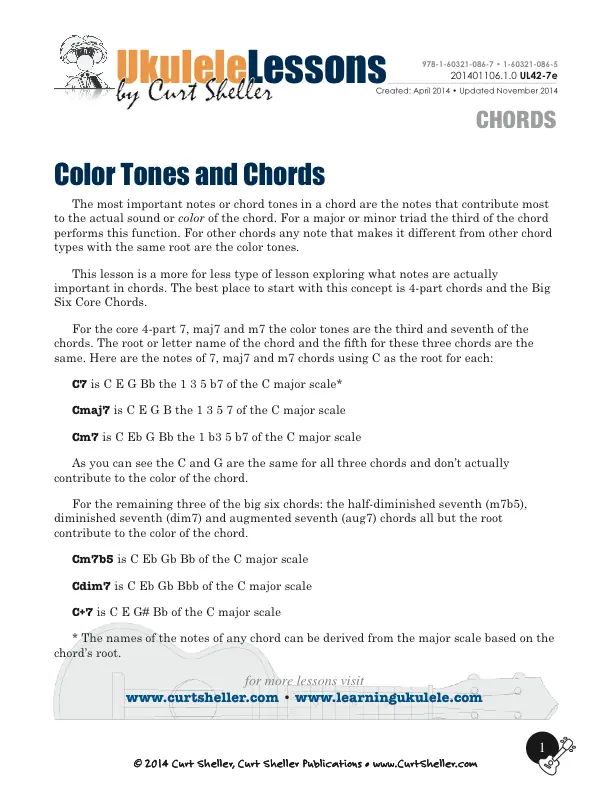
Color Tones and Chords

The most important notes or chord tones in a chord are the notes that contribute most to the actual sound or “color” of the chord. For a major or minor triad, the third of the chord performs this function. For other chords, any note that makes it different from other chord types with the same root are the color tones.

This lesson is a more for less type of lesson exploring what notes are actually important in chords. The best place to start with this concept is 4-part chords and the Big Six Core Chords.
ULHA-YB-43b

Come And Go With Me

Harmonic Analysis (RMA) Worksheet for the song: "Come And Go With Me".

UL101

Common `Ukulele Tunings

Any tuning is possible on a ukulele, as long as the ukulele’s construction supports it and a string is available.

UL135uc

Common Chord Progression for Ukulele, C Major

In Western Harmony there is no stronger chord resolution in a major or minor key than then the V chord to the I chord, the dominant to tonic. In the key of C major this is G or G7 to C.

UL59i

Common Chord Progressions

Learning the similarities between chord progressions and songs helps you remember a lot of songs. There's a lot more in common between songs than one might think. This series of lessons explores common chord progressions.

UL36a

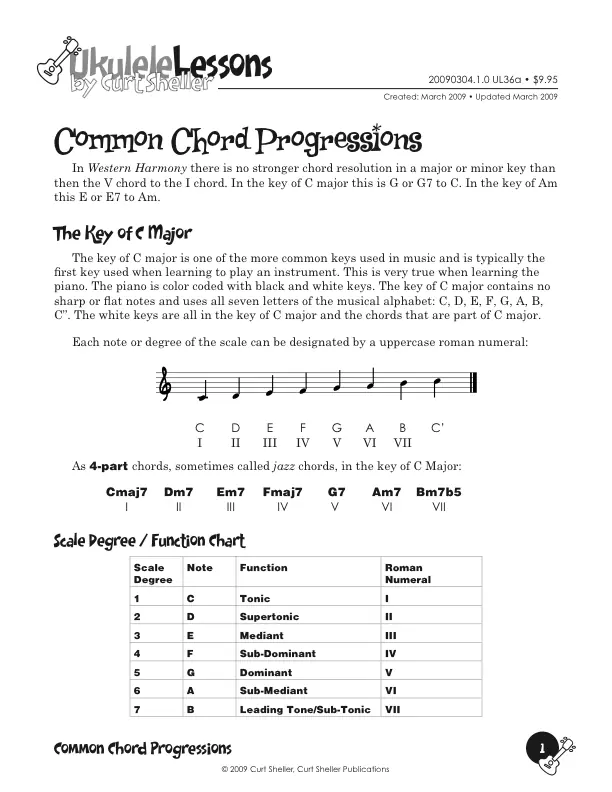
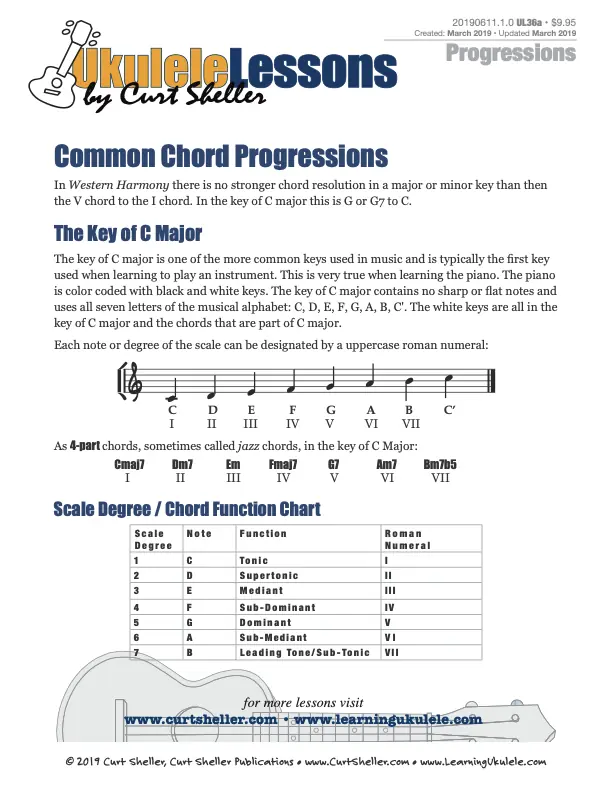
Common Chord Progressions

In Western Harmony there is no stronger chord resolution in a major or minor key than then the V chord to the I chord. In the key of C major this is G or G7 to C.

UL47c

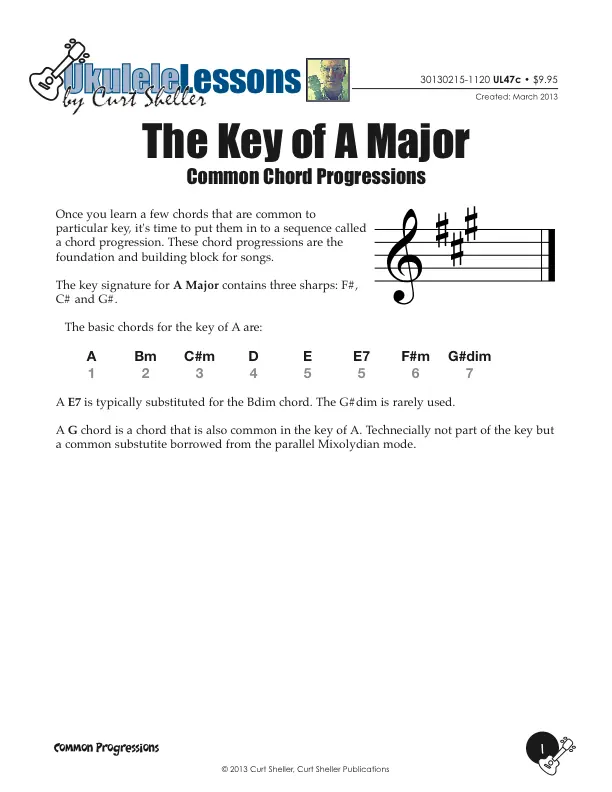
Common Chord Progressions for the Key of A

Common chord progressions for the key of A. Using the primary and seconday chords for the key explore these common chord progressions for the key of A.

UL55c

Common Chord Progressions for the Key of Ab

Common chord progressions for the key of Ab. Using the primary and seconday chords for the key explore these common chord progressions for the key of Ab.

UL49c

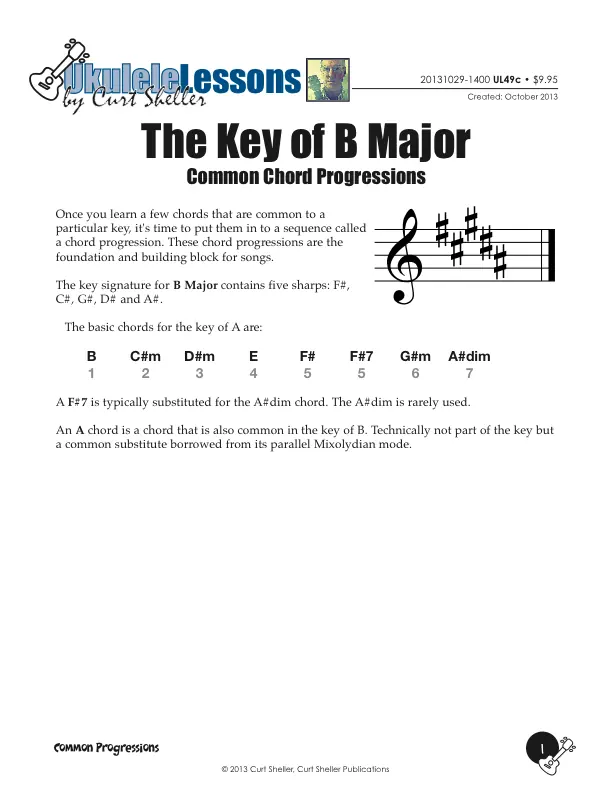
Common Chord Progressions for the Key of B

Common chord progressions for the key of B. Using the primary and seconday chords for the key explore these common chord progressions for the key of B.

UL53c

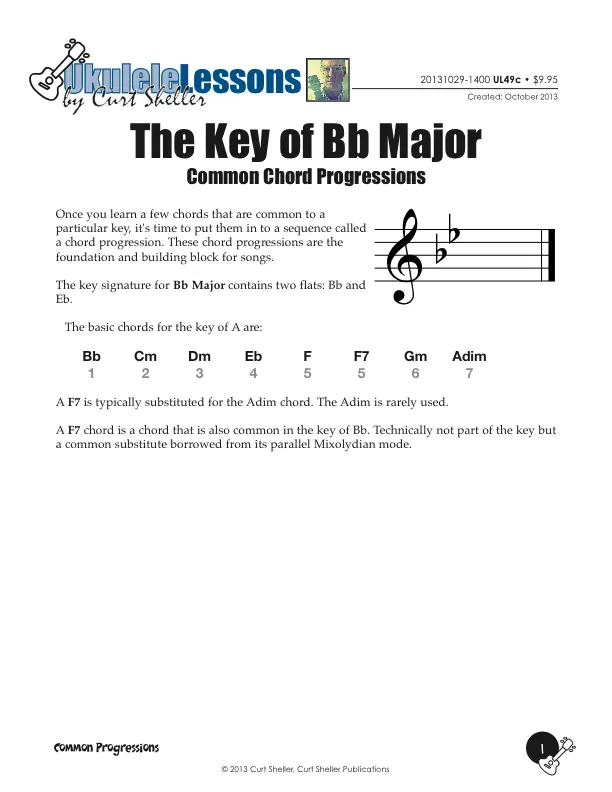
Common Chord Progressions for the Key of Bb

Common chord progressions for the key of Bb. Using the primary and seconday chords for the key explore these common chord progressions for the key of Bb.

UL44c

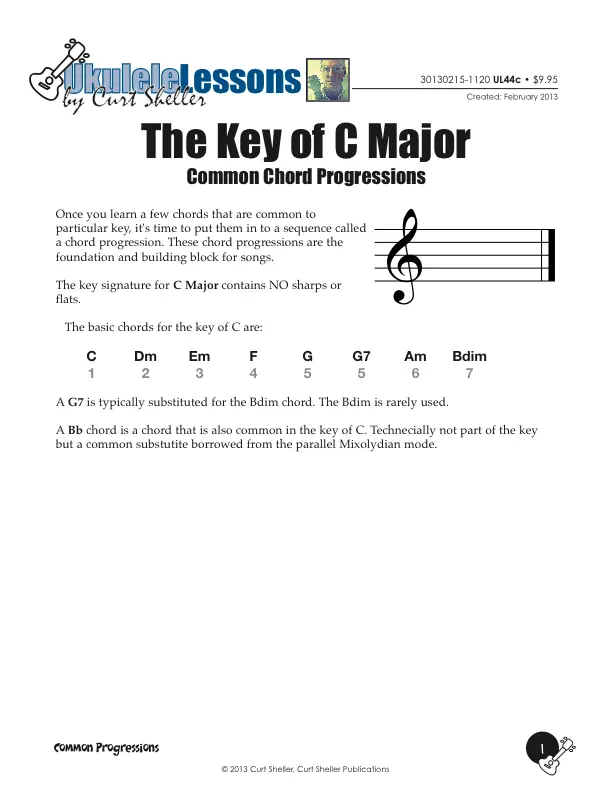
Common Chord Progressions for the Key of C Major

Sometimes called the “learning key,” the key of C major is one of the easiest keys to memorize and begin using. C major (often just C or key of C) is a musical major scale based on C, with pitches C D E F G A B C. Its key signature has no flats or sharps. Its relative minor is A minor: A B C D E F G A B r, and its parallel minor is C minor: C D E F G Ab Bb C D Eb.


UL51c

Common Chord Progressions for the Key of C#

Common chord progressions for the key of C#. Using the primary and seconday chords for the key explore these common chord progressions for the key of C#.

UL58c

Common Chord Progressions for the Key of Cb

Using the primary and secondary chords for the key explore these common chord progressions for the key of Cb. The key of Cb is a pretty rare key but actually an easy key to relate to the key of C. The key of C has ALL natural notes and the key of Cb has all flat notes for the scale: Cb Db Eb Fb Gb Ab Bb Cb`. The names of the notes are the easy part, the chords are typically played as movable form chords with only the Fb ( the enharmonic equivalent name is E ) available as an open string in the C tuning.

UL46c

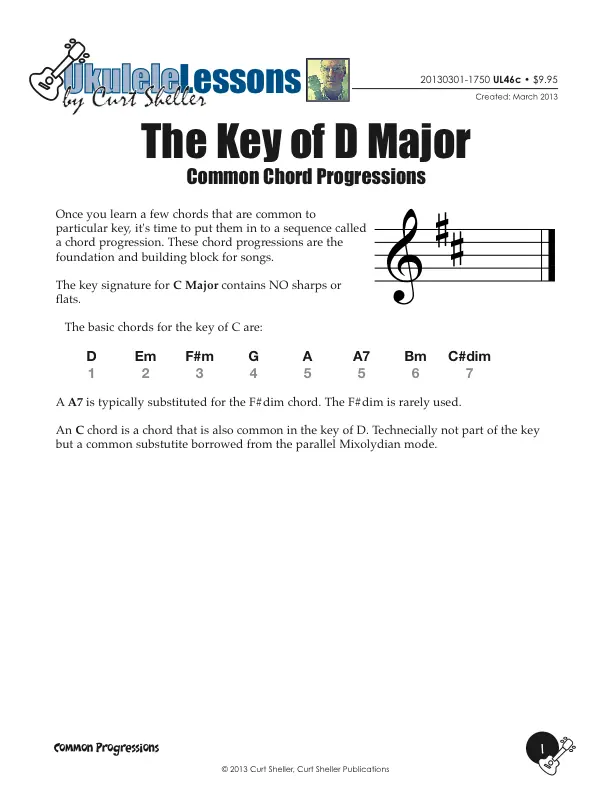
Common Chord Progressions for the Key of D

Common chord progressions for the key of D. Using the primary and secondary chords for the key explore these common chord progressions for the key of D. D is one of the common keys that include C, G, *D, A, and E.

UL56c

Common Chord Progressions for the Key of Db

Common chord progressions for the key of Db. Using the primary and seconday chords for the key explore these common chord progressions for the key of Db.

UL48c

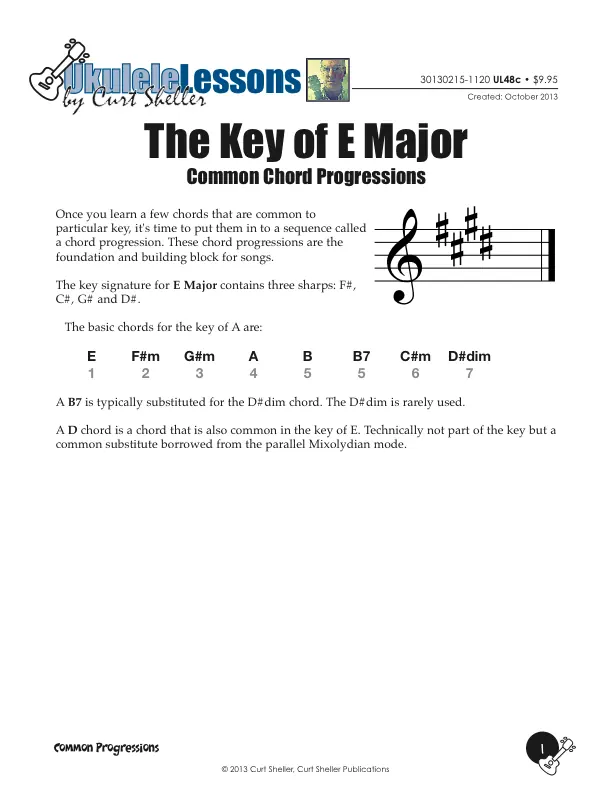
Common Chord Progressions for the Key of E

Common chord progressions for the key of E. Using the primary and seconday chords for the key explore these common chord progressions for the key of E.

UL54c

Common Chord Progressions for the Key of Eb

Common chord progressions for the key of Eb. Using the primary and seconday chords for the key explore these common chord progressions for the key of Eb.

UL52c

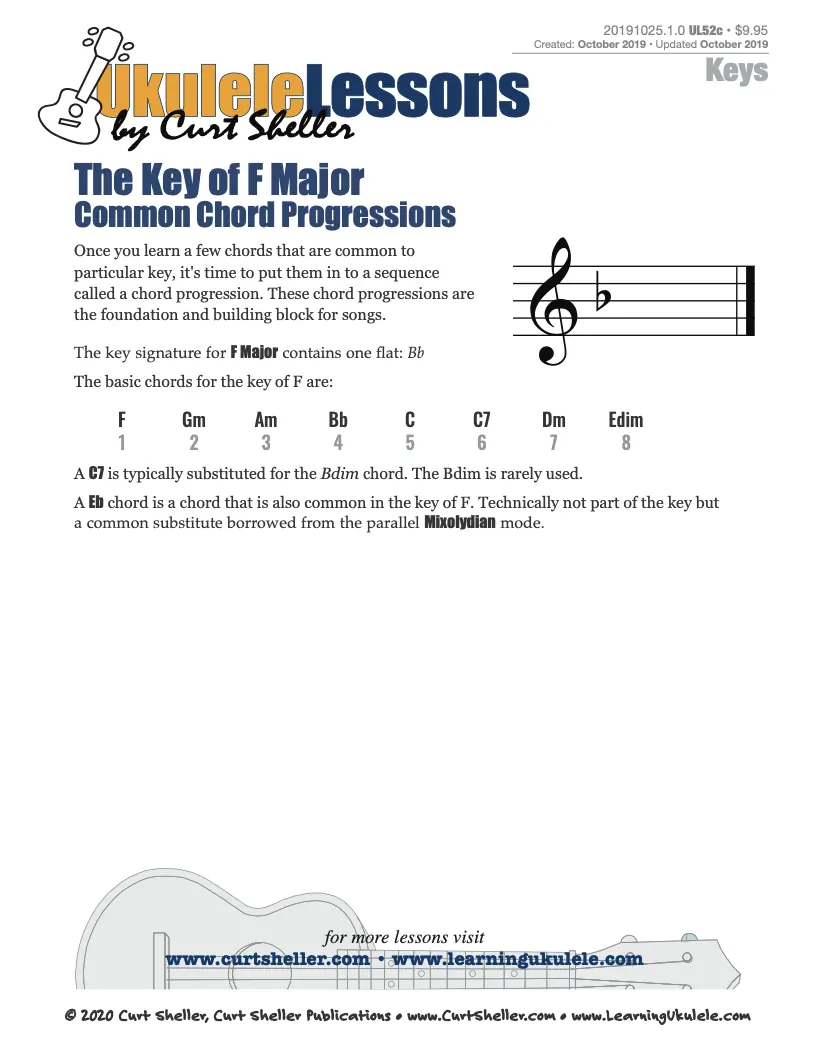
Common Chord Progressions for the Key of F

Common chord progressions for the key of F. Using the primary and seconday chords for the key explore these common chord progressions for the key of F.

UL50c

Common Chord Progressions for the Key of F#

Common chord progressions for the key of F#. Using the primary and seconday chords for the key explore these common chord progressions for the key of F#.

UL45c

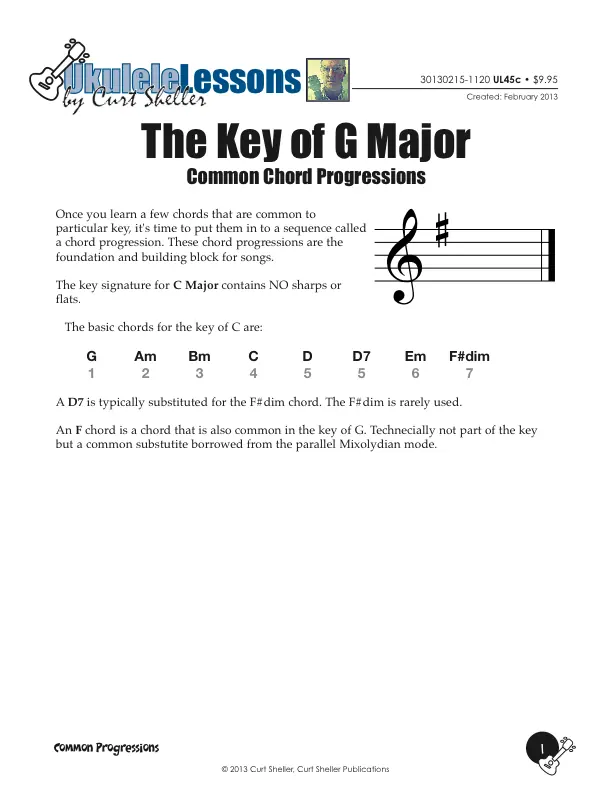
Common Chord Progressions for the Key of G

Common chord progressions for the key of G. Using the primary and seconday chords for the key explore these common chord progressions for the key of G.

Non-Searchable, NO-frills, Long List of All Available Lessons