
Learning Ukulele with Curt
All 971 Lessons
With over 900+ lessons on LearningUkulele.com & Learning Ukulele with Curt, it can be a bit of an overwhelming task to navigate and find what you're looking for. The LessonSERIES section is a good place to start, as it presents a structured approach and curated list of lessons on a specific area of study.

29 August 2026
Showing 621–640 of 971 results
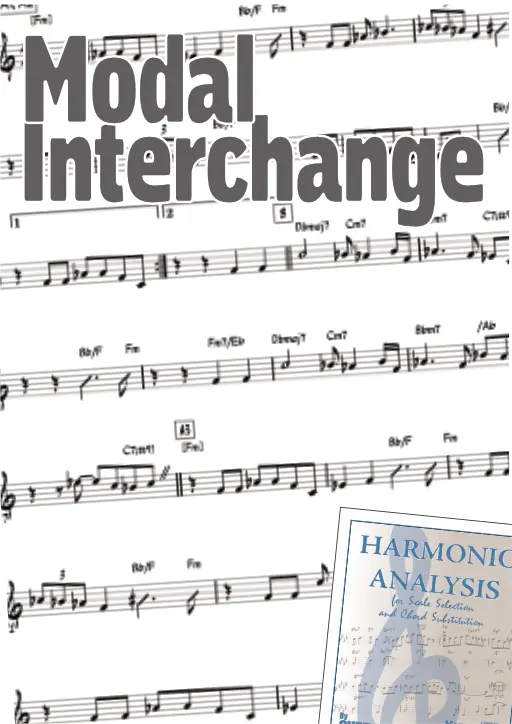
Modal Interchange
"Modal Interchange" is temporarily borrowing chords from a parallel tonality or mode that shares the same root. These borrowed chords originate from the major or minor parallel modes, including their respective harmonic and melodic minor, as well as symmetrical scales sharing the same root. You can borrow from any parallel scale or mode.

Modes of the Melodic Minor Scale
A great deal of modern jazz harmony arises from the modes of the ascending form of the melodic minor scale, also known as the Jazz Melodic Minor Scale. This scale is essentially a diatonic major scale with a lowered third, for example C–D–E♭–F–G–A–B–C. As with any other scale, the modes are derived from playing the scale from different root notes, causing a series of jazz scales to emerge.

Modular Phonetic Rhythm
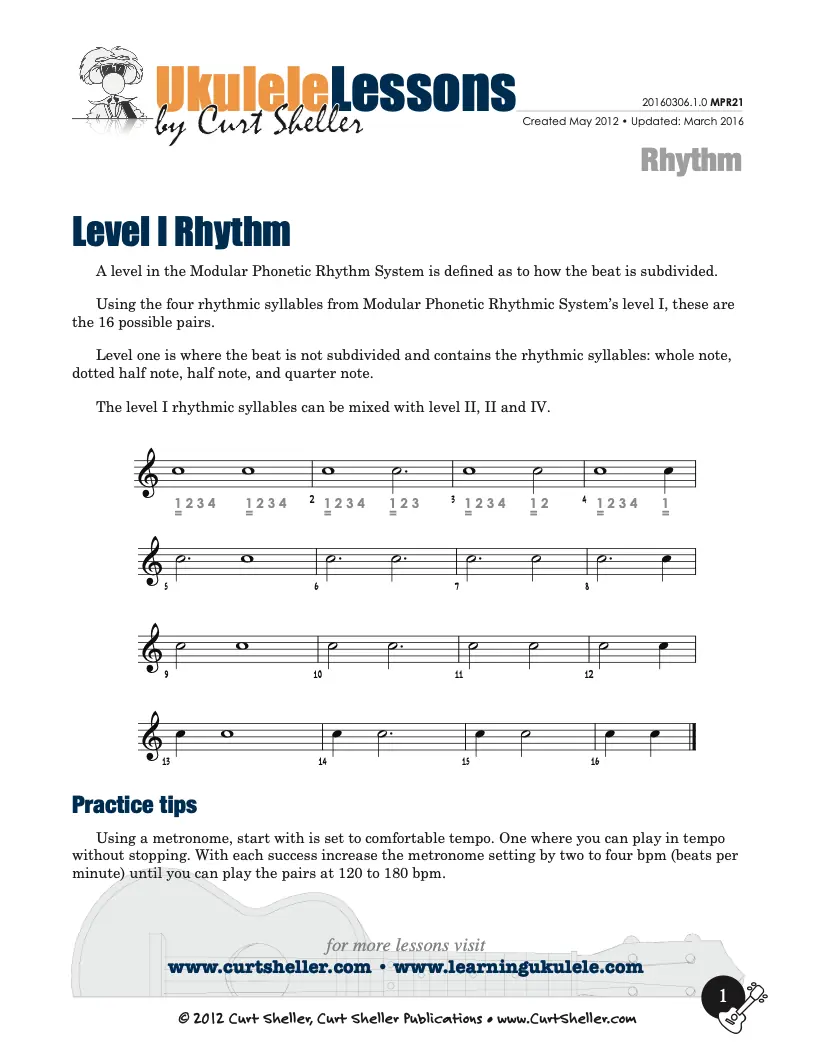
"Modular Phonetic Rhythm" by Chuck Anderson represents a significant advance in the teaching and application of rhythm. Eliminating many inefficient aspects of rhythm education, Modular Phonetic Rhythm streamlines the traditional educational approach, resulting in a reflexive reaction to rhythm. This approach is applicable to all ages and to all styles of music.






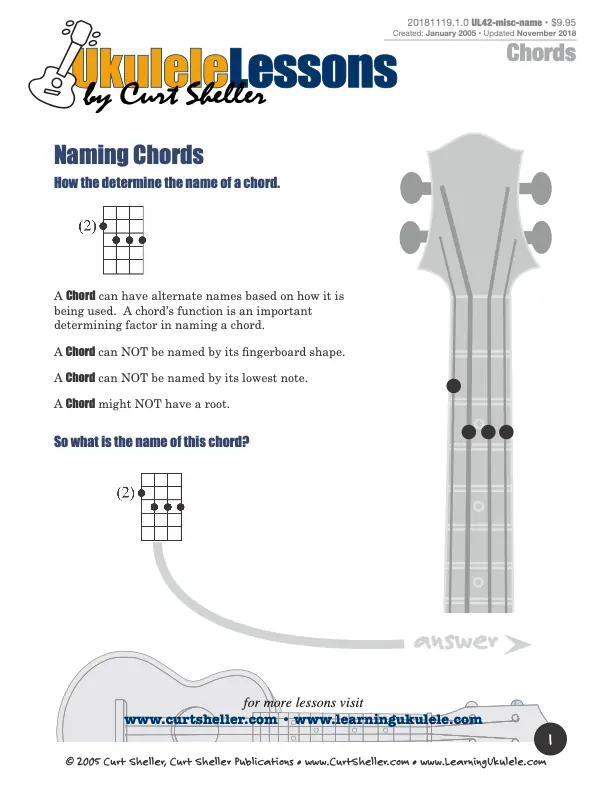
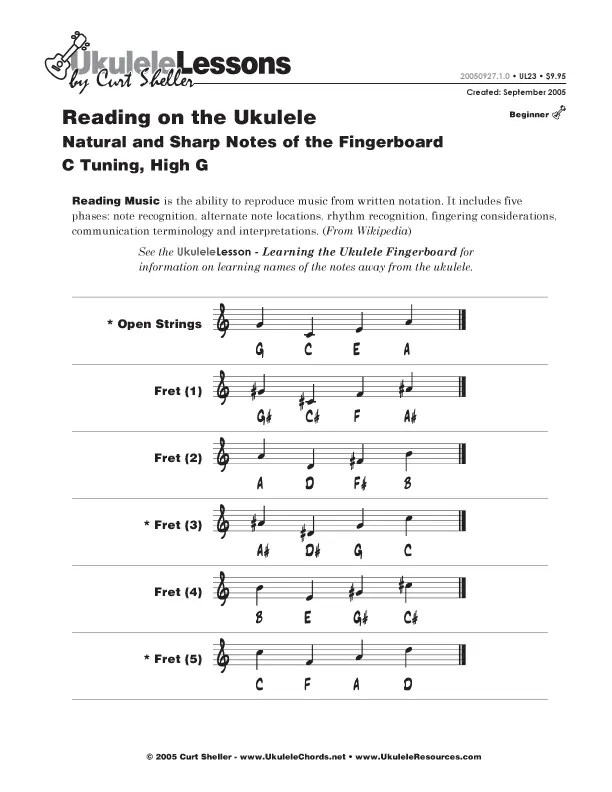
Natural, Sharp and Flat Notes of the `Ukulele Fingerboard - D Tuning
The D Tuning comes in two versions where string four is either tuned to the "A", a major second below string one or low "A" where string fours is a perfect fifth below string three. The D tuning with a low A is the same as the thin four strings of a standard tuned guitar with a capo at fret (7).
Natural, Sharp and Flat Notes of the `Ukulele Fingerboard - G Tuning
The G Tuning comes in two versions where string four is either tuned to the "D", a major second below string one or low "D" where string four is a perfect fifth below string three. The G tuning with a low D is the same as the thin four strings of a standard tuned guitar.