
Published:
Updated:
Learning Ukulele with Curt
Any Song Will Do
This is not really a song, but simply saying that for the purposes of a lot of the lessons and lesson series on this site ANY song will do for exploring the lesson's material and concepts presented in the lesson.
Author(s): Curt Sheller Publisher: Code: ANYSONG
Main Category: Jazz Main Instrument: Any

2026-08-19

If you're a registered site member and have the correct permissions you can view ALL the pages of this PDF or Samples pages at a larger size using the LearningUkulele.com Online PDF Viewer.
Download PDFThis Download IS part of your Gold Site Access and a FREE download. Thanks for supporting the site. – Curt
Each PDF file is a professionally prepared, formatted, high resolution file that prints out great. You'll need a PDF Reader or application capable of viewing PDF files to view the PDF.
NOTE: Download the current PDF file for the latest, complete, and most up-to-date version. As well as additional information not presented on-line.
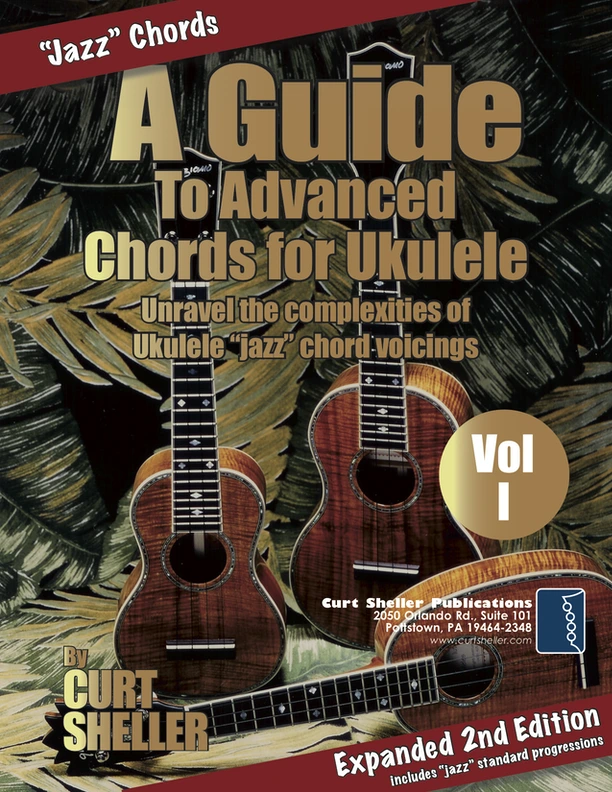
A Guide to Advanced Ukulele Chords - Volume I
Beyond learning basic Ukulele chords, most players struggle with advanced chords. Commonly called "jazz" chords, these more sophisticated voicings find a wide use in all forms of music. A Guide to Advanced Chords for Ukulele - presents a highly organized and efficient approach to the mysterious subject of advanced chords. Chord dictionaries are not the answer.


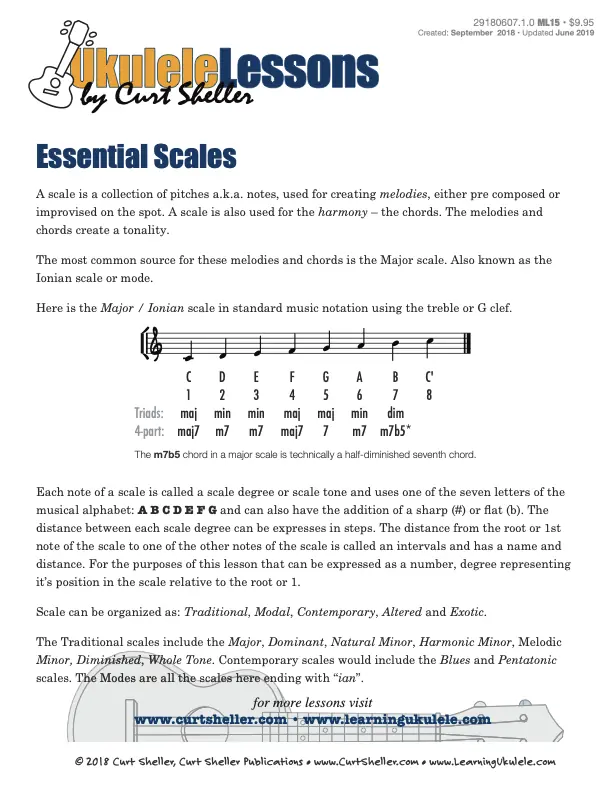
Essential Scales
A scale is a collection of pitches a.k.a. notes, used for creating melodies, either pre composed or improvised on the spot. A scale is also used for the harmony – the chords. The melodies and chords create a tonality. The most common source for these melodies and chords is the Major scale. Also known as the Ionian scale or mode.
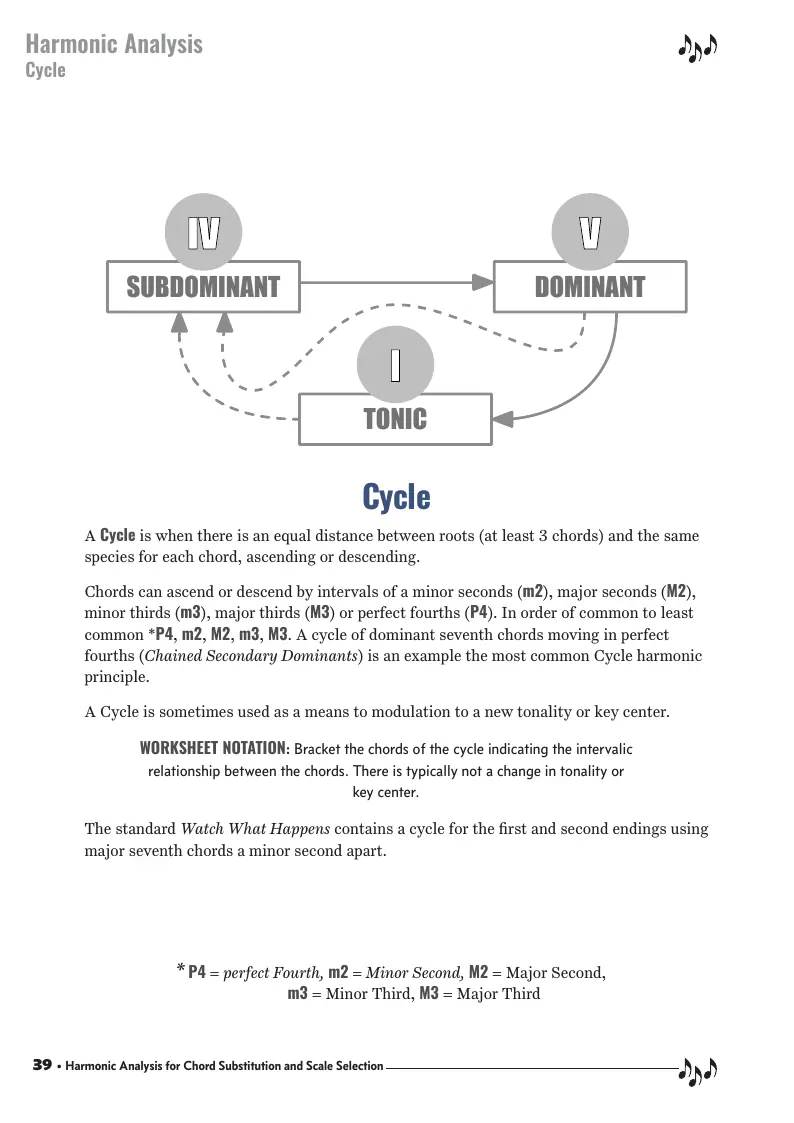
Harmonic Analysis - Cycles
Harmonic Analysis is the understanding of the functional sequence of chords. It is the process used to analyze the harmonic structure of a progression, song, or composition. This analysis is then used to make scale selections for improvisation and chord substitution. This lesson covers the Cycles harmonic principle.
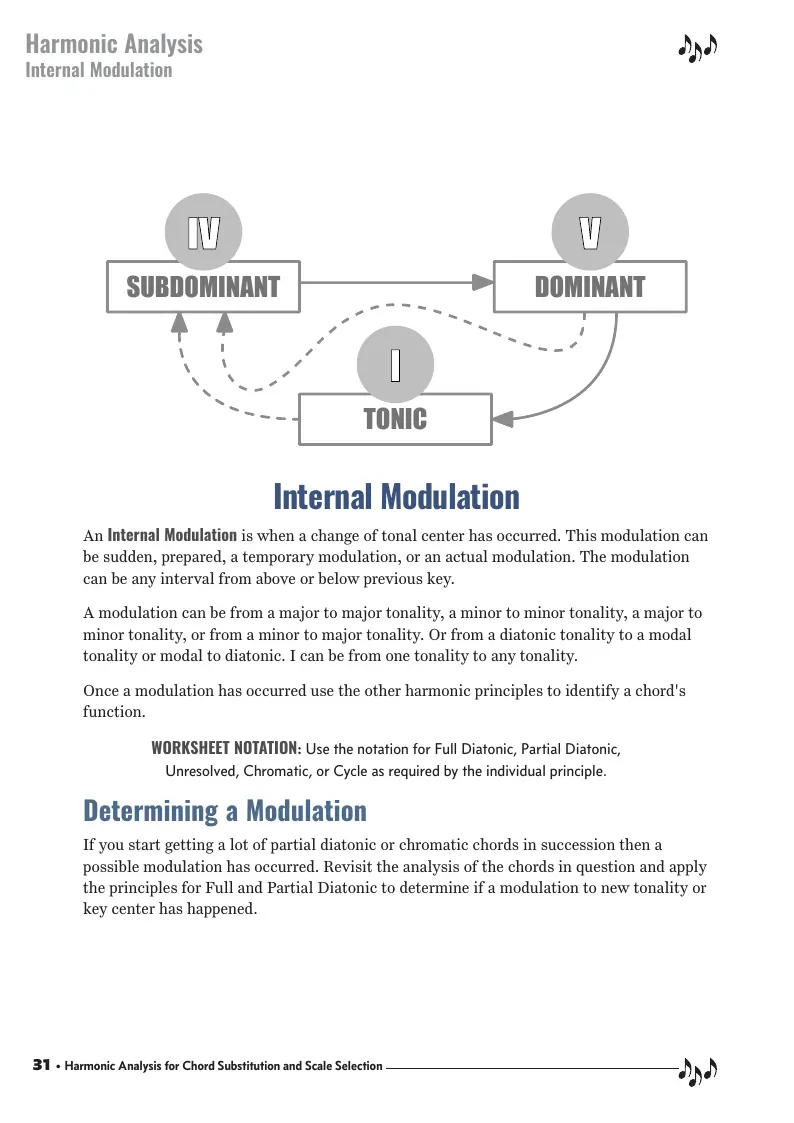
Harmonic Analysis - Internal Modulation
Harmonic Analysis is the understanding of the functional sequence of chords. It is the process used to analyze the harmonic structure of a progression, song, or composition. This analysis is then used to make scale selections for improvisation and chord substitution. This lesson covers the Internal Modulation harmonic principle.







The Learning Process - The Mind, Hands and Ears
For music and learning an instrument like the ukulele or guitar, it's all about the making the connection between your Mind, your Hands, and your Ear. When listening to music, we enjoy it at the tempo the composer or artist intended, in real time. Only the ear is involved in listening. This is passive listening and you're simply enjoying the music. This is what we do every day and it's what draws us to want to learn a musical instrument.
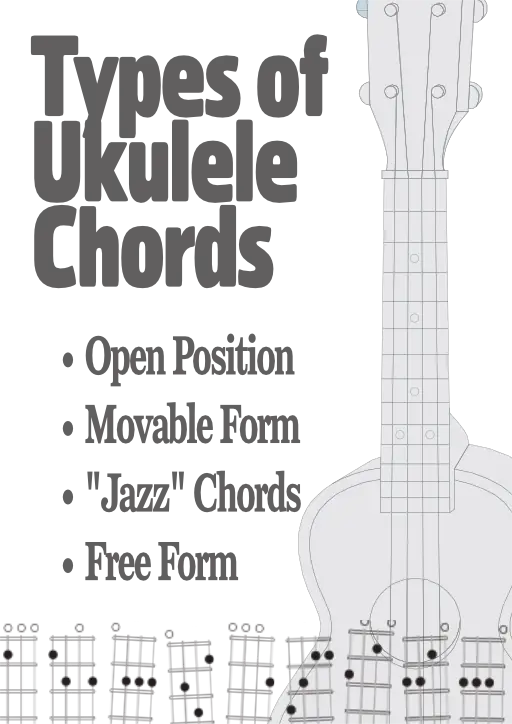
Types of `Ukulele Chords
Naturally, for Ukuleles, all chords need to be voiced using only the four strings available. You would think that this is limiting, when in actuality it's quite liberating when you learn the makeup of chords. Chords can be categorized into four categories: “Open Position Chords”, “Movable Form Chords”, “4-part - a.k.a. Jazz Chords”, and “Free Form Chords.”

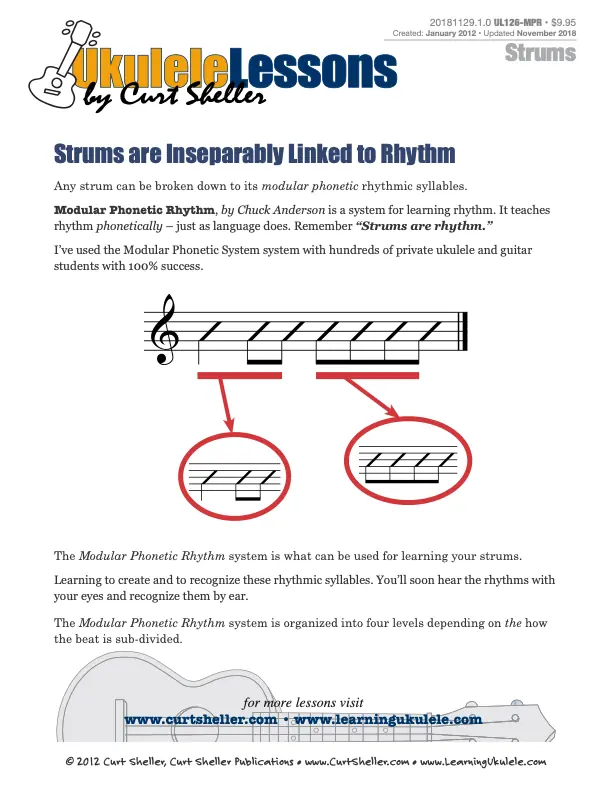
`Ukulele Strums and The Modular Phonetic Rhythm System
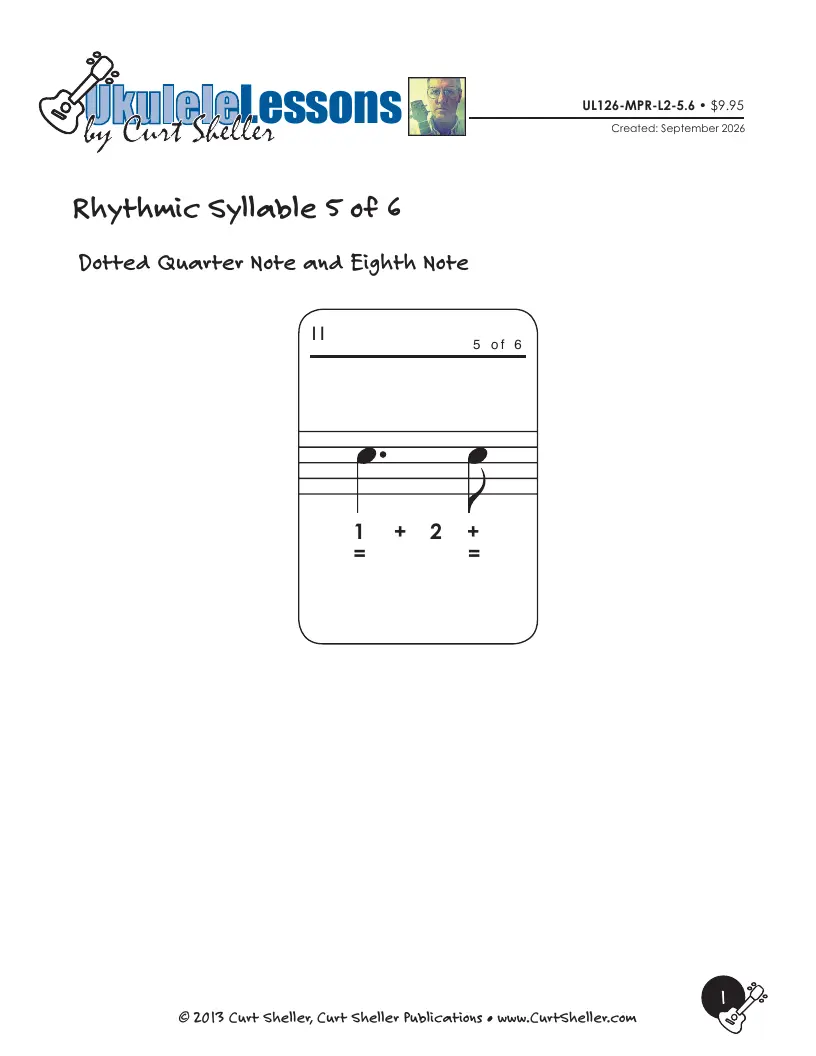
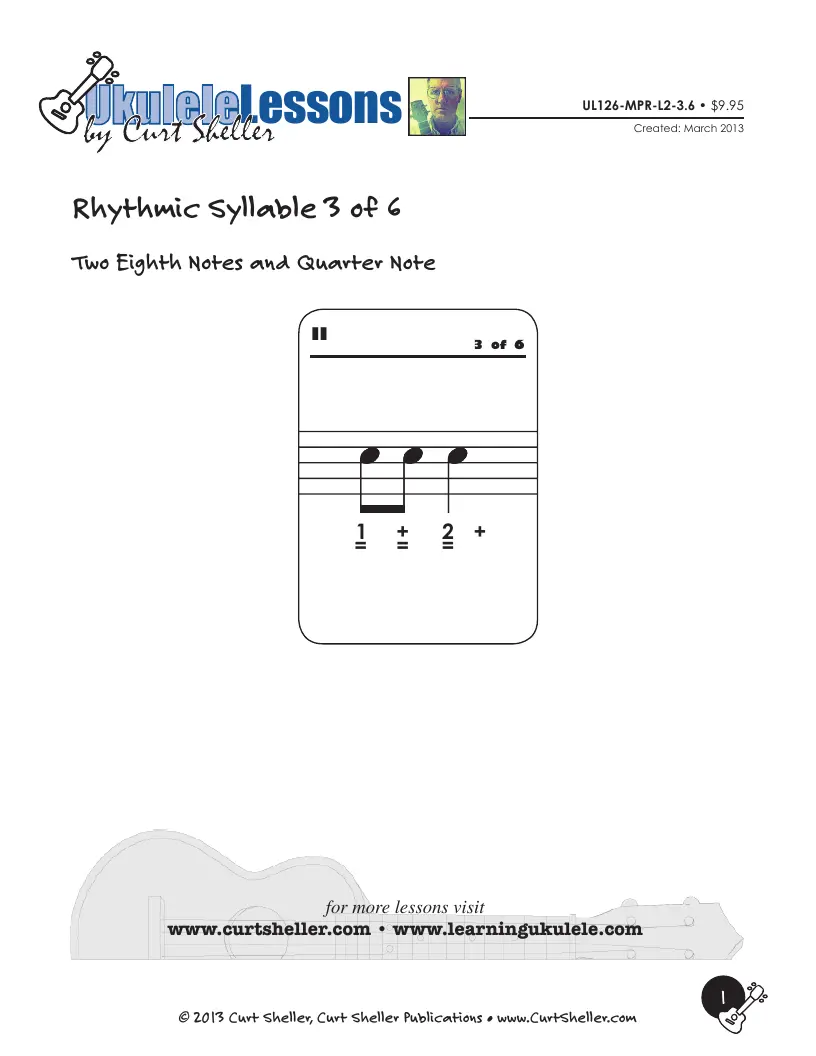
Strums are Inseparably Linked to Rhythm. Any strum can be broken down to its Modular Phonetic rhythmic syllables. Modular Phonetic Rhythm, by Chuck Anderson is a system for learning rhythm. It teaches rhythm phonetically - just as language does. Remember 'Strums ARE rhythm'