Published:
Updated:
Learning Ukulele with Curt
Georgia On My Mind
Harmonic Analysis (RMA) Worksheet for the song: "Georgia On My Mind".
Author(s): Curt Sheller Publisher: Curt Sheller Publications Code: ULHA-YB-87
Main Category: Harmonic-Analysis Main Instrument: Any
Categories: Theory, Intervals, Progressions, RMA, Harmony

2026-08-23
RelatedLessonAssets
Harmonic Analysis (RMA) Worksheet for the song: Georgia On My Mind.

Georgia On My Mind
Published December 22, 1930; Southern Music Publishing Co., Inc.
Georgia On My Mind is a 1930 song written by Hoagy Carmichael and Stuart Gorrell and first recorded that same year by Hoagy Carmichael. However, the song has been most often associated with soul singer Ray Charles, who was a native of the U.S. state of Georgia and recorded it for his 1960 album The Genius Hits the Road.
In 1960, Ray Charles, a native of Georgia, recorded a version of the song that went to No. 1 on the Billboard magazine Hot 100. Charles' hit rendition would become the most widely-known version of the tune from this time on. It would also be the song most associated with his musical career.
In 1979, the State of Georgia designated Ray Charles' version the official state song. The song has become part of the Great American Songbook tradition. wikiwand
How About More Uke?

How About More Uke?
Georgia On My Mind is on Curt's, 2015 How About More Uke?, The Curt Sheller Jazz Trio CD.
Curt, your CD was fantastic. You are among the ukulele masters of our day.
— John K.

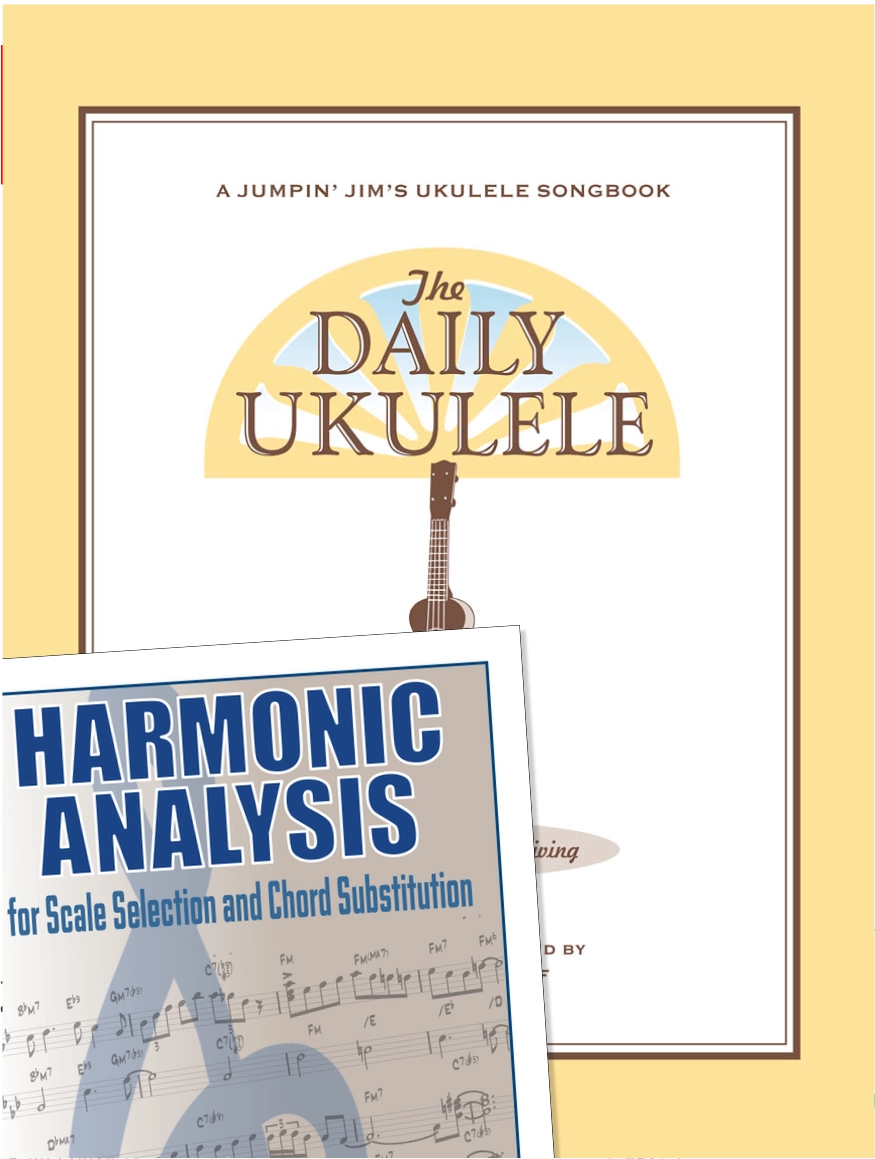
Georgia On My Mind is in the The Daily Ukulele — 365 Songs for Better Living book.
Strum a different song every day with easy arrangements of 365 of your favorite songs in one big songbook! The Daily Ukulele features ukulele arrangements with melody, lyrics and uke chord grids and are in ukulele-friendly keys that are particularly suited for groups of one to one hundred to play and sing.
Ukulele Chords
These and many other chords are covered in the Learn A Chord A Day series of lessons.
C Tuning Chords
In the Daily Ukulele series of book the chords are actually listing in their order of appearance. And, are always the basic open position chords when possible.
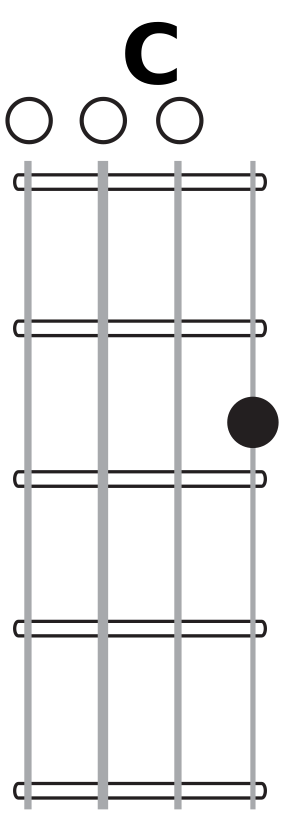
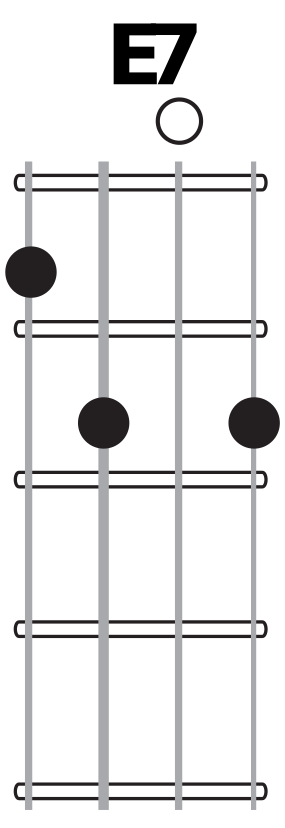
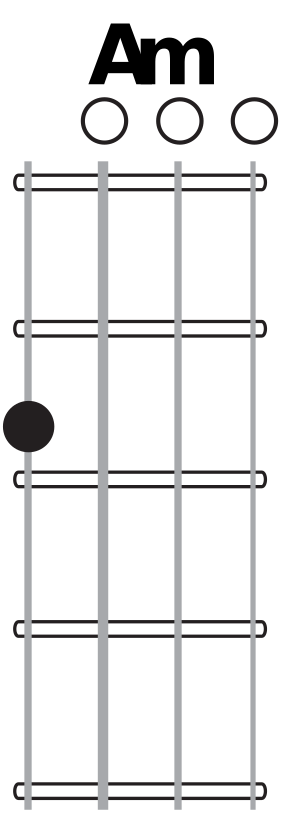
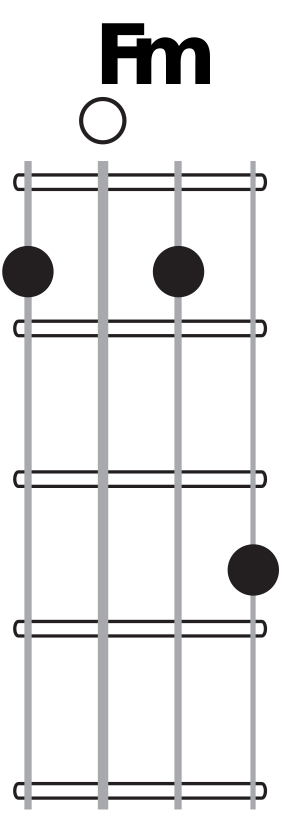
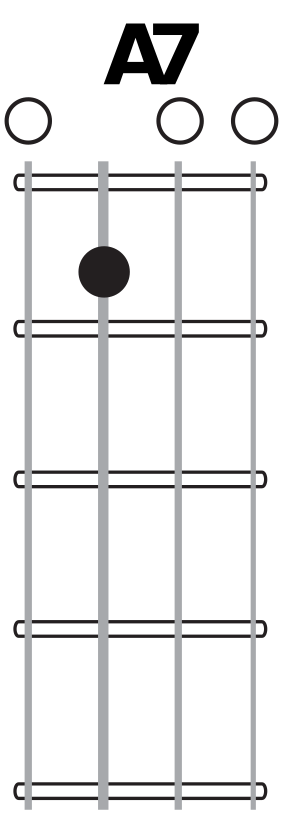
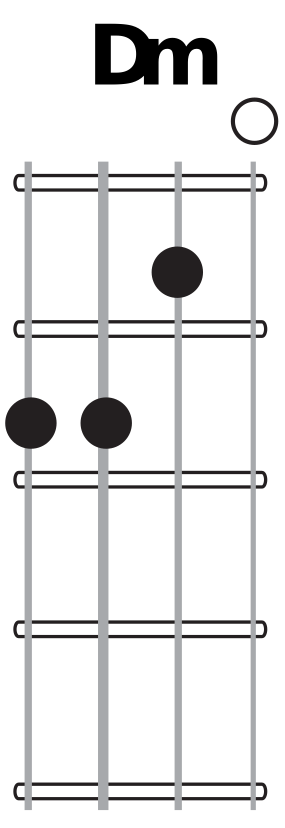
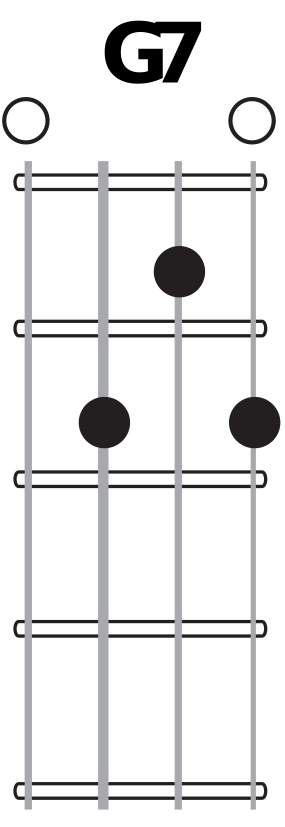
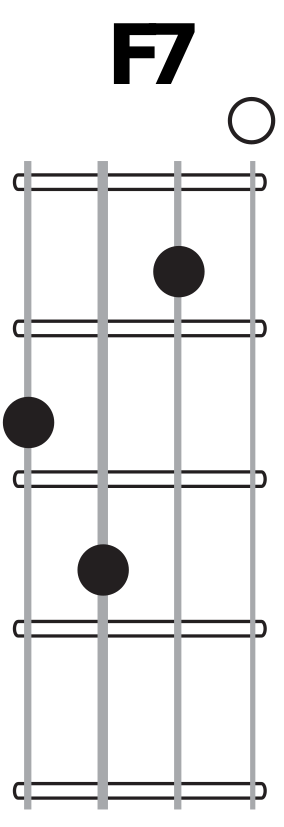
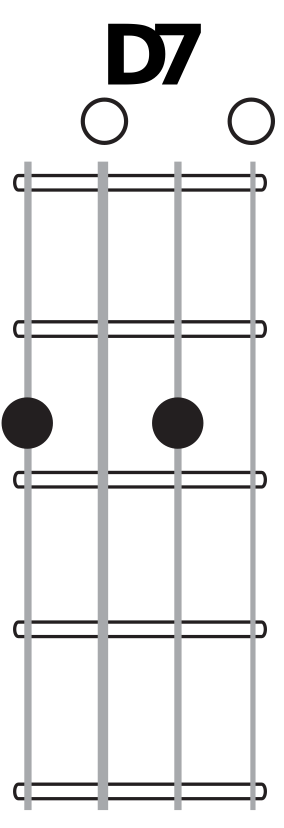
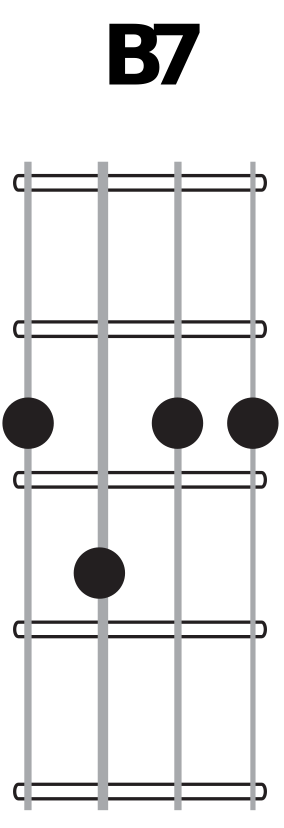
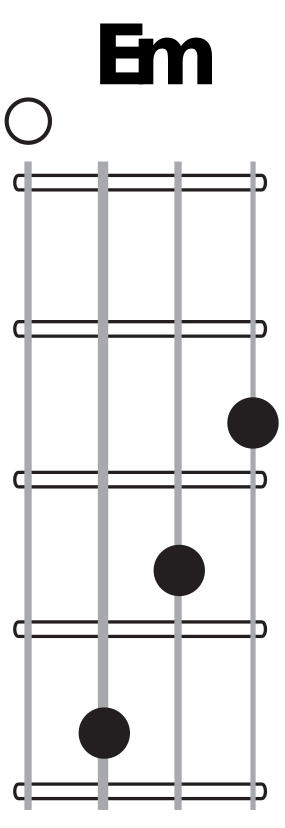
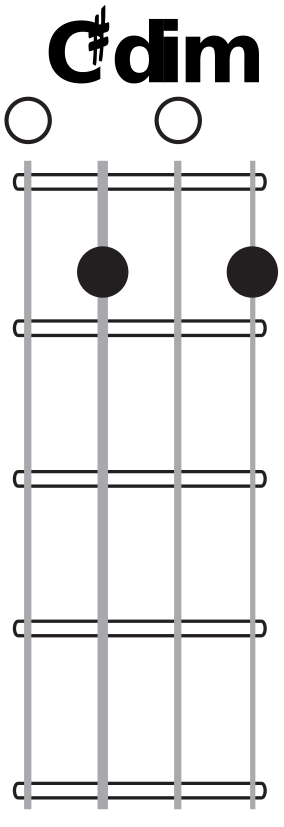
Starting Melody Note and 1st Interval
- Georgia On My Mind is in 4/4, Common Time and the Key of C .
- Start on M3 ↓ P4.
Intervals Legend: Root=note that begins a scale of the starting key; C is C, D is D, Am is A, Em is E, etc… m=minor; M=Major; P=Perfect; D=Diminished; A=Augmented. • ↑ is up/ascending; ↓ is down/descending;
Harmonic Analysis (HA) Worksheet
Visit the Harmonic Analysis for Scale and Chord Selection series of lessons for information on creating your own Harmonic Analysis Worksheet
A re-harmonization, in Red can be a simple, sticking pretty close to the original composer's intentions or complex and a whole new set of chord changes.
1.
VI7
(V of II)
A Mix-2-6
Eb Mix+4
A Mix-2-6
G WT
2.
Fine
A Mix-2-6
G WT
One beat chords, wing it ;-)
VII7
(V of III)
VI7
(V of II)
B Mix-2-6
A Mix-2-6
G Whole Tone
C*dim is a Disguised Secondary Dominant: VI7
Ralph Patt Vanilla Book
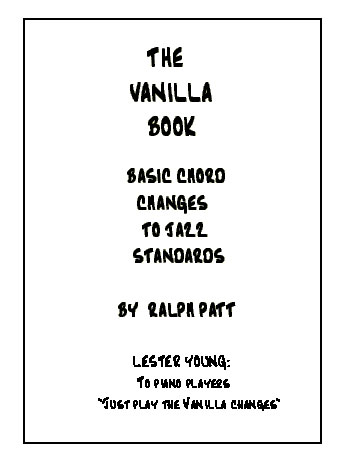
Checkout the Ralph Patt Vanilla Book (ralphpatt.com/Song.html) for the Vanilla
changes for Georgia On My Mind • The Vanilla Book uncovers the basic (“Vanilla”) chord changes to over 400 of the most commonly played jazz standards
to help the jazz player learn the basic changes
and allow the player to add embellishments and substitutions on a solid framework.
Embellishments to basic chords such as added 6ths, 9ths, 13ths, flat 5ths etc. are usually determined by the melody notes and the style of music being played and finally your ear.
NOTE: Ralph Oliver Patt (5 December 1929 – 6 October 2010) was an American jazz guitarist who introduced major-thirds tuning, which can simplify the learning of the fretboard and chords by beginners and facilitate improvisation by advanced guitarists. His use of this tuning was first inspired by the atonal music of Arnold Schoenberg, and later by the jazz of John Coltrane and Ornette Coleman.
Ralph Patt (5 December 1929—6 October 2010) has passed away and the site is no longer up. However, through the magic o f the Internet and the INTERNET ARCHIVE WayNackMachine you can still checkout most of his pages.
    [:  F         |  A7         |  Dm        |  Bb   Bbm  |
                                1.________________________
    |   F    E7   |  Gm7   C7   |  F  F#dim  |  Gm7   C7 :]
    2.___________________________
    |   F         |  Em7b5  A7  |  Dm   Gm   |  Dm   Bb7  |
    |   Dm   Gm   |  Dm7    G7  |  Dm        |  Bm7b5  E7 |
    |   Am7b5  D7 |  Gm7   C7  ||  F         |   A7       |
    |   Dm        |  Bb   Bbm  |   F    E7   |  Gm7   C7  |
    |   F         |  F        ||
The Harmonic Analysis (HA)
A Harmonic Analysis (RMA/HA) and its worksheet are intended to show the function of the chords, the harmonic principles used, the keys and tonalities the song explores. And, can be used for scale selections and chord and scale substitutions.
NOTE: A Harmonic Analysis Worksheet is NOT intended to be a lead leadsheet.
Minimal roadmap information such as repeats, fine, D.S., D.C., and codas has been used in preparing the worksheets to somewhat mirror the leadsheet in the Daily Ukulele book.
Sections, Verse, Chorus, 1st, 2nd Ending, turnbacks …
The worksheets will show 1st, 2nd Ending, turnbacks, etc. as indicated in the Yellow Book
. You should start to recognize that 1st endings typically always return to a previous verse or an  section. With a 2nd ending, a transition to a different part of the song, a
  or chorus. Harmonic Principles are used for these repeats and transitions.
If turnback chords are not indicated for these 1st and 2nd endings in the original Yellow Book leadsheet, recommended chord(s) will be indicated in parentheses or as an alternate harmony in Red . Typically the last measures or turnbacks will be a chord that resolves to and harmonically leads you to the next section or turning you back to the same section. Typically a V or direct substitution of that next chord.
Reference Key
This is the key of the source leadsheet.
- Georgia On My Mind is in 4/4, Common Time and the Key of C .
Harmonic Principles Used:
These are the harmonic principles used in Georgia On My Mind.
Nashville Number System (NNS)
Nashville Numbering System always uses four bars/measures per line, no bar lines, and default is each number of the number of beats per bar/measure based on the time signature. If multiple chords in same bar then they are underlined. It can be as simple as converting the Roman Numerals above to Arabic numbers.
At its simplest you simply replace the roman numbers with Arabic numbers. e.g., I becomes 1 , II becomes 2 , etc. The only exception is the bVII7 chord becomes 7 as this borrowed chord from the Mixolydian tonality is so common and the VII (half-diminished seventh) in a major chord is so rare (actually never). And, you could go as far as saying all the modes are numbered: I II III IV V VI VII — just as in the major scale. So calling it a 7 is not that far out.
Check the definitive book Nashville Number System
Scale Selection
Once a Harmonic Analysis has been completed, scale selections can be made. These scale selections can be either vertical or horizontal choices. And, really, only needed if you are going to take a solo or embellish the melody with added notes.
Scale Abbreviation Legend
Traditional Scales: Maj: Major (Ionian), Nat Min: Natural Minor, Dim: Diminished, WT: Whole Tone, Har Min: Harmonic Minor
Contemporary Scales: Minor Pent: Minor Pentatonic, Pent: Major Pentatonic, Blues
Scale/Mode Names: Ion: Ionian (Major), Dor: Dorian (Minor), Phrygian: Phrygian, Lyd: Lydian, Mix: Mixolydian (Dominant), Aeol: Aeolian (Natural Minor), Loc: Locrian
Altered Scales: Mix+4: Mixolydian Plus 4 / Lydian Dominant, Mix-2-6: Mixolydian flat 2, flat 6
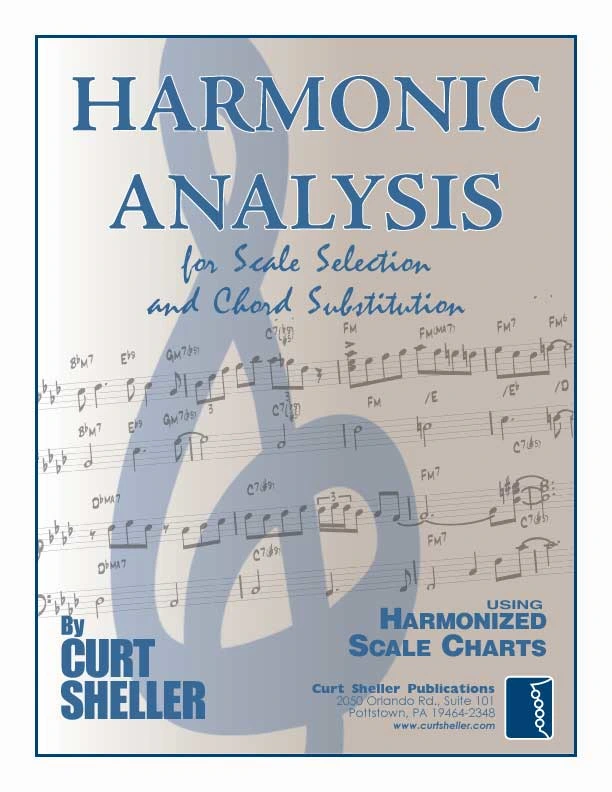
Checkout the Lesson Series: Harmonic Analysis for Scale and Chord Selection or download the Harmonic Analysis for Scale and Chord Selection book. And the QuickStart Series of Scale and Arpeggio books.



End of Lesson - Thanks, Hope You Enjoyed It!
Related Lessons, Videos, Lesson Series, Songs, Books & Reference Charts, Resources & Assets, Workshops are below.

A Guide to Ukulele Strums
Learn a variety of strums and rhythmic patterns in wide range of musical styles. One of the first skills a ukulele player learns is the art and craft of strumming, playing rhythm. This refers to an accompaniment technique suitable for the singer, singer - songwriter or someone who plays a support role for another instrument.
Harmonic Analysis for Scale Selection and Chord Substitution
Harmonic Analysis is the understanding of the functional sequence of chords. It is the process used to analyze the harmonic structure of a progression, song or composition. This analysis is then used to make scale selections for improvisation and chord substitution.

The Daily Ukulele
Strum a different song every day with easy arrangements of 365 of your favorite songs in one big songbook! The Daily Ukulele features ukulele arrangements with melody, lyrics and uke chord grids and are in ukulele-friendly keys that are particularly suited for groups of one to one hundred to play and sing.

Harmonic Analysis for Scale and Chord Selection
Harmonic Analysis (HA), also known as the study of chord relationships, is the method used to identify the harmonic role of chords within a chord progression or song. A chord progression refers to a sequence of chords, with each chord having a root note and belonging to a specific chord type. The function of a chord within a particular scale's tonality is determined by its relationship to that scale.