
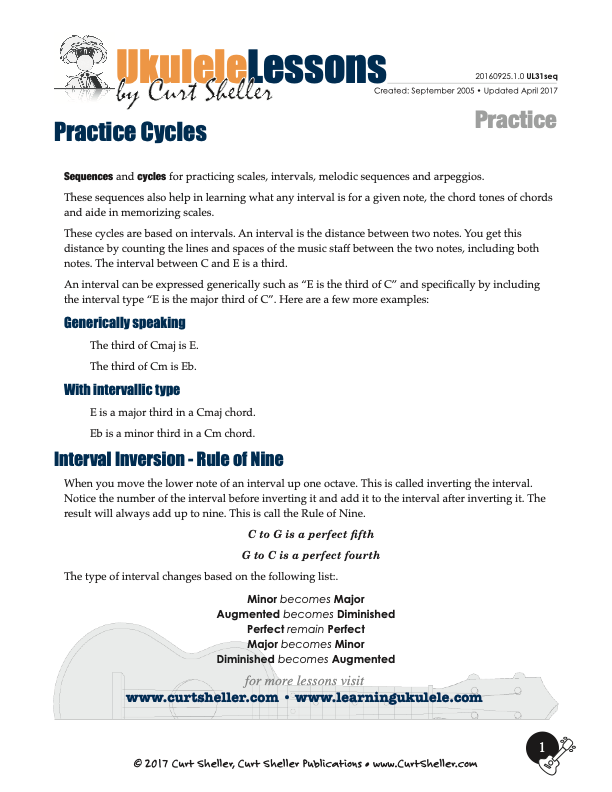
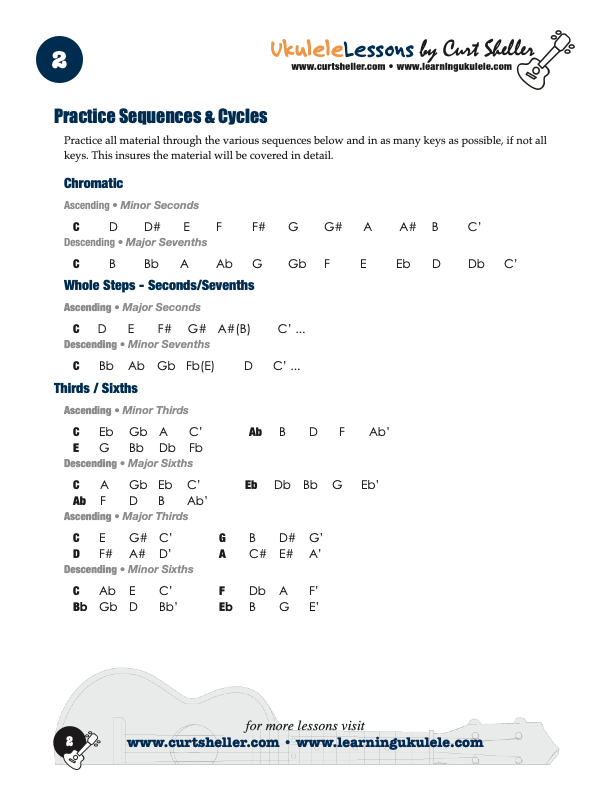
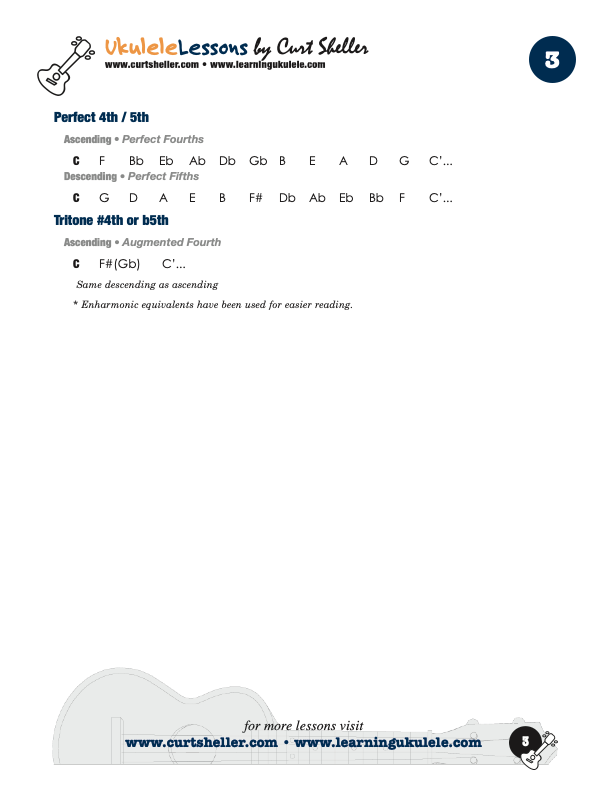
Sequences and cycles for practicing scales, intervals, melodic sequences and arpeggios.
Subjects(s): Advanced • Intermediate • Jazz • Practice • Rock • Theory
Sequences and cycles for practicing scales, intervals, melodic sequences and arpeggios.
These sequences also help in learning where any interval is of a given note, the chord tones of chords and aides in memorizing scales.
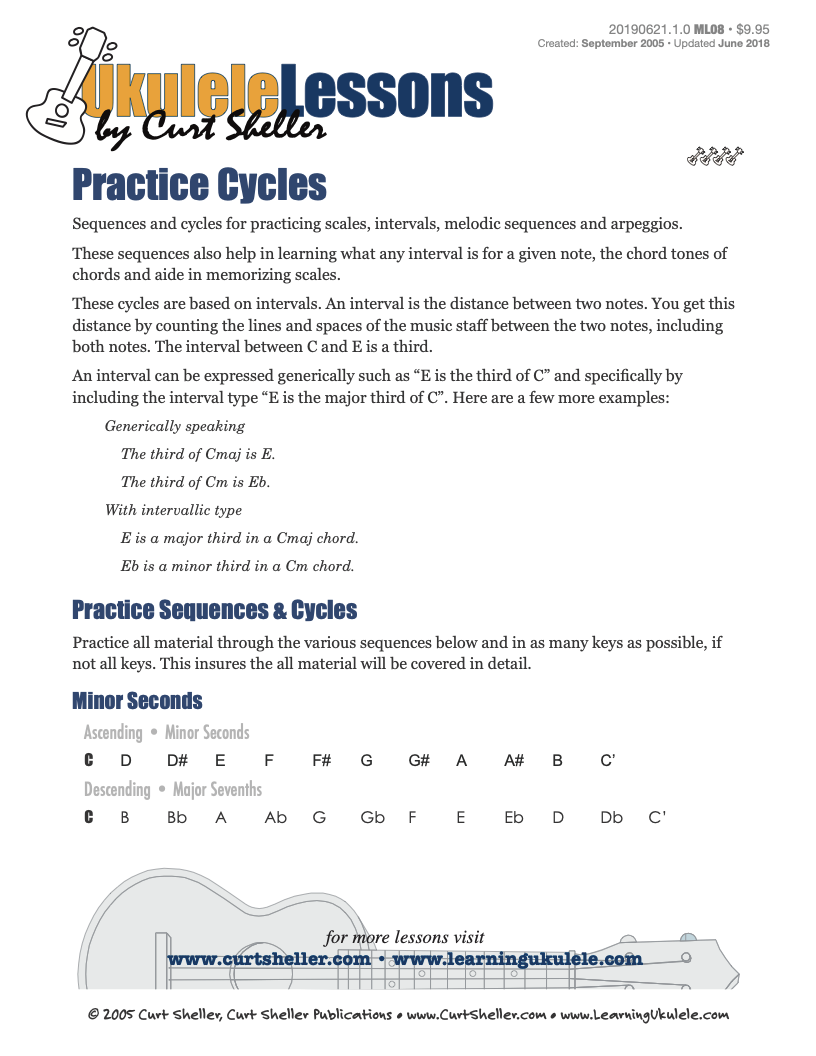
These cycles are based on intervals. An interval is a distance between two notes. You get this distance by counting the lines and spaces between the two notes, including both notes. The interval between C and E is a third.
An interval can be expressed generically. Such as, E is the third of C and specifically by including the interval type, E is the major third of…
Cycle of Thirds
With Thirds being the overwhelming interval used to create chords, we can use the Cycle of Thirds for quick access when learning the spell chords.
Looking at the cycle of thirds all chords built in thirds are going to be Some Sort of…
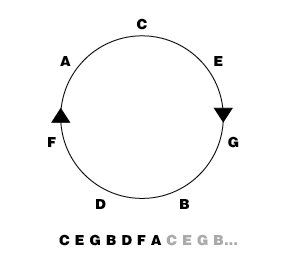
Example of ANY C major, minor, diminished or augmented triad.
- C: C E G
- Cm: C E♭ G
- Cdim: C E♭ G♭
- Caug: C E G♯
- C♭: C♭ E♭ G♭
- C♭m: C♭ E♭ G
- C♭dim: C♭ E♭♭ G♭♭
- C♭aug: C♭ E♭ G
- C: C♯ E♯ G♯
- Cm: C♯ E G♯
- Cdim: C♯ E G
- Caug: C♯ E♯ Gx (double sharp)
NOTE: — All some sort of the letters, C E G. Generically speaking, the First, Third, and Fifth of their corresponding major scale, based on the root of the chord. Hence, the need for double flats and double sharps — the letter MUST remain some sort of: C E G.
Sequences and cycles for practicing scales, intervals, melodic sequences and arpeggios.
These sequences also help in learning where any interval is of a given note, the chord tones of chords and aides in memorizing scales.
These cycles are based on intervals. An interval is a distance between two notes. You get this distance by counting the lines and spaces between the two notes, including both notes. The interval between C and E is a third.
An interval can be expressed generically. Such as, E is the third of C and specifically by including the interval type, E is the major third of…
Cycle of Thirds
With Thirds being the overwhelming interval used to create chords, we can use the Cycle of Thirds for quick access when learning the spell chords.
Looking at the cycle of thirds all chords built in thirds are going to be Some Sort of…
Example of ANY C major, minor, diminished or augmented triad.
- C: C E G
- Cm: C E♭ G
- Cdim: C E♭ G♭
- Caug: C E G♯
- C♭: C♭ E♭ G♭
- C♭m: C♭ E♭ G
- C♭dim: C♭ E♭♭ G♭♭
- C♭aug: C♭ E♭ G
- C: C♯ E♯ G♯
- Cm: C♯ E G♯
- Cdim: C♯ E G
- Caug: C♯ E♯ Gx (double sharp)
NOTE: — All some sort of the letters, C E G. Generically speaking, the First, Third, and Fifth of their corresponding major scale, based on the root of the chord. Hence, the need for double flats and double sharps — the letter MUST remain some sort of: C E G.


Related Lessons, Videos, Lesson Series, Songs, Books & Reference Charts, Resources & Assets, Workshops are below.
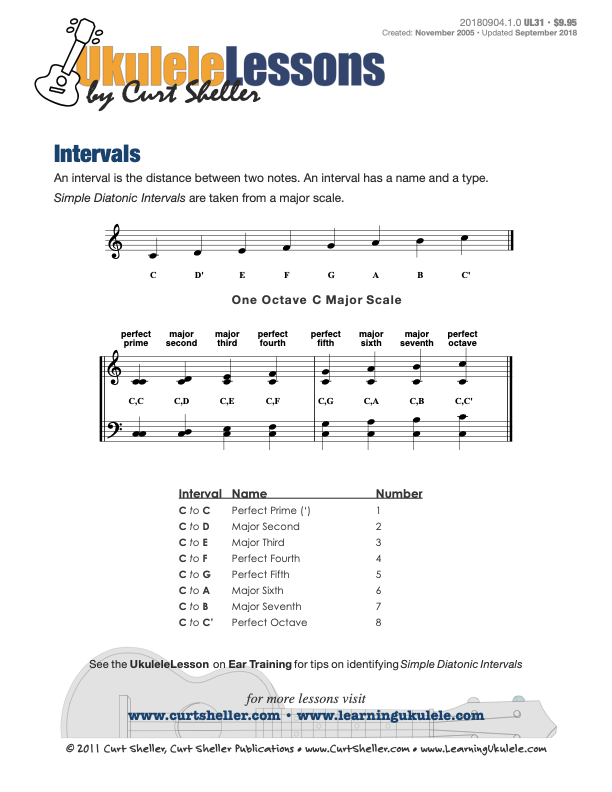
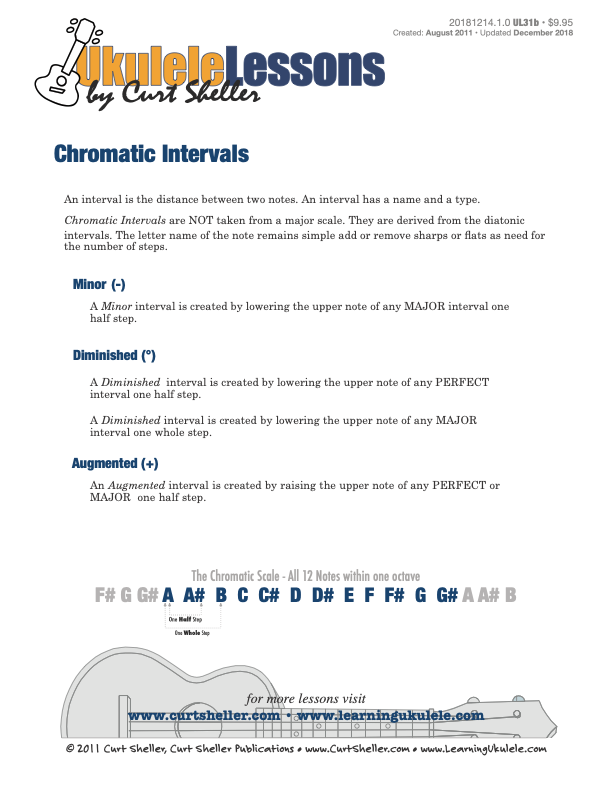
An interval is the distance between two notes. An interval has a name and a type. Intervals can be played one note (melodic) or two notes (harmonic) at a time, ascending or descending. Simple and Compound Intervals are taken from a major scale. Chromatic Intervals are NOT taken from a major scale. They are derived from the diatonic intervals.
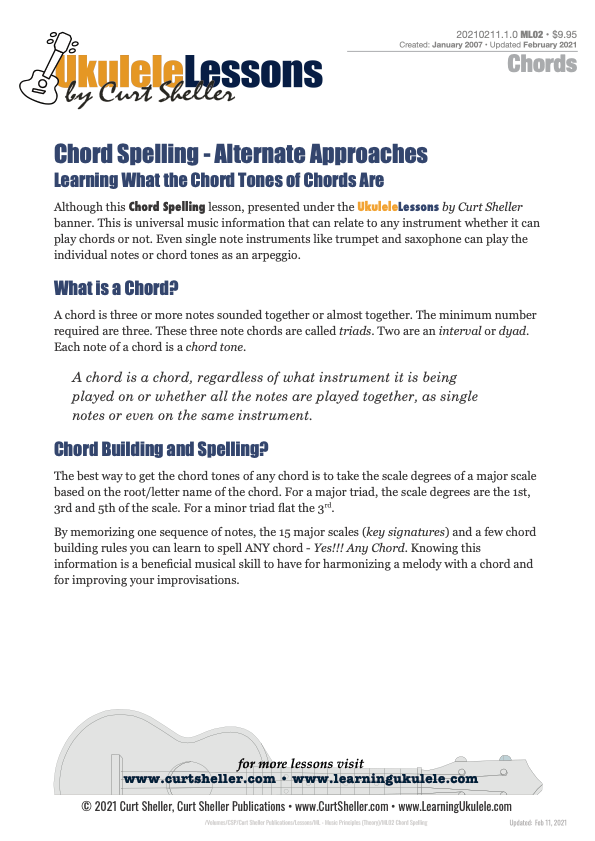
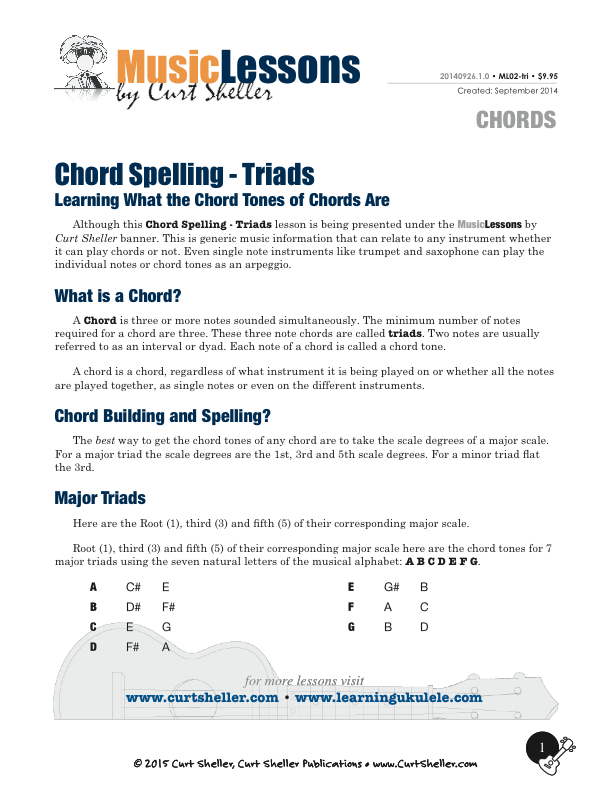
This lesson presents the traditional approach for learning the chord tones of chords with a little twist to make it a bit easier. A Chord is three or more notes sounded simultaneously - together or almost together. The minimum number of notes required for a chord are three. These three note chords are called triads. Two notes are usually referred to as an interval or dyad. Each note of a chord is called a chord tone.
Daily Practice Material for the Contemporary Ukulele Player is an organized collection of daily practice and reference material for the contemporary ukulele player. This material can be used to develop the vocabulary and knowledge necessary for single note playing.
Harmonic Analysis is the understanding of the functional sequence of chords. It is the process used to analyze the harmonic structure of a progression, song or composition. This analysis is then used to make scale selections for improvisation and chord substitution.

return in your investment)—it is this— learning the
f*ckingnotes of your OWN instrument. Sorry for the tough talks—but it is sooooo true!