
"I Feel Fine" is a song by the English rock band the Beatles that was released in November 1964 as the A-side of their eighth single. It was written by John Lennon and credited to the Lennon–McCartney partnership. The recording includes one of the earliest uses of guitar feedback in popular music.
Subjects(s): Theory • Progressions • Harmony • Analysis • RMA


"I Feel Fine" is a song by the English rock band the Beatles that was released in November 1964 as the A-side of their eighth single. It was written by John Lennon and credited to the Lennon–McCartney partnership. The recording includes one of the earliest uses of guitar feedback in popular music.
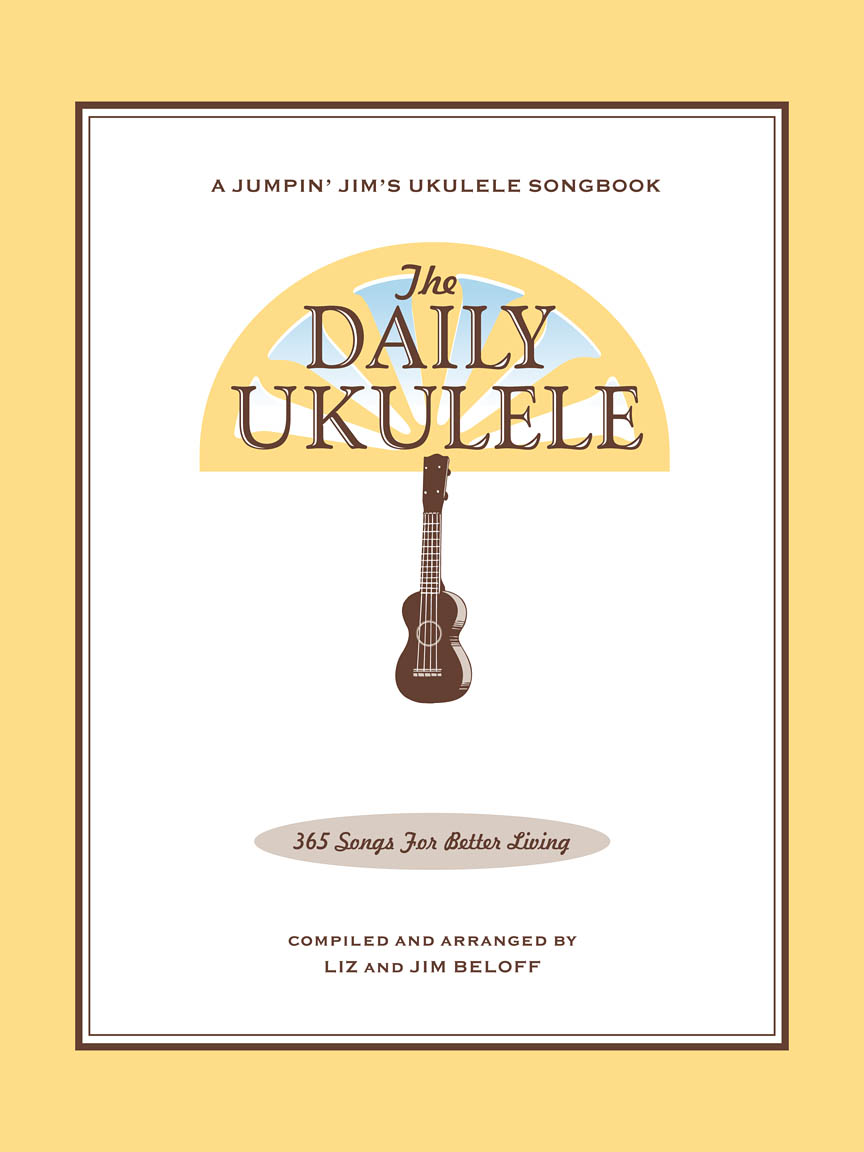
The Daily Ukulele— 365 Songs for Better Living book.
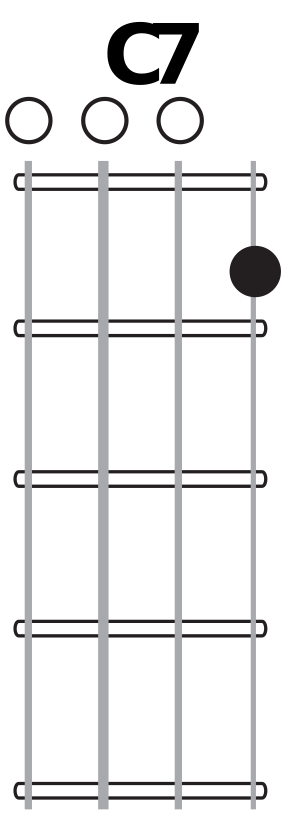
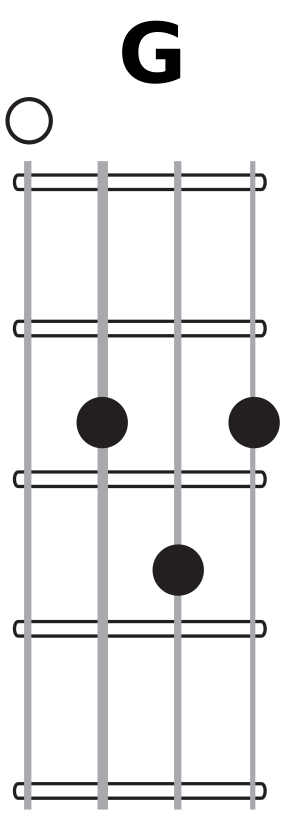
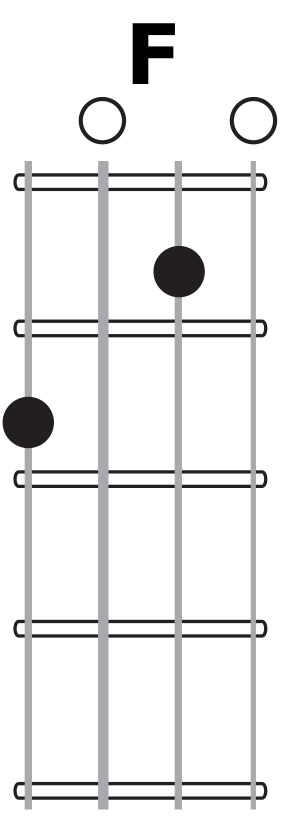
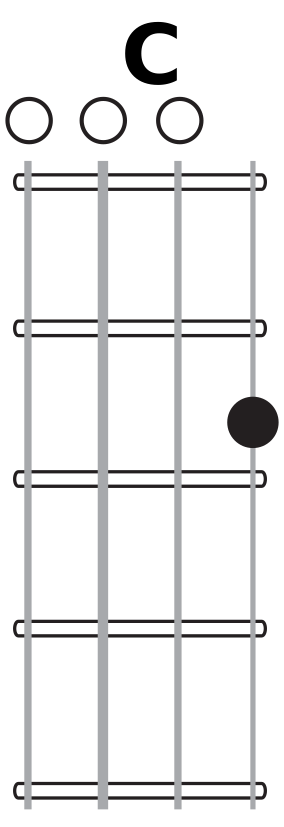
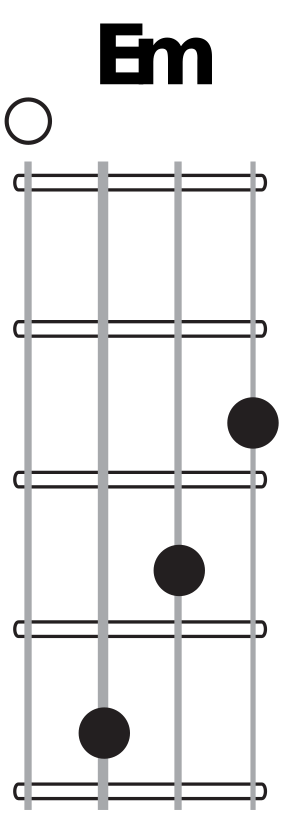
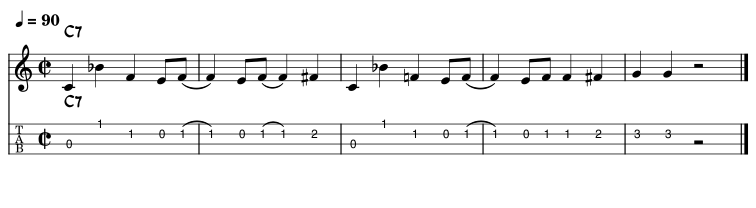
bluseyfell as the I7 chord. C C7 is C E G Bb , so it does have a C major triad (C E G) as it's foundation. The C Mixolydian (C D E F G A Bb C`) th scale to use or C Pentatonic with a Bb added (C D E G A Bb C`) to address the fact that it is a C7 chord.
lead leadsheet.Minimal roadmap information such as repeats, fine, D.S., D.C., and codas has been used in preparing the worksheets to somewhat mirror the leadsheet in the Daily Ukulele book.
Yellow Book. You should start to recognize that 1st endings typically always return to a previous verse or an
 section. With a 2nd ending, a transition to a different part of the song, a
  or chorus. Harmonic Principles are used for these repeats and transitions.
- Full Diatonic
- Partial Diatonic • Full Diatonic includes Secondary Dominant chords
Contemporary Scales: Minor Pent: Minor Pentatonic, Pent: Major Pentatonic, Blues,
Scale/Mode Names: Ion: Ionian (Major), Dor: Dorian (Minor), Phrygian: Phrygian, Lyd: Lydian, Mix: Mixolydian (Dominant), Aeol: Aeolian (Natural Minor), Loc: Locrian
I Feel Fineis written in 4/4 time with drummer Ringo Starr's R&B-influenced beat (based on the "Latin" drumming in Ray Charles's hit "What'd I Say") featured through most of the song except for the bridge, which has a more conventional backbeat. After a brief note of heavy feedback (see below), the intro begins with a distinctive arpeggiated riff which starts in D major before quickly progressing to C major and then G major, at which point the vocals begin in G. The melody, unusually, uses a major third and a minor seventh, and has been classified as Mixolydian mode. Just before the coda, Lennon's intro riff (or ostinato) is repeated with a bright sound by George Harrison on electric guitar (a Gretsch Tennessean). The song ends with a fadeout of the G major portion of the opening riff repeated several times. (wikiwand)
- (wikiwand) I Feel Fine
- The Beatles Bible: I Feel Fine
- The Beatles – The Beatles – I Feel Fine (Official Music Video) [Remastered 2015] •


Related Lessons, Videos, Lesson Series, Songs, Books & Reference Charts, Resources & Assets, Workshops are below.
Harmonic Analysis ( HA ) is the process used to determine the harmonic function of chords within a chord progression. A chord progression is defined as a sequence of chords, each chord has a root and has a particular chord type. The relationship of a chord's root to a scale determines its function within that scale's tonality. Once a chord's function is identified, scale selections along with chord and scale substitutions can be made. This process is called Root Movement Analysis ( RMA ). This series of lessons are extracted from my book for use with individual private and on-line students. Each lesson directly corresponds the chapters in my book Harmonic Analysis for Scale Selection and Chord Substitution by Curt Sheller (me).

Harmonic Analysis (HA), also known as the study of chord relationships, is the method used to identify the harmonic role of chords within a chord progression or song. A chord progression refers to a sequence of chords, with each chord having a root note and belonging to a specific chord type. The function of a chord within a particular scale's tonality is determined by its relationship to that scale.
Harmonic Analysis is the understanding of the functional sequence of chords. It is the process used to analyze the harmonic structure of a progression, song or composition. This analysis is then used to make scale selections for improvisation and chord substitution.
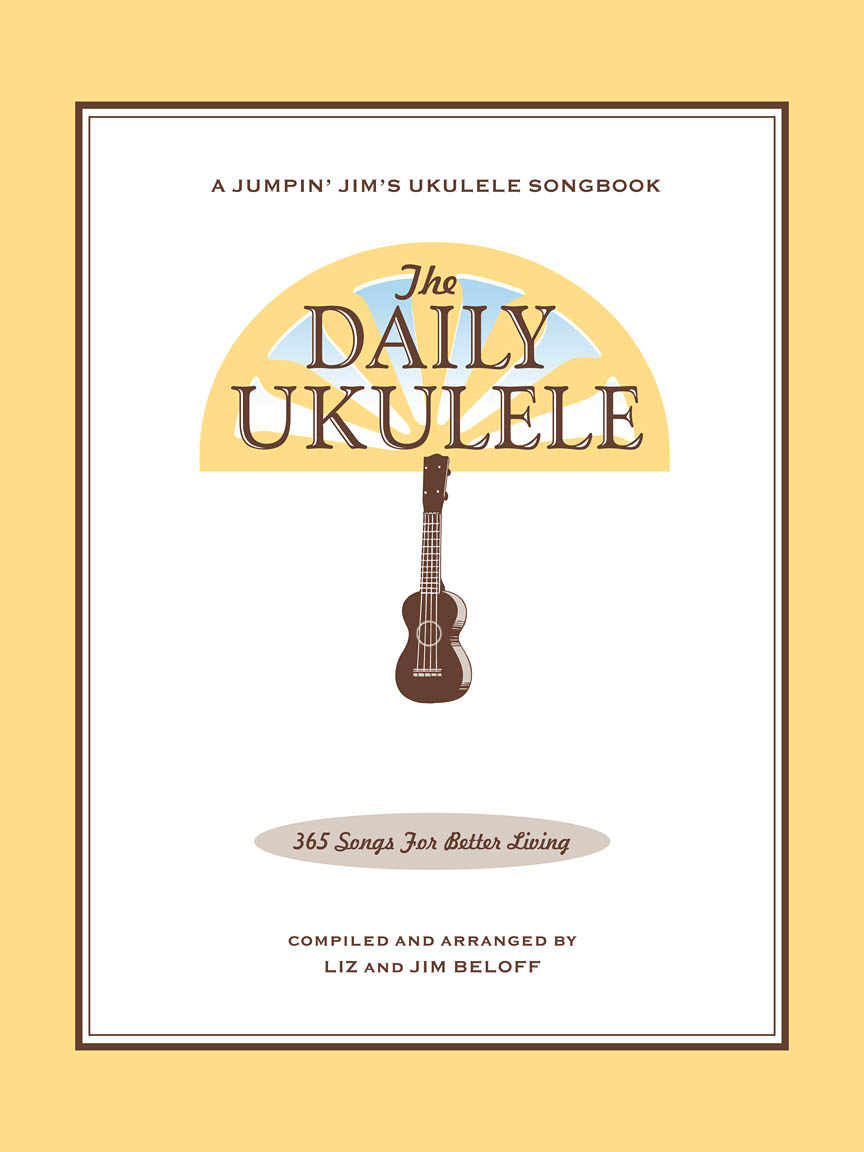
Strum a different song every day with easy arrangements of 365 of your favorite songs in one big songbook! The Daily Ukulele features ukulele arrangements with melody, lyrics and uke chord grids and are in ukulele-friendly keys that are particularly suited for groups of one to one hundred to play and sing.
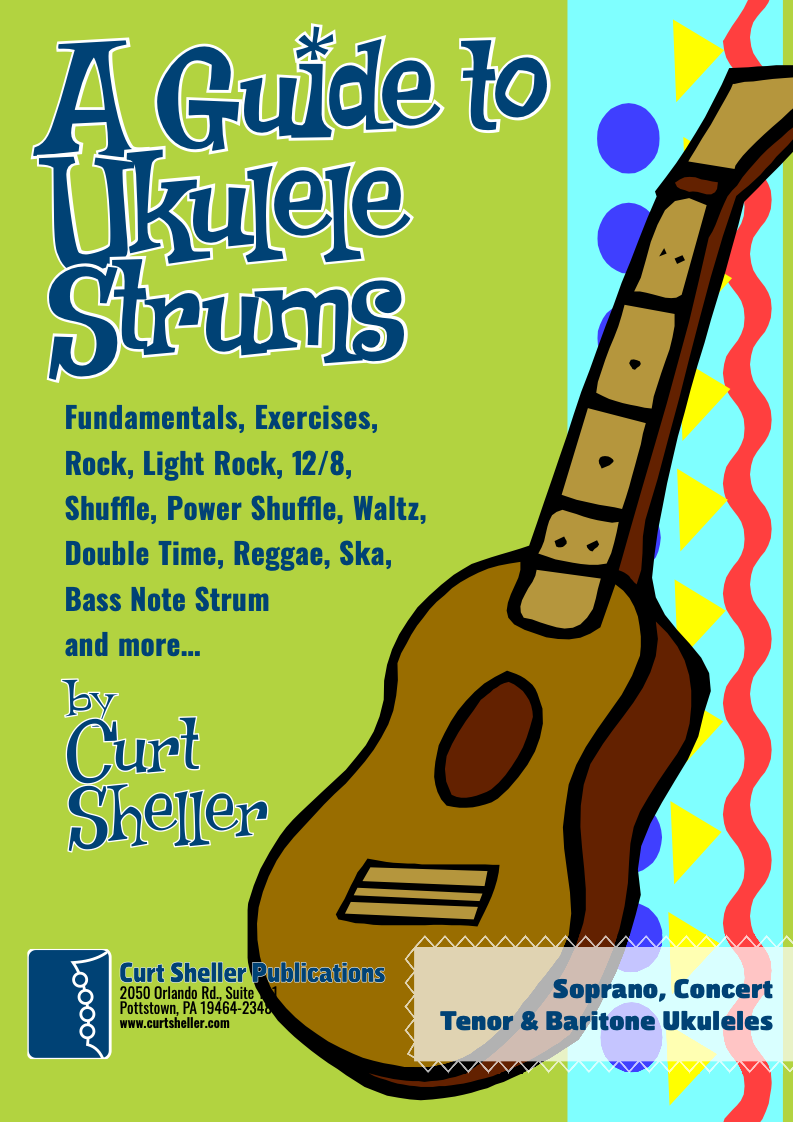
Learn a variety of strums and rhythmic patterns in wide range of musical styles. One of the first skills a ukulele player learns is the art and craft of strumming, playing rhythm. This refers to an accompaniment technique suitable for the singer, singer - songwriter or someone who plays a support role for another instrument.


return in your investment)—it is this— learning the
f*ckingnotes of your OWN instrument. Sorry for the tough talks—but it is sooooo true!