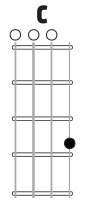
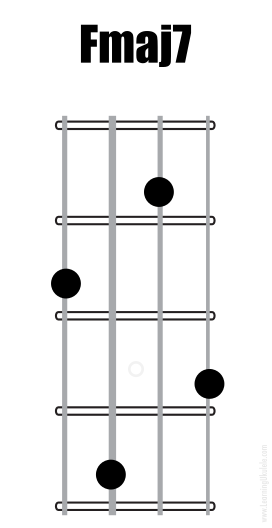
Too many chord shapes to memorize Hopefully, that is something you might have realized after three months into the Chord a Day saga. There are way too many chord shapes to memorize.
Subjects(s): Chords • Cool


Where is Today's Chord?
A Chord A Day. You should know a lot about plenty of chords at this time.
JazzChords — it's learning how chords are created and how to derive new chords from your core set of ever-expanding existing chords.
JazzChords
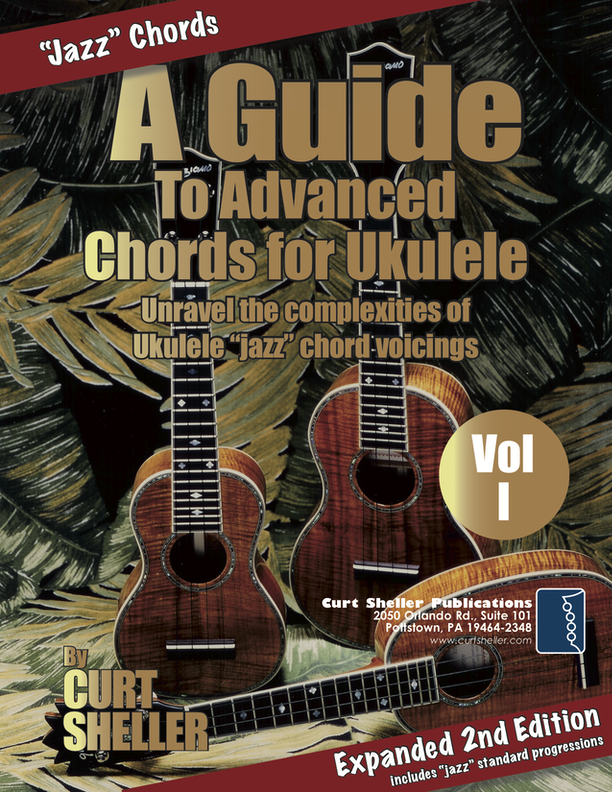
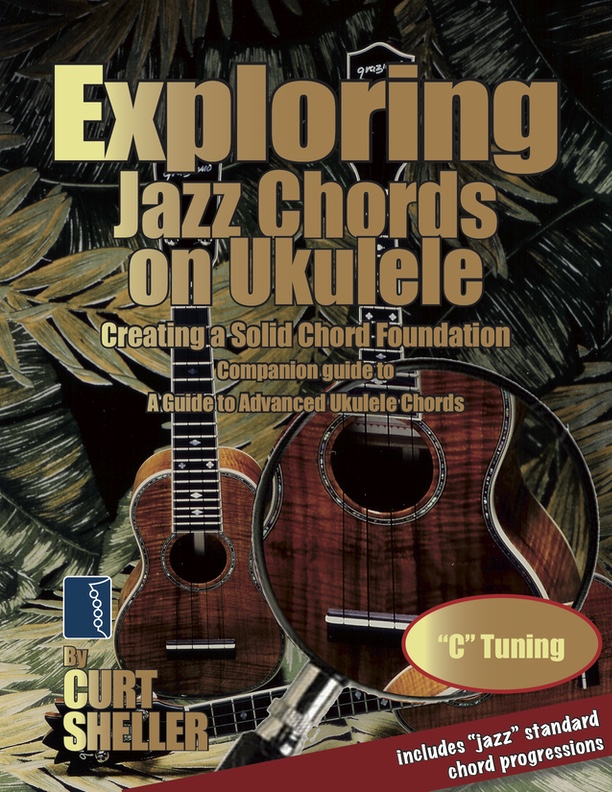
JazzChords in March. Quite a series for reviewing your chords and learning a lot of new chords.
- Basic Open Position Chords – These are the core set of chords that the January covered. These are the basic chords that every ukulele player should know.
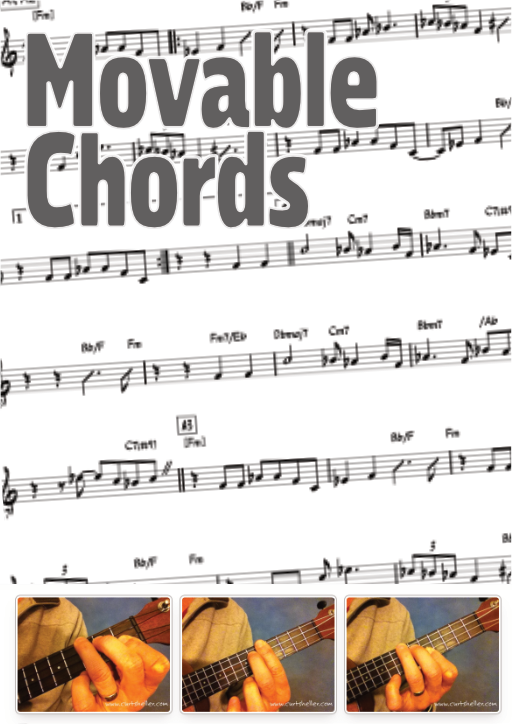
- Movable Chords – movable form of the open position chords
Jazz
Chords – these chords all start with the Big Six core chords.Free Form
Chords – this is where you know how chords are created, constructed and used and don't fit into one of the above categories. With a low G, C tuning, these chords are a kin to closed voicing chords, where all the notes are within one octave - just like most of the chords with a high G, C tuning.


Related Lessons, Videos, Lesson Series, Songs, Books & Reference Charts, Resources & Assets, Workshops are below.
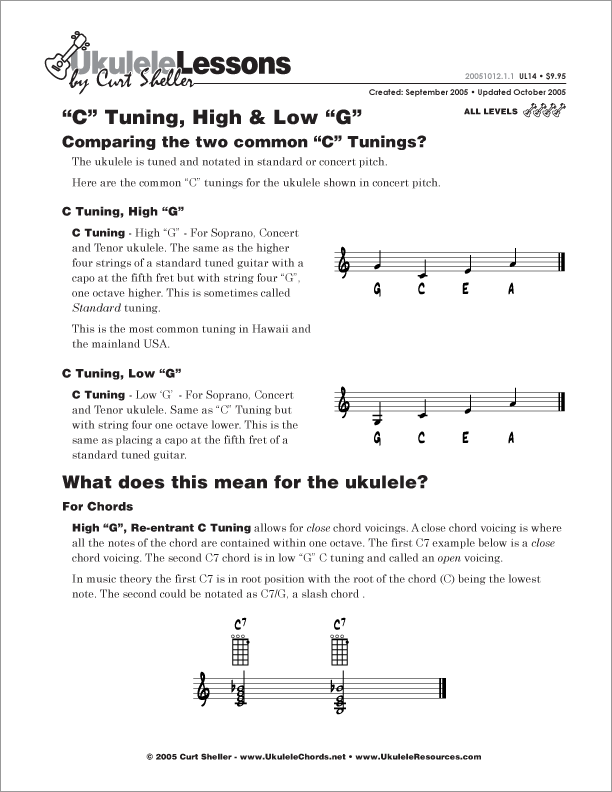
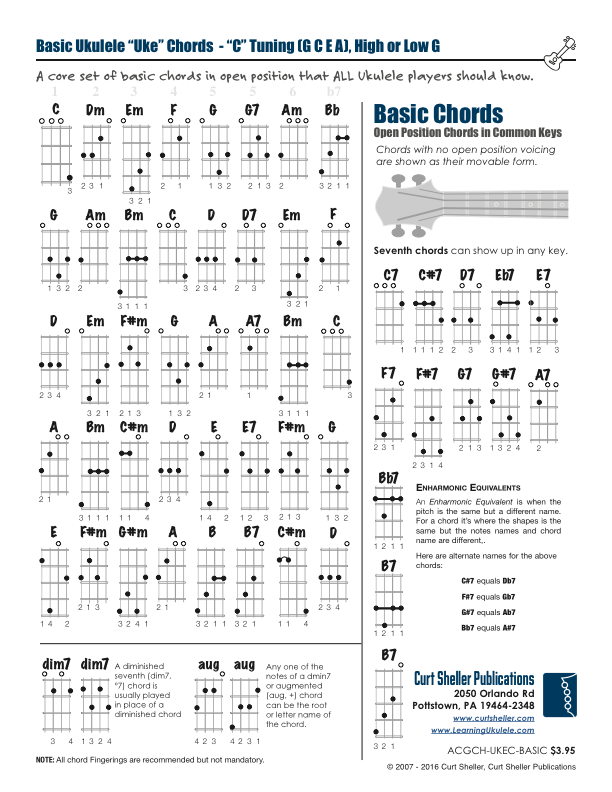
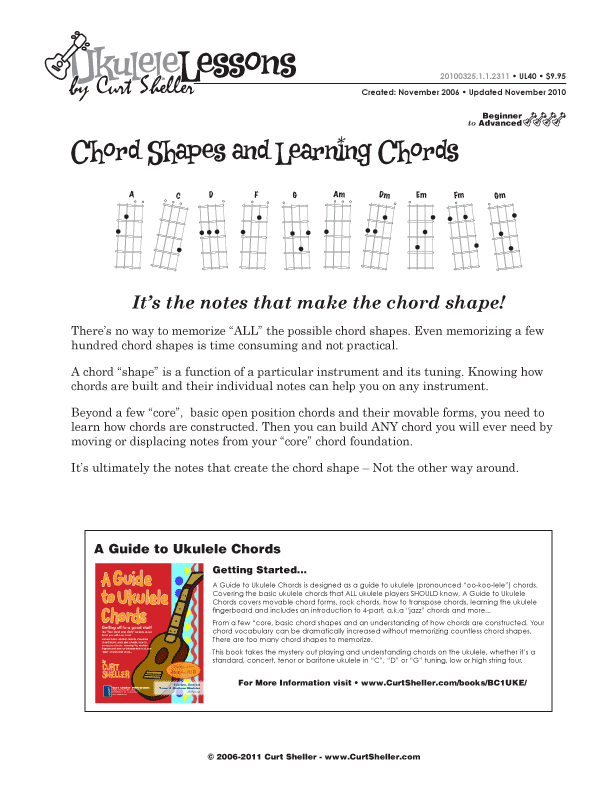
Pick up any chord dictionary, and one thought that should go through your mind is - TOO MANY CHORDS There is now way to memorize all those shapes. It would be better off learning how they came up with all those shapes. Most chord dictionaries are also just like pages transposed to all possible keys.
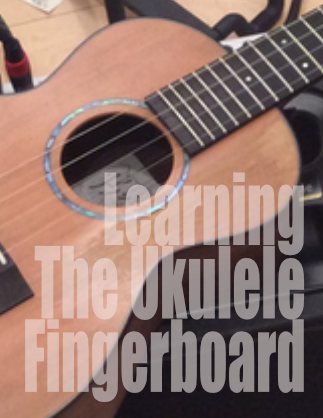
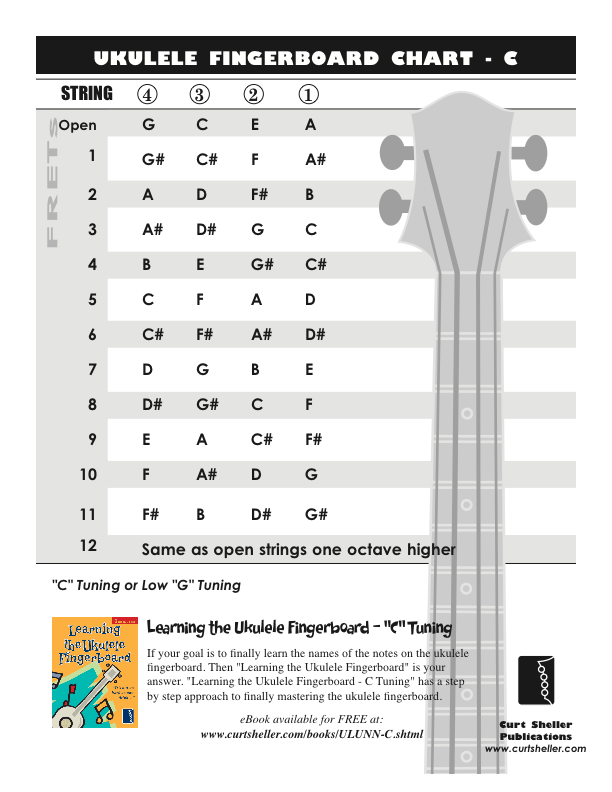
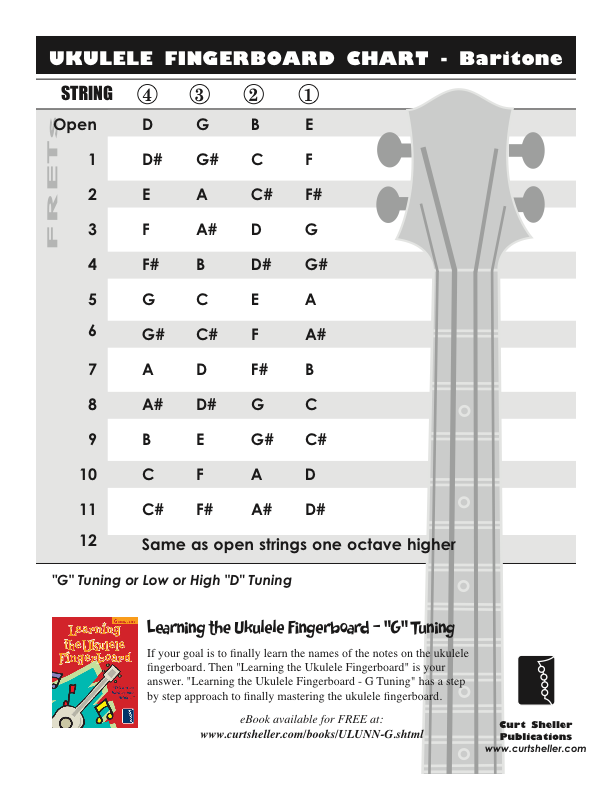
Most players struggle with learning the names of the notes of the ukulele fingerboard. There doesn't seem to a pattern and notes repeat. There is an easy way and "it's easier that you think." Most players know the names of the open strings for their favorite tuning.
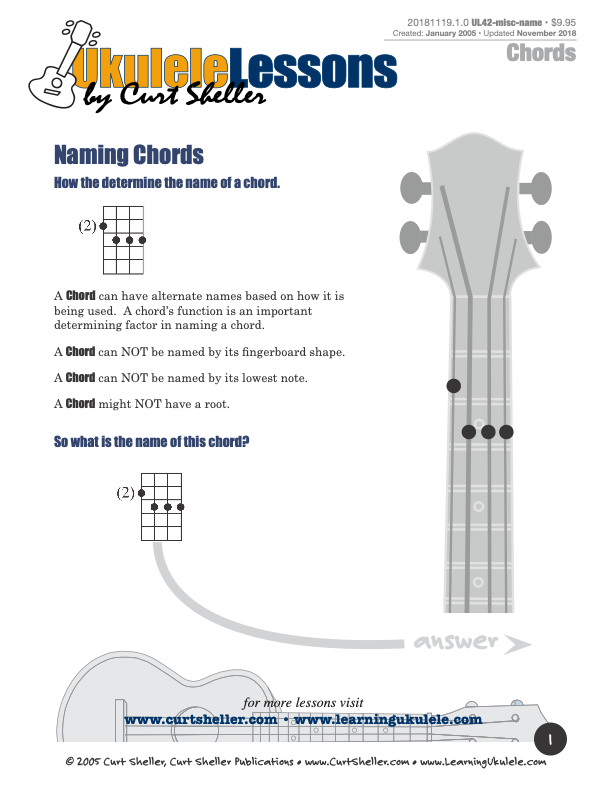
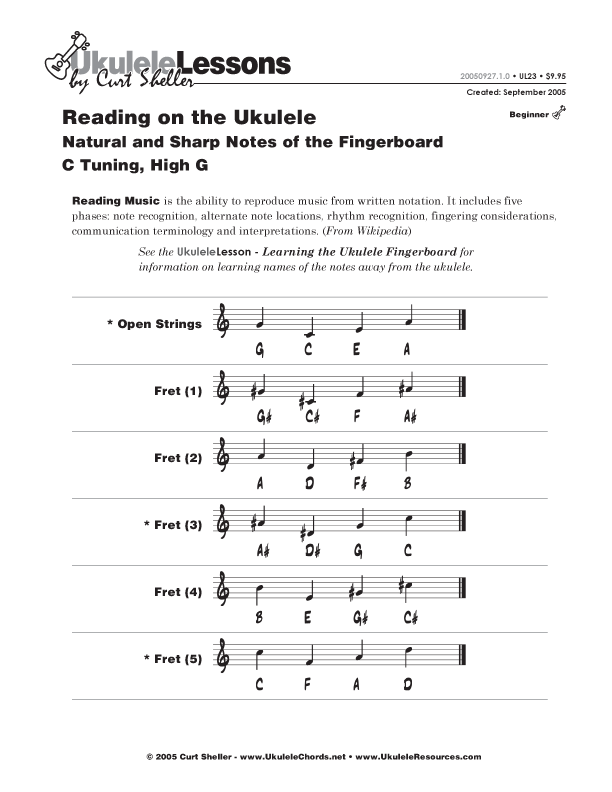
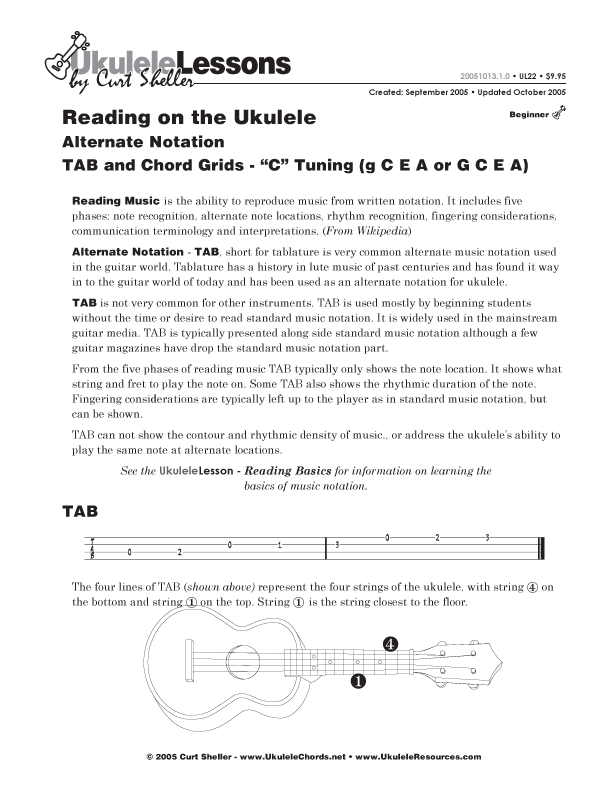
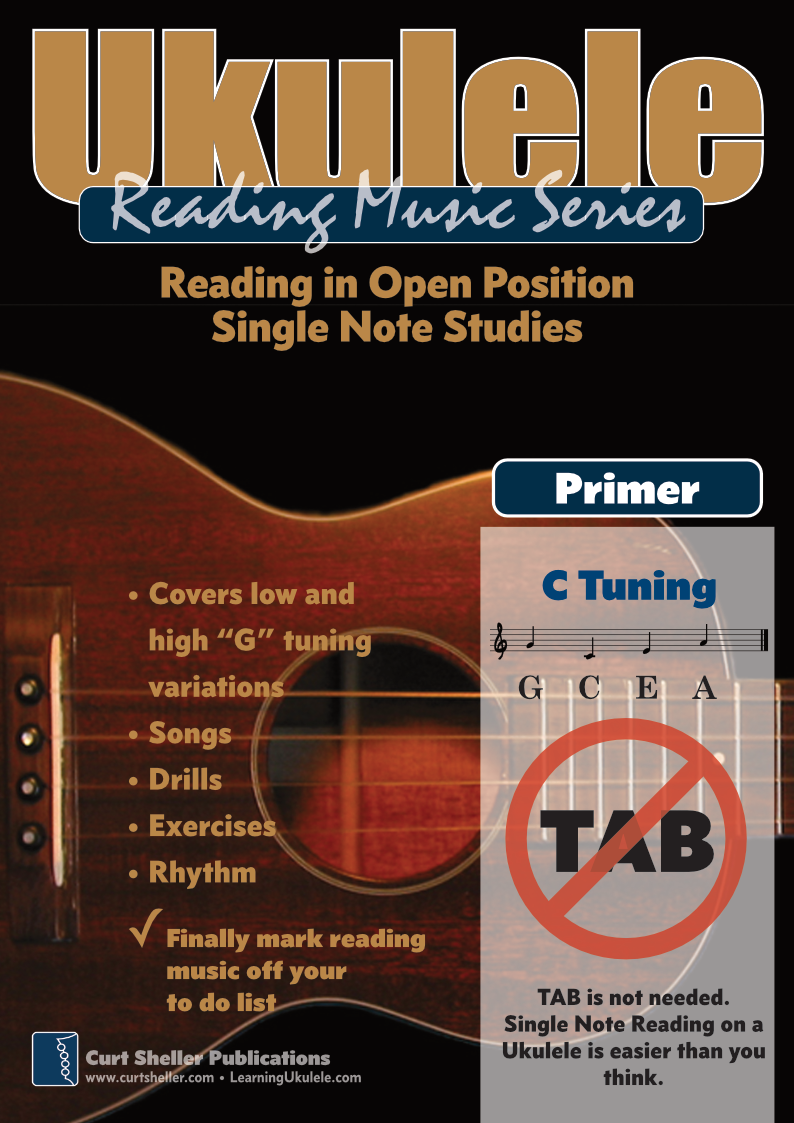
"TAB" or "Tablature", is an alternate form of musical notation, which tells players where to place their fingers on a particular instrument rather than which pitches to play. TAB is sort of a secret language between guitar players and ukulele players. Although a shortcut to getting started it actually serves to alienate one from the rest of the music world.
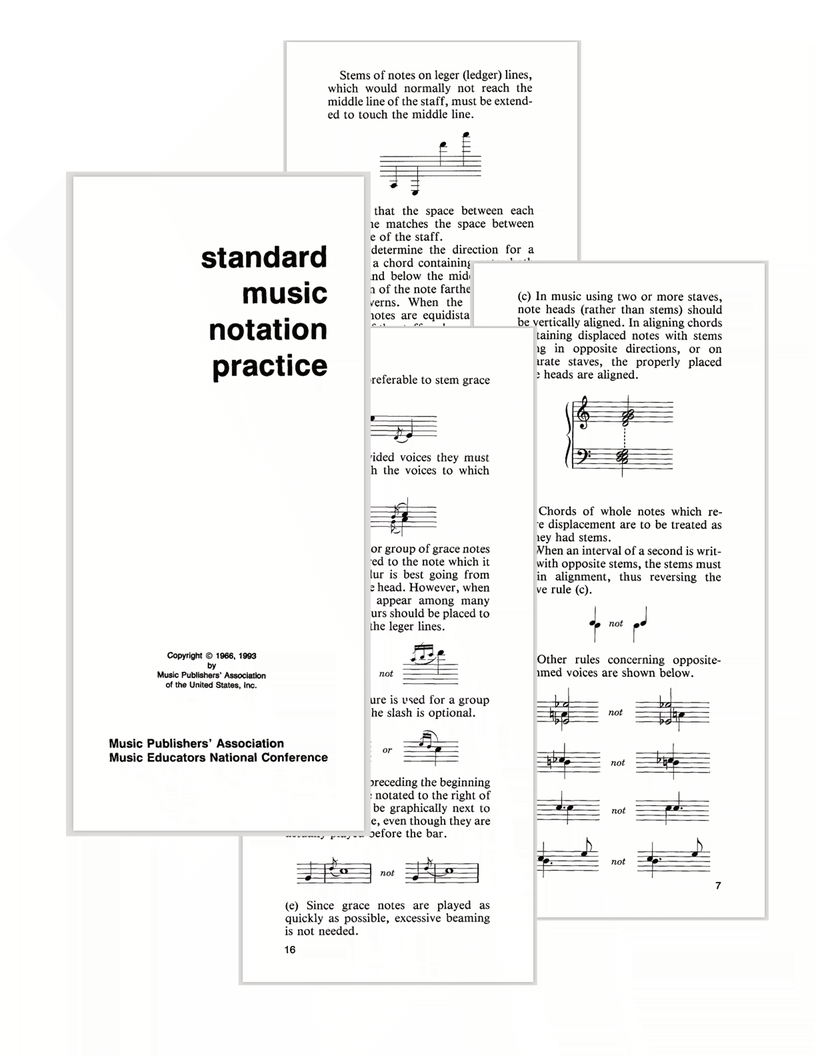
For music and learning an instrument like the ukulele or guitar, it's all about the making the connection between your Mind, your Hands, and your Ear. When listening to music, we enjoy it at the tempo the composer or artist intended, in real time. Only the ear is involved in listening. This is passive listening and you're simply enjoying the music. This is what we do every day and it's what draws us to want to learn a musical instrument.
The "Major Scale" or Ionian scale is a diatonic scale, made up of seven distinct notes, plus an eighth which duplicates the first one octave higher. In solfege these notes correspond to the syllables Do, Re, Mi, Fa, Sol, La, Ti/Si, (Do), the Do in the parenthesis at the end being the octave of the root.
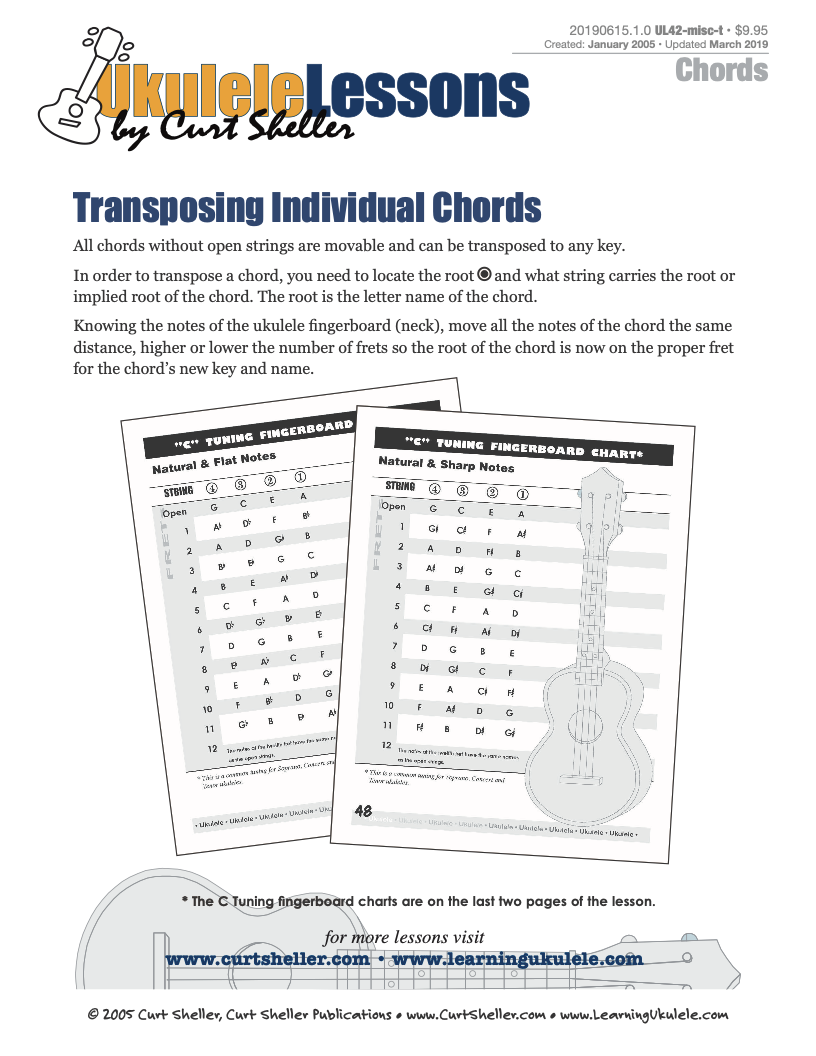
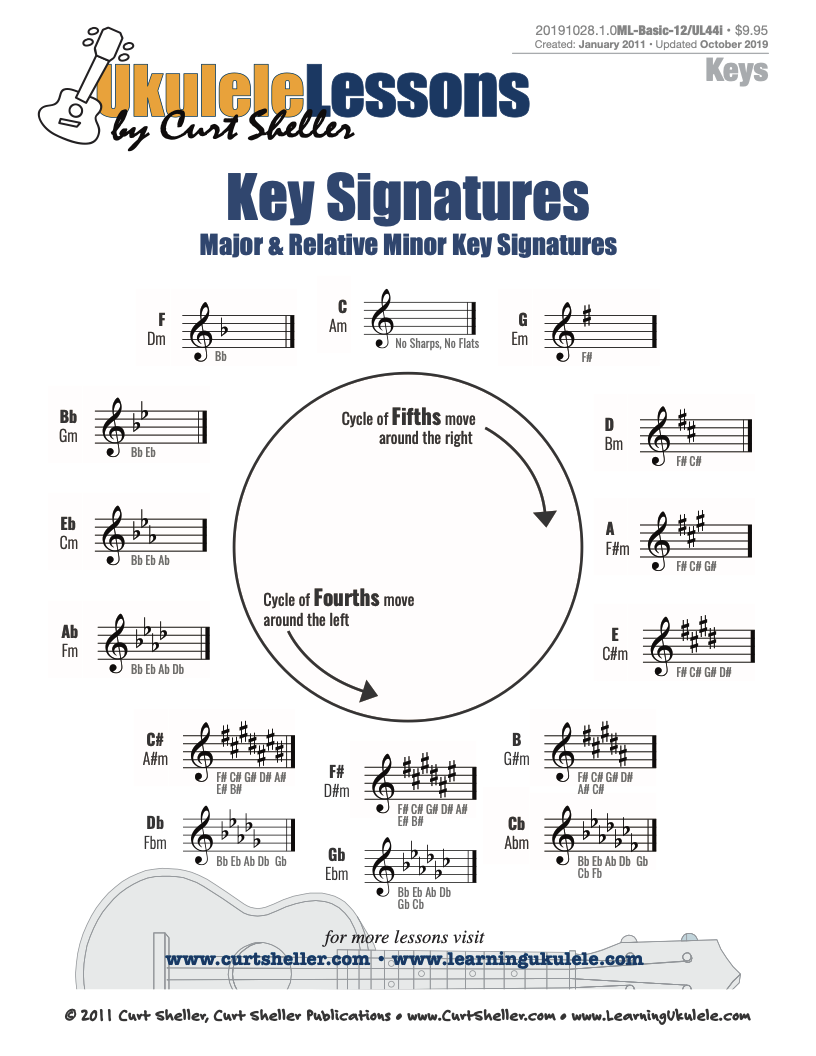
"Transposition" is the process of moving a note, chord, scale or any musical passage from one key to another key. All music can be transposed, from a single note to a complex musical score. This lesson deals with transposing chords on ukulele and transposing chords.
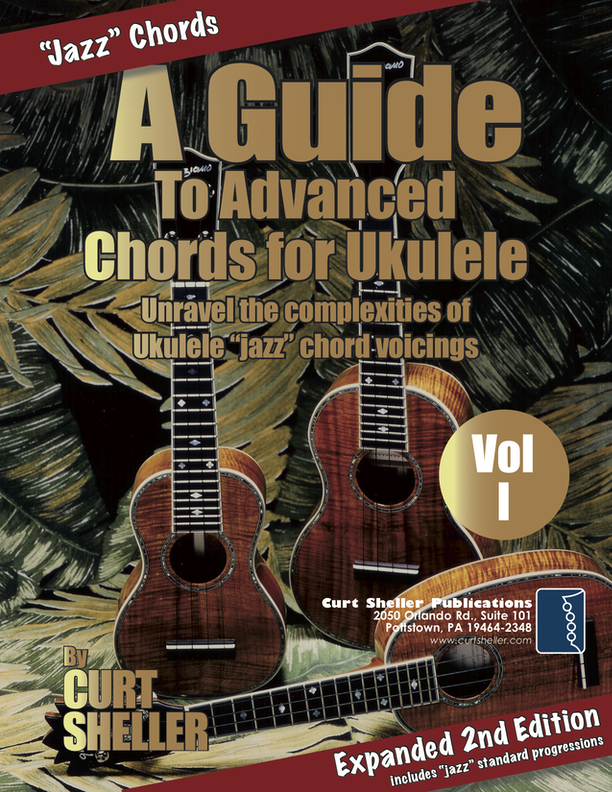
Beyond learning basic Ukulele chords, most players struggle with advanced chords. Commonly called "jazz" chords, these more sophisticated voicings find a wide use in all forms of music. A Guide to Advanced Chords for Ukulele - presents a highly organized and efficient approach to the mysterious subject of advanced chords. Chord dictionaries are not the answer.
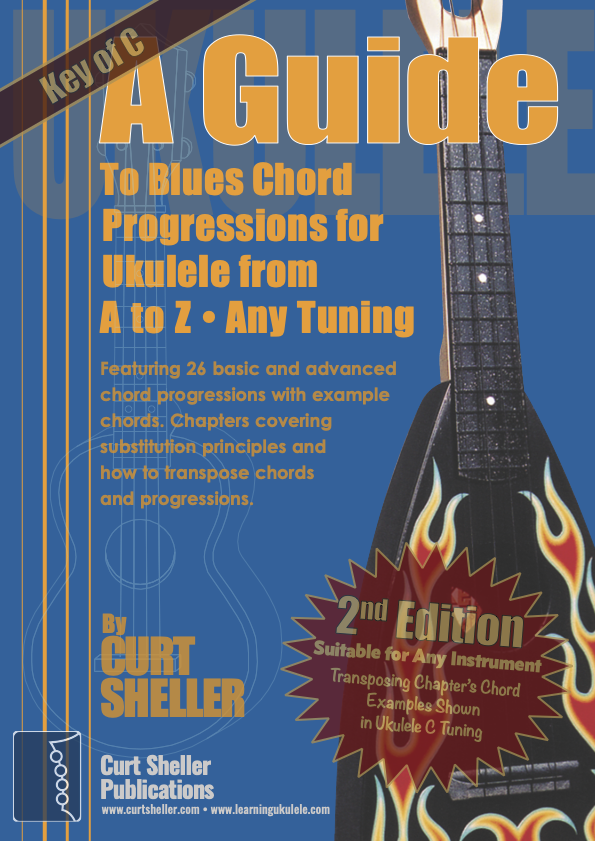
The Blues are at the heart of all American music. It has influenced Country, Rock, Folk, Jazz, Bluegrass and just about every form of American music we listen to today. 26 blues progressions in C and G tuning, progressing from basic to advanced jazz progressions, with chord grids and substitutions explained.
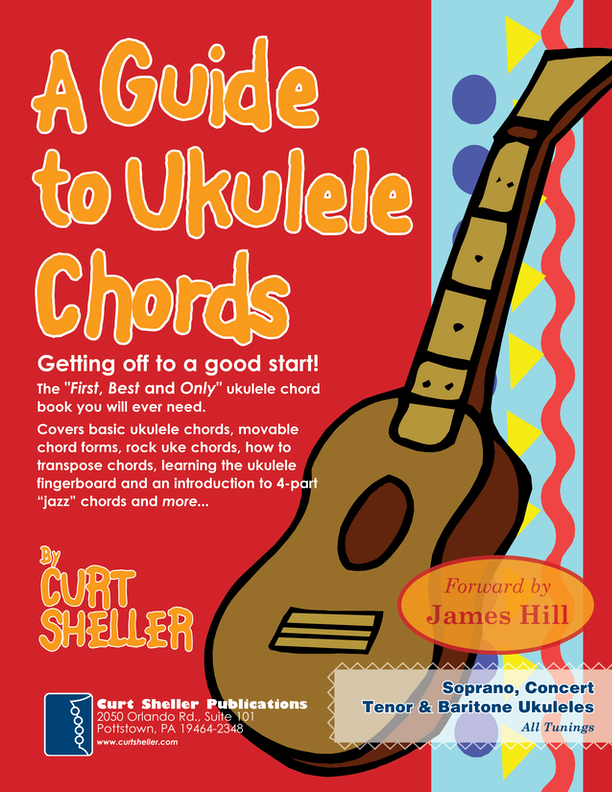
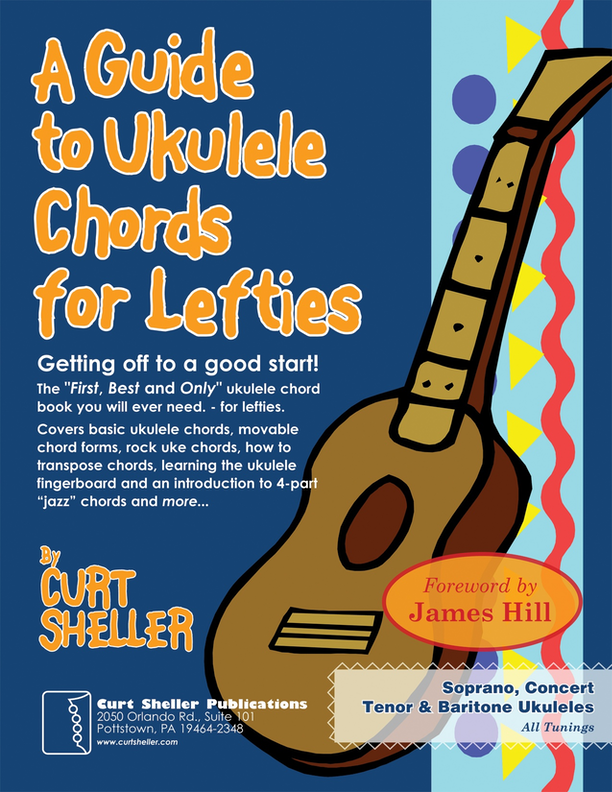
Covering basic ukulele chords that ALL uke players MUST know, movable chord forms, rock uke chords, how to transpose chords, learning the ukulele fingerboard and an introduction to 4-part jazz chords and more... FOR LEFTIES - Tunings: C, G, or D Tunings. Low or high string four variations.
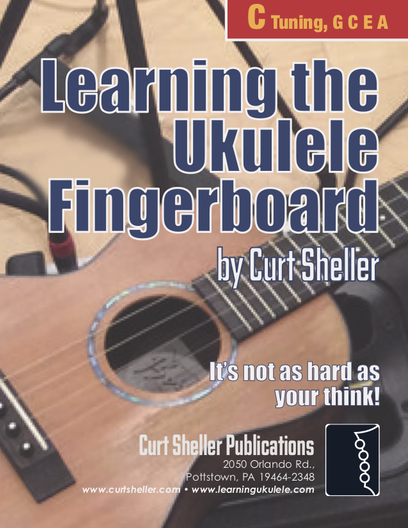
Finally, learn the names of the notes of the fingerboard. Learning the notes of your instrument allows you the flexibility of not having to remember so many shapes. There are simply way too many chords, scale and notes patterns, and shapes to remember. It all comes down the notes.
return in your investment)—it is this— learning the
f*ckingnotes of your OWN instrument. Sorry for the tough talks—but it is sooooo true!