Published:
Updated:
Learning Ukulele with Curt
Girl From Ipanema
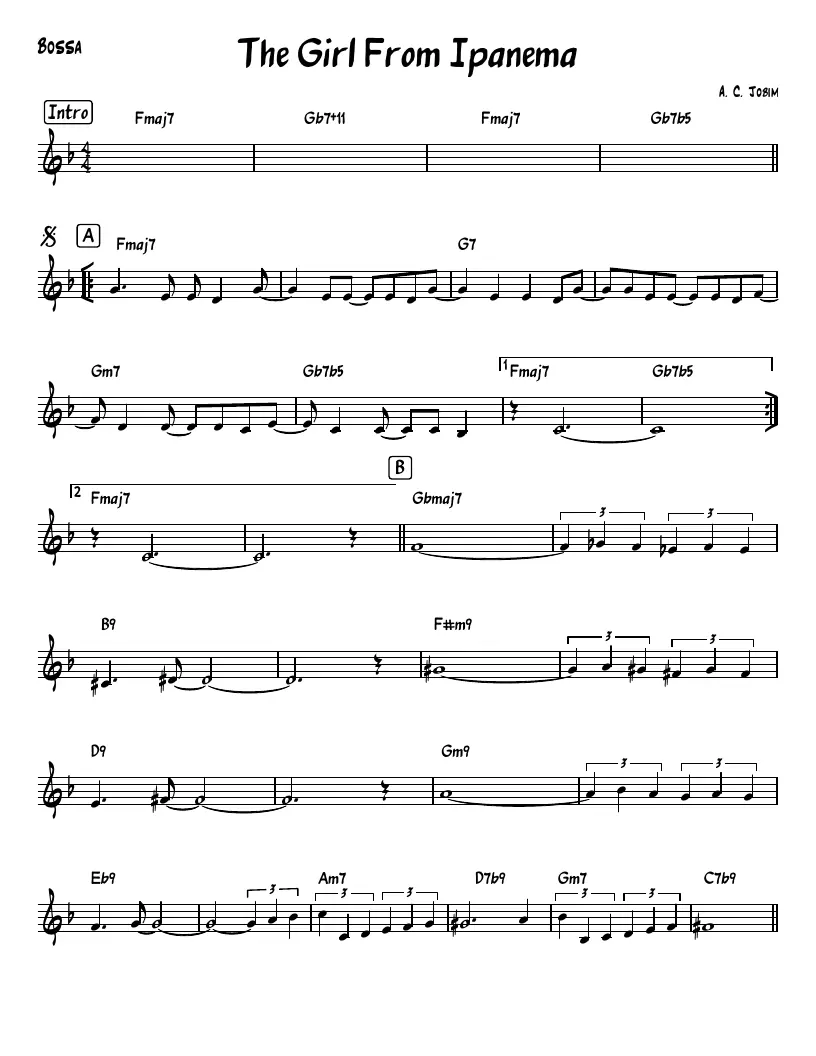
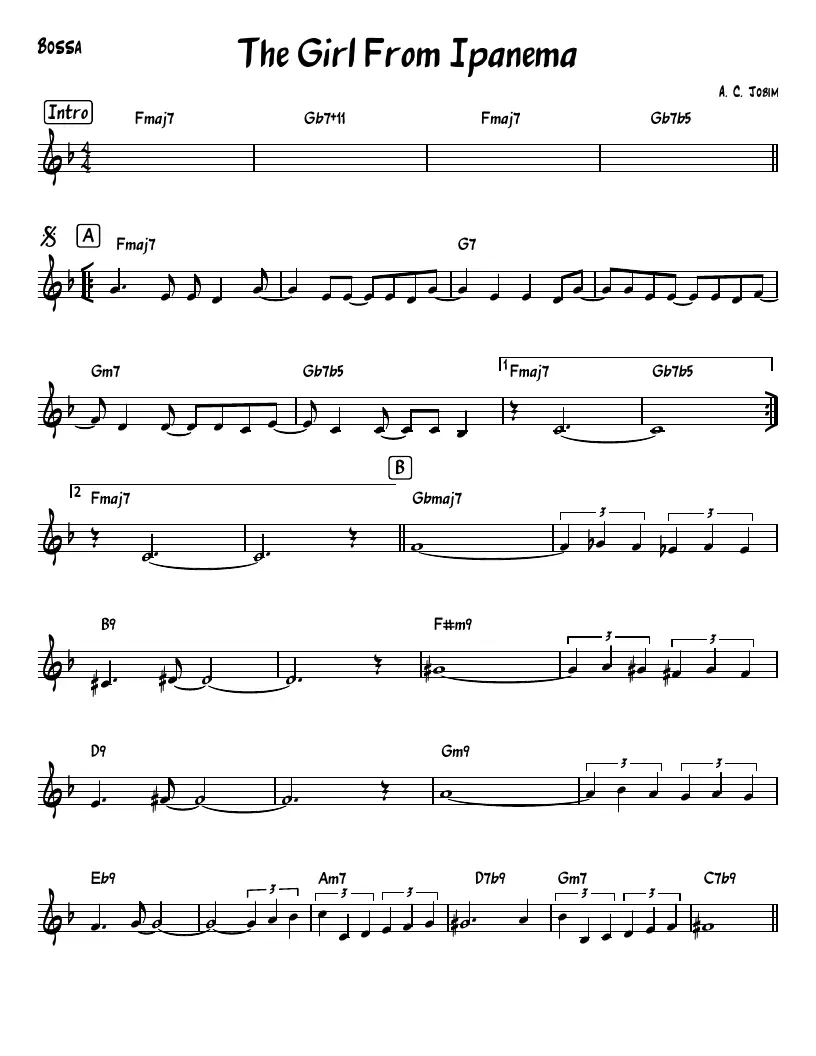
The Girl from Ipanema (Garota de Ipanema) is an essential jazz standard that every jazz musician should know. The A sections chord progression, basically a I II7 II V is functionally the same as Take the A Train, Jersey Bounce, Desafinado and a few others.
Author(s): Curt Sheller Publisher: Curt Sheller Publications Code: UL434
Main Category: Arpeggios Main Instrument: Any
Categories: Playalongs, Arrangement

2026-08-19
RelatedSongAssets
If you're a registered site member and have the correct permissions you can view ALL the pages of this PDF or Samples pages at a larger size using the LearningUkulele.com Online PDF Viewer.
This Download is NOT part of your LearningUkulele.com & Learning Ukulele with Curt membership level.
Sign-up for Premium Site Access or Upgrade Your Plan to download this PDF or your can purchase a copy for download
Sign In for Access…Contact Us if there are any issues.
The Girl from Ipanema (Garota de Ipanema) is an essential jazz standard that every jazz musician should know. The A sections chord progression, basically a I II7 II V is functionally the same as Take the A Train, Jersey Bounce, Desafinado and a few others.
The Girl from Ipanema is a well-known bossa nova, a worldwide hit in the mid-1960s that won a Grammy for Record of the Year in 1965. It was written in 1962, with music by Antonio Carlos Jobim and Portuguese lyrics by Vinicius de Moraes with English lyrics written later by Norman Gimbel. When sung by female artists it is typically rendered as The Boy from Ipanema
.
The Girl from Ipanema is in the
Real Book - Volume 1
— Sixth Edition book.
Roadmap
The Girl from Ipanema is a somewhat easy song to learn. It's an A A B A song form. The A sections are a I II7 II bII7b5 I progression with the bII7b5 being a tritone sub for a V . A1 turns back to the I using the bII7b5 tritone.
In the key of F major, the most common key this is: Fmaj7 G7 Gm7 Gb7b5 1st ending) Fmaj7 Gb7b5 2nd ending) Fmaj7. Then modulates again up a half step to Gbmaj7 B7 F#m9 D7 Gm9 Eb7 . Eb7 is a backdoor to the III the start of a II VI7 II V to the top..
The B section finishes with a III VI7 II V7 to the last A section Am7 D7 Gm7 C7 .
More Girl From Ipanema
content below, continue exploring...
More Girl From Ipanema
Ukulele TABS
Here is one way to play the melody for The Girl From Ipanema in a C
tuned ukulele, with low G
, C tuning.
To play in the original key of F you need a low G
to cover the B below middle C in the melody.
- Girl from Ipanema Tom Jobim and Joao Gilberto Reunited – Joao Gilberto and Tom Jobim reunite to play their old song, The Girl From Ipanema (A Garota de Ipanema) years later.
- Astrid Gilberto Stan Getz Ipanema 64
– Astrud Gilberto singing
Girl From Ipanema
with Stan Getz in the 1964 filmGet Yourself A College Girl
.
Famous Astrid Gilberto/Stan Getz Recording (1964): D♭ Major is the key used on the iconic Stan Getz and João Gilberto album featuring Astrud Gilberto, which became the definitive global hit. The solo section on the recording in in the Key of F.
The Girl From Ipanema
The 1964 Grammy Award for Record of the Year by Antonia Carlos Jobim
Premium Play-along Tracks are only available to Premium
members and Active/Private Students.
Here is a Demo of Desafinado to get an idea of the quality of these custom play-along tracks.
Play-along Demo: Desafinado
Desafinado — Premium Play-along Track with Guitar Melody Played
I, (Curt) originally created these tracks to perform over for gigs and this was a demo for booking gigs.
These Premium Play-along Tracks are available to LearningUkulele.com & Learning Ukulele with Curt. Site Members and are my personal one-of-kind tracks I (Curt) and Chuck Anderson recorded and arranged last century.
Exploring on Ukulele
We'll use this most famous Bossa Nova to explore the Bossa Nova style on ukulele.
The Girl From Ipanema
by Antônio Carlos Brasileiro de Almeida Jobim , also known as Tom Jobim
Astrud Gilberto and Stan Getz – The Girl From Ipanema (Garota de Ipanema) (1964) LIVE
This is the original hit from 1964 that created the Bossa Nova craze worldwide. Garota de Ipanema won the Grammy Award for Record of the Year and started Astrud Gilberto's career.
Bossa Nova is one of my (Curt's) favorite styles to play. First checkout the videos the get the feel of the song.
The Girl From Ipanema - Frank Sinatra & Antônio Carlos Jobim | Concert Collection
Bossa Nova on Ukulele
The role of ukulele performing in the Bossa Nova style is the same as the guitar's role. The guitarist would typically play a nylon string classical guitar.
Bossa is a syncopated style with a bass note / chord approach. Very doable on a guitar and we'll have to simulate it on ukulele.
The bass is typically the root or fifth of the chords and the thumb plays that as the lowest note of the chord voicing. The index, middle, and ring fingers play the remaining part of the chord.
The rhythmic part of the style is a mixture of Levels I, II and IIR of the Modular Phonetic Rhythm System by Chuck Anderson. This is the system I use with GREAT results.
Key of Db
As a jazz standard The Girl From Ipanema is typically performed in the Key of F as in the Sinatra and Jobim video. The original Getz/Gilberto recording is in the Key of F and Key of Db .
- The original studio version by Stan Getz starts in F major for the male vocal part (João Gilberto).
- When Astrud Gilberto's female vocal part enters, it modulates up to D♭ major.
- The instrumental solo section (Stan Getz on tenor sax) stays in D♭ major before returning.
Here I transposed the song to the Key of Db for the ukulele to take advantage of all four strings and get the same feeling of the Astrud Gilberto's original performance.
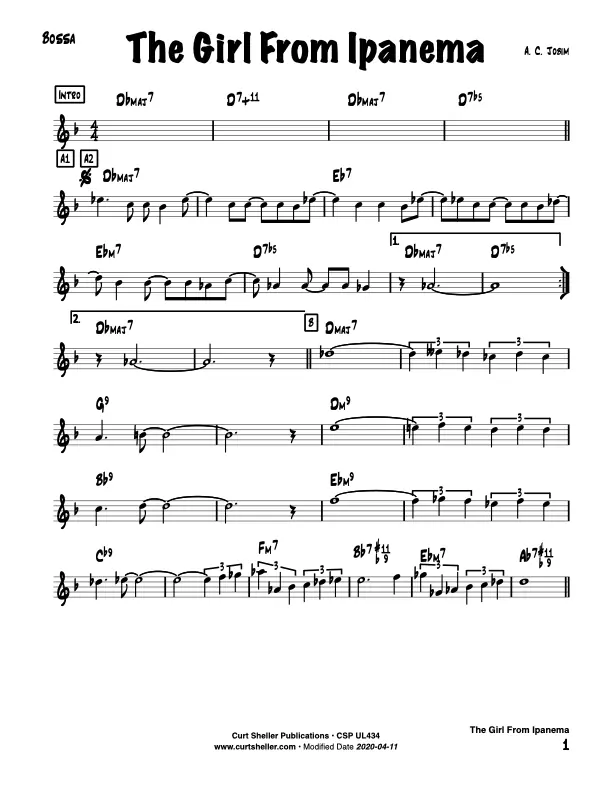
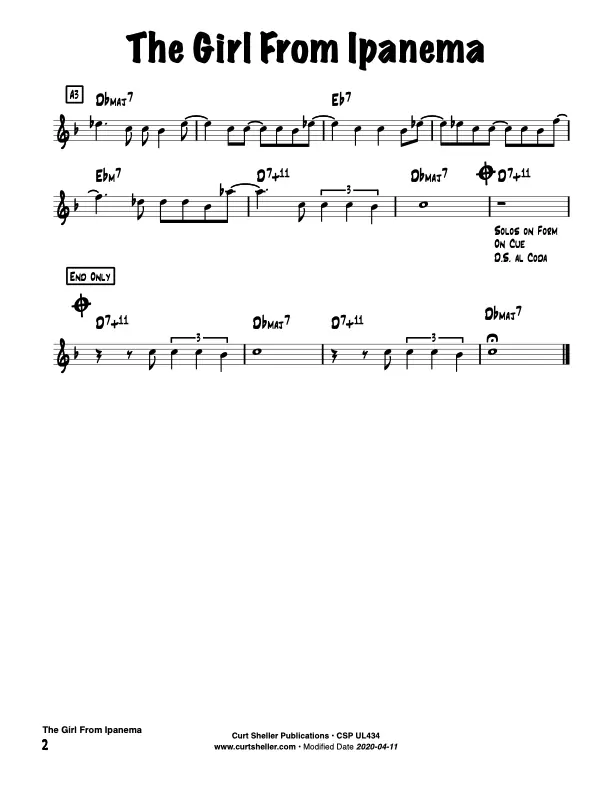
Each major and minor key conveys it's own characteristics and emotions. If doing a song instrumentally, i.e. no vocals, you can pick any key that gives you the characteristics and emotions you are trying to convey. I picked D♭ to keep the feeling of the original Astrud Gilberto's performance.
German music theorist and composer John Mattheson laid these characteristics and emotions out in his writings in 1713. They were rediscovered and translated by Rita Steblin in her book A History of Key Characteristics in the 18th and Early 19th Centuries in 1983.
Background Chords on Ukulele
These are the chords being playing in the video.
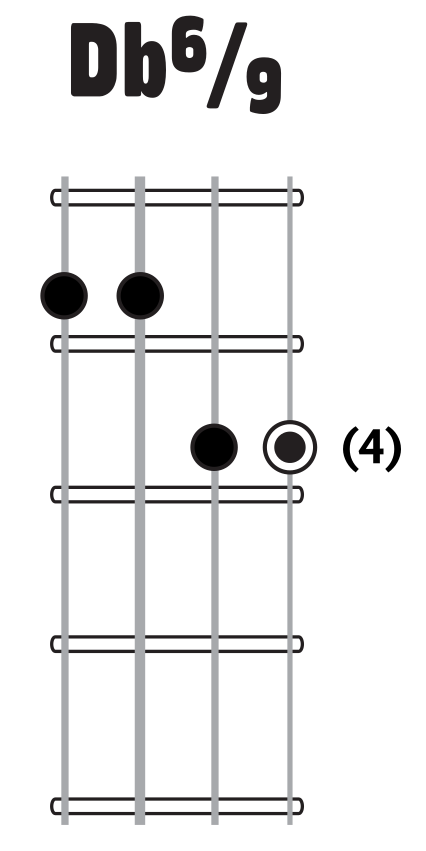
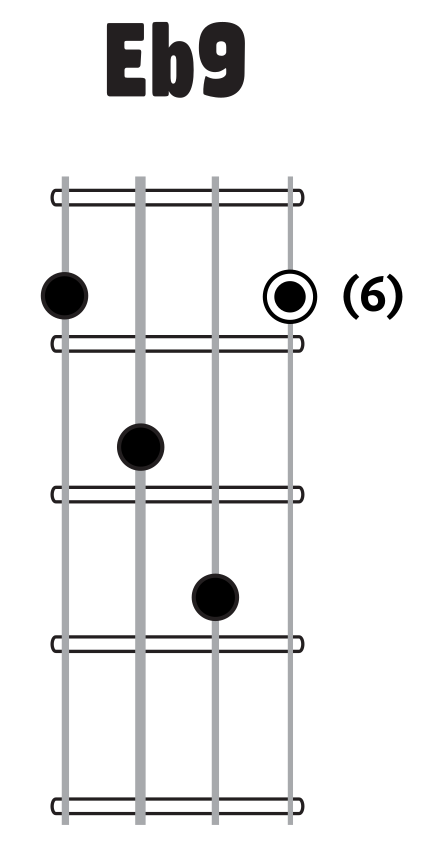
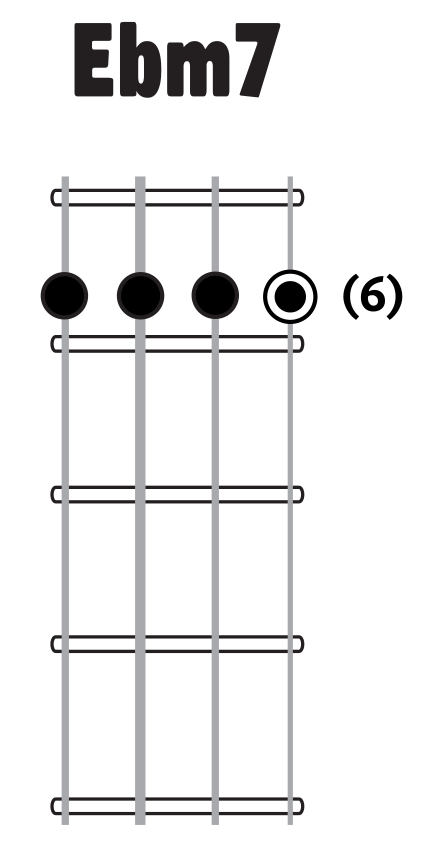
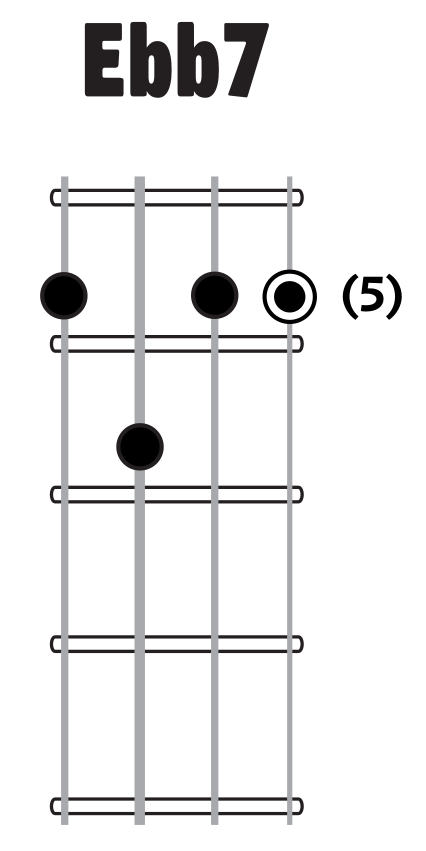
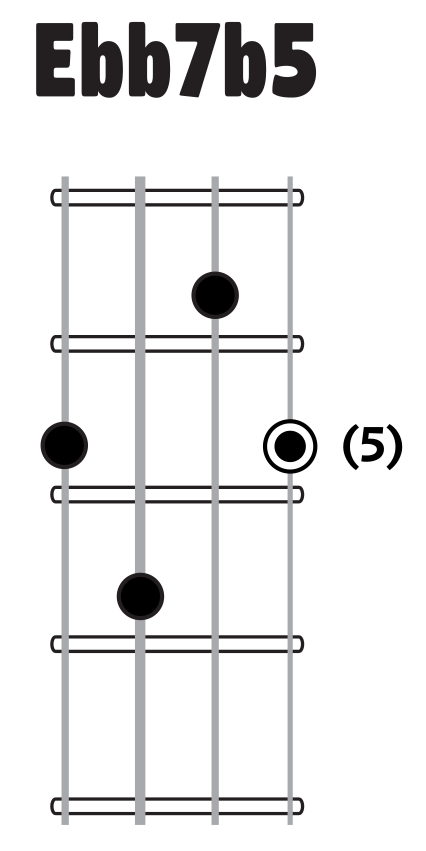
The A chords are: Db6/9, Eb13, Ebm7, Ebb7(D7), Ebb7b5(D7b5). In the A section the Harmonic Analysis (HA) is: I II7 Im7 bII7 I bII7, Hence the technically correct Ebb7 for the II chord. The Ebb7 (Ebb G Bbb Dbb) is same shape as D7 (D F# A C) and are Enharmonic Equivalents which you might already know.
The A Section Chords for Ukulele
Triple Flat
Triple Flats? – That can't be right. Well, yes Virginia theoretically it is. In the key of Db the second, the II chord is Eb. So the bII would be flatted for E double flat Ebb with the Bbb the fifth of the chord. And flatting the fifth results in a triple (bbb) flat. You have to keep the scale degree name / chord degree name in a full diatonic key. Now, granted not a lot of musicians, very few in fact would know this and might call it D7. You would get the right pitches – but the names of the pitches would be wrong for the the key of Db Major .
The triple flats show up in the chord tones for the Ebb7b5. E7 is E G# B D, Eb7 is Eb G Bb Db, Ebb7 is Ebb Gb Bbb Dbb, and Ebb7b5 is Ebb Gb Bbbb Dbb. These are the correct chord spellings for these chords.
Knowing all of this, I would probably choose an Enharmonic Equivalent spelling that most musicians could play instead of the theoretically correct spelling. The goal is to get the music played.
This music theory stuff is wild. — Curt
The B Section Chords for Ukulele
The B section of the song is rich in harmonic movement, is actually not that hard to navigate.
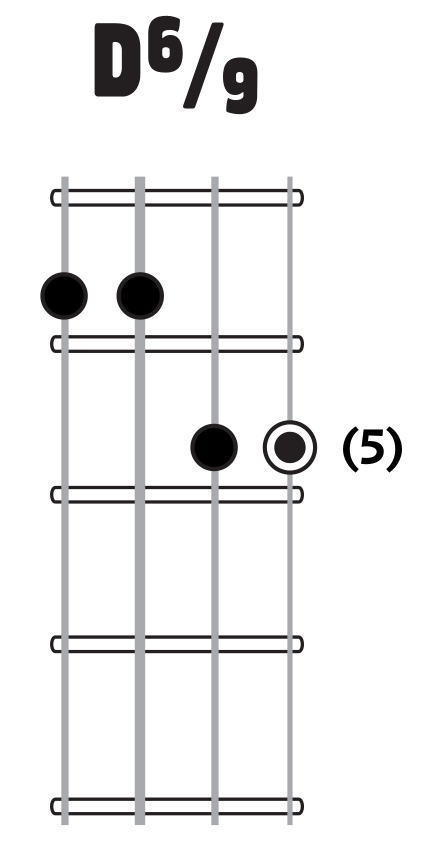
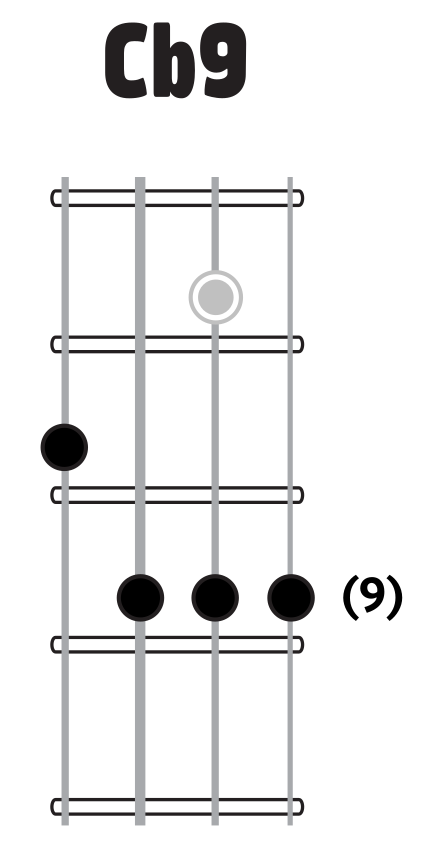
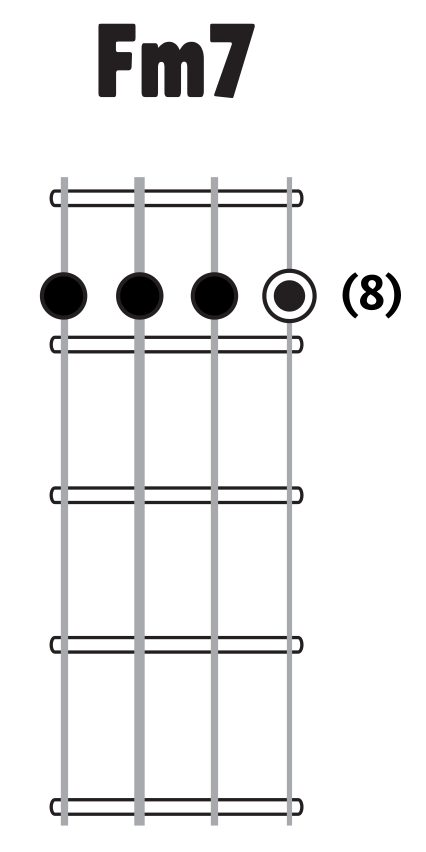
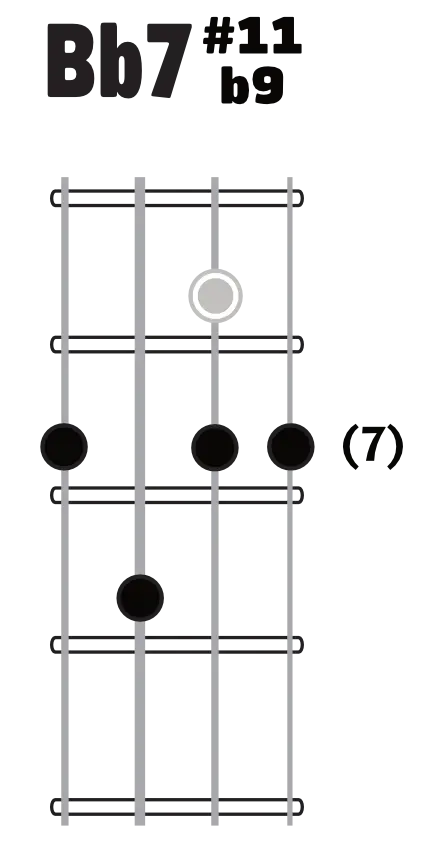
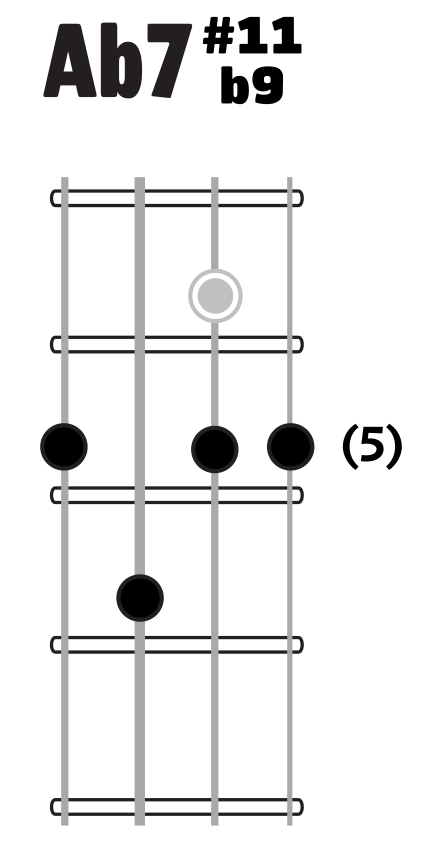
The B chords are: D6/9, G9, Dm9, Bb9, Ebm9, Cb9, Fm7, Bb7#11b9, Ebm7, Ab7#11b9,. In the A section the Harmonic Analysis (HA) is: I II7 Im7 bII7 I bII7, Hence the technically correct Ebbb7 ( E triple flat 7 ) for the II chord. The same shape as a D7 which you might already know.
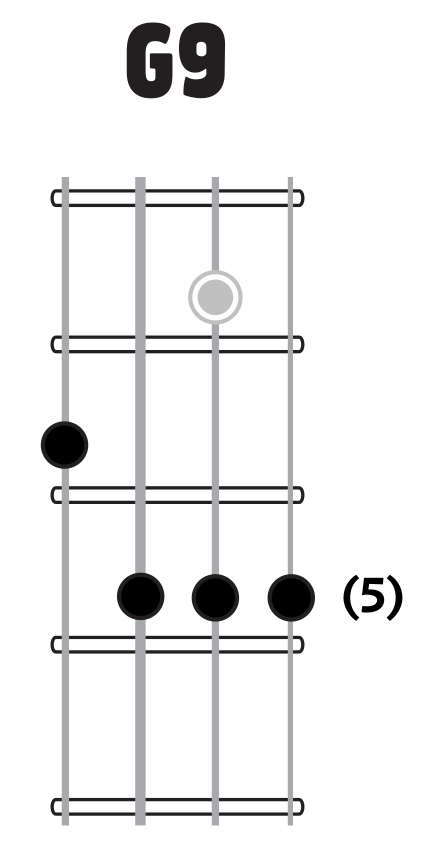
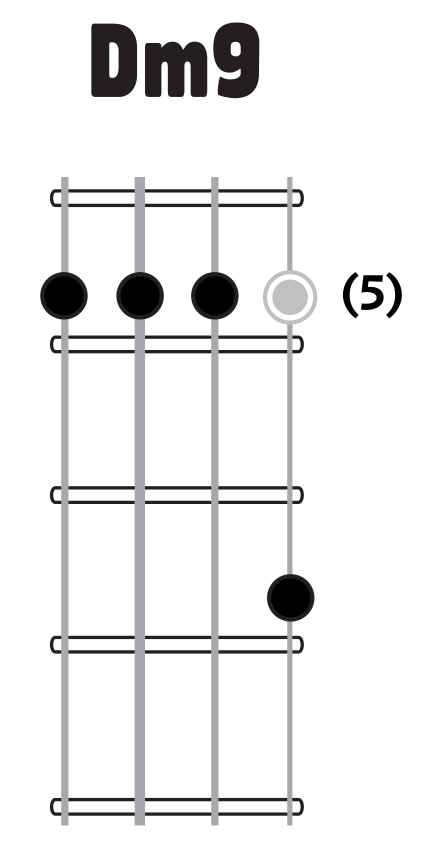
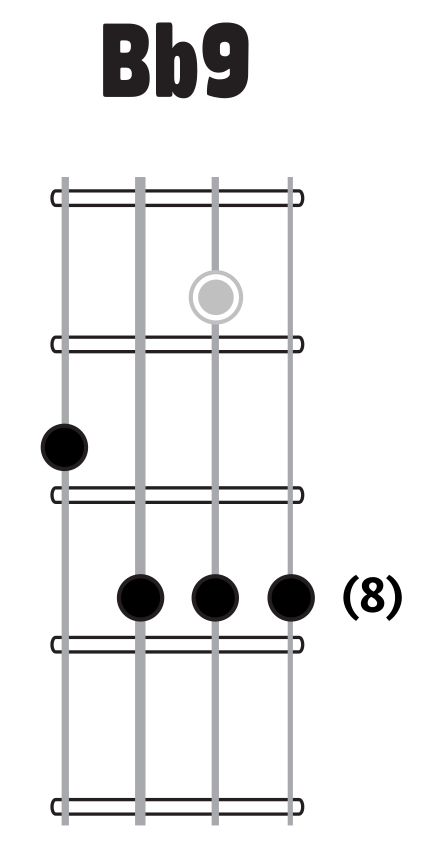
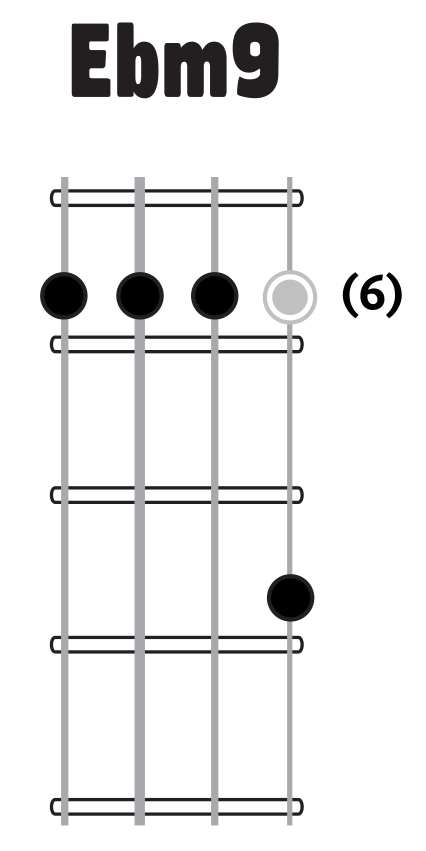
No Vanilla Seventh Chords
Notice that I didn't play many plain vanilla chords. There is an un-written rule in jazz
that the original old-gaurd jazz musicians would say. Don't play simple straight-ahead seventh chord — a plain vanilla
seventh chord. Add upper partials / chord extensions and/or alter the chord. The extensions and alterations depend on what the harmonic resolution of the seventh chord is and the melody.